
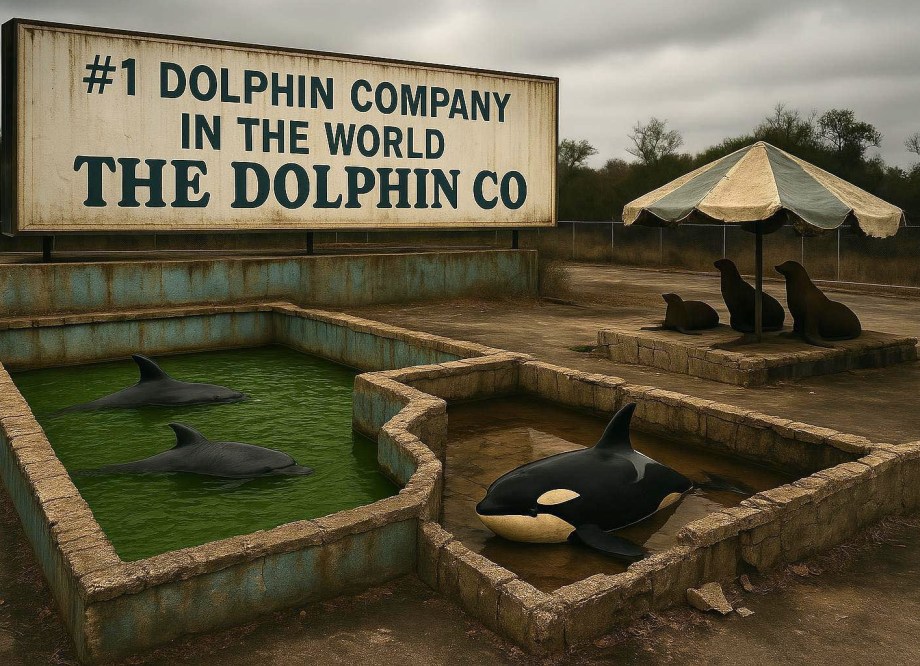
This post is part of a continuing series which utilizes over two years of extensive research to share the untold stories of The Dolphin Company’s four Florida dolphinariums.
UPDATE 20 MARCH 2025
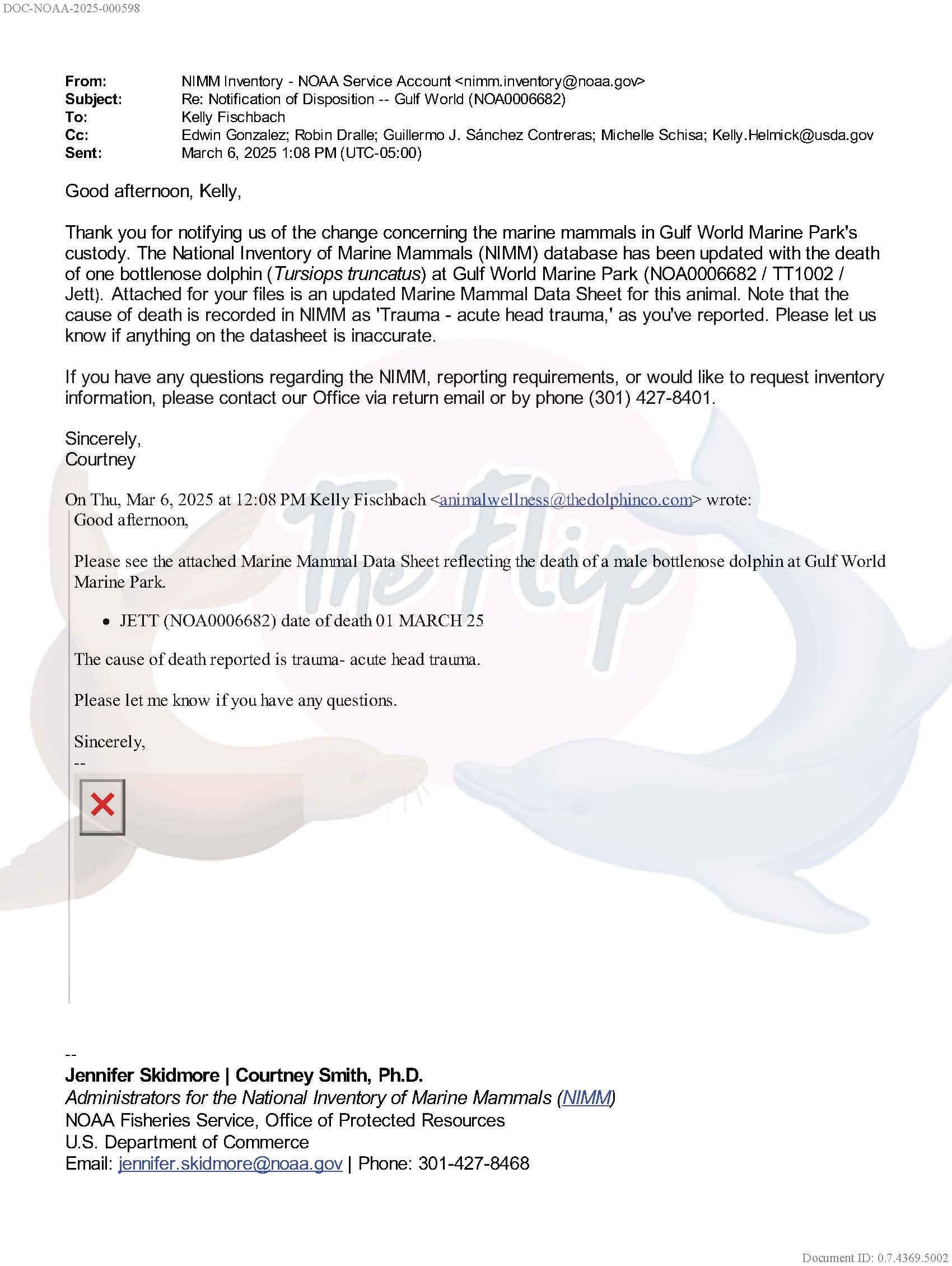
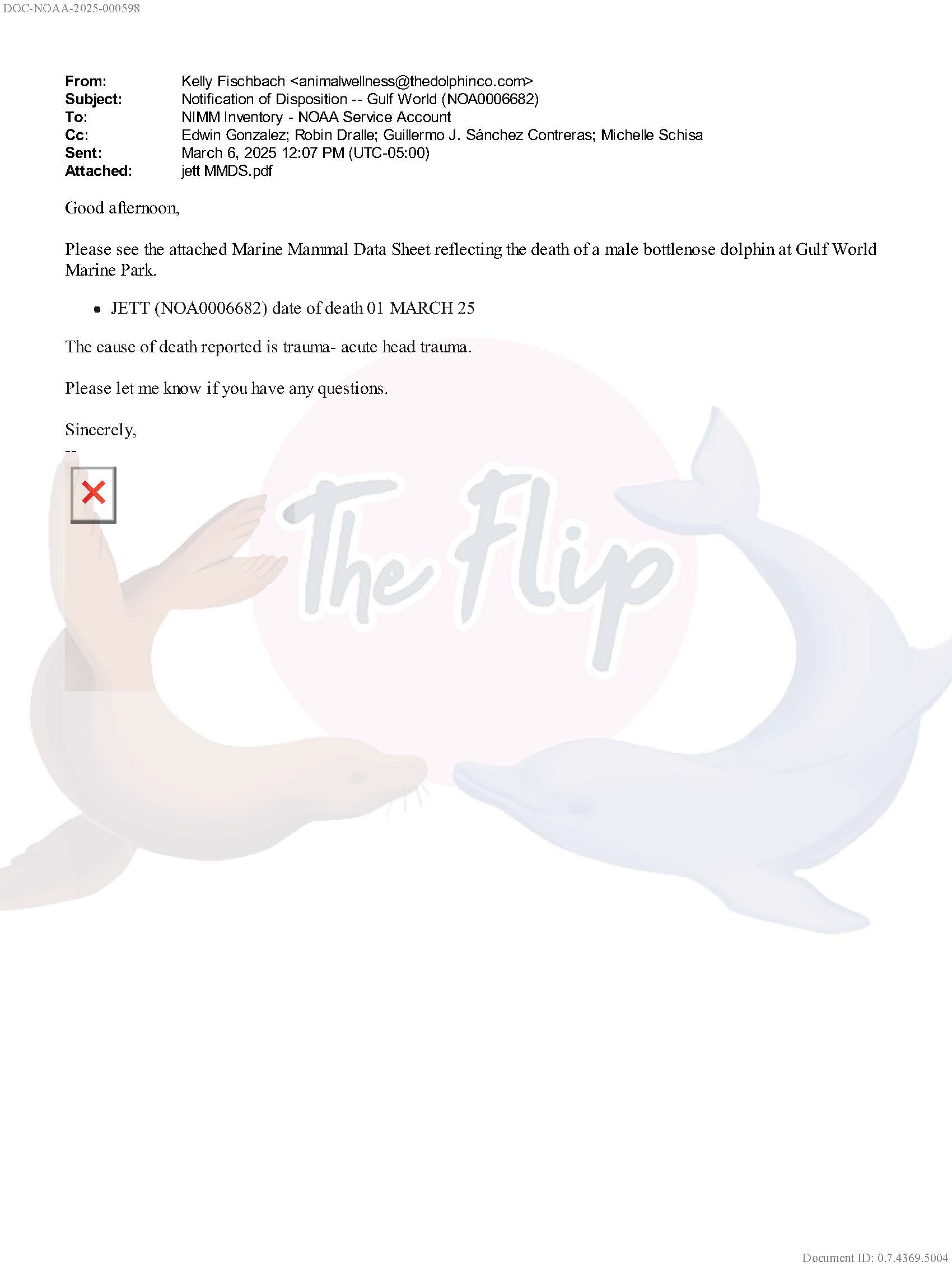
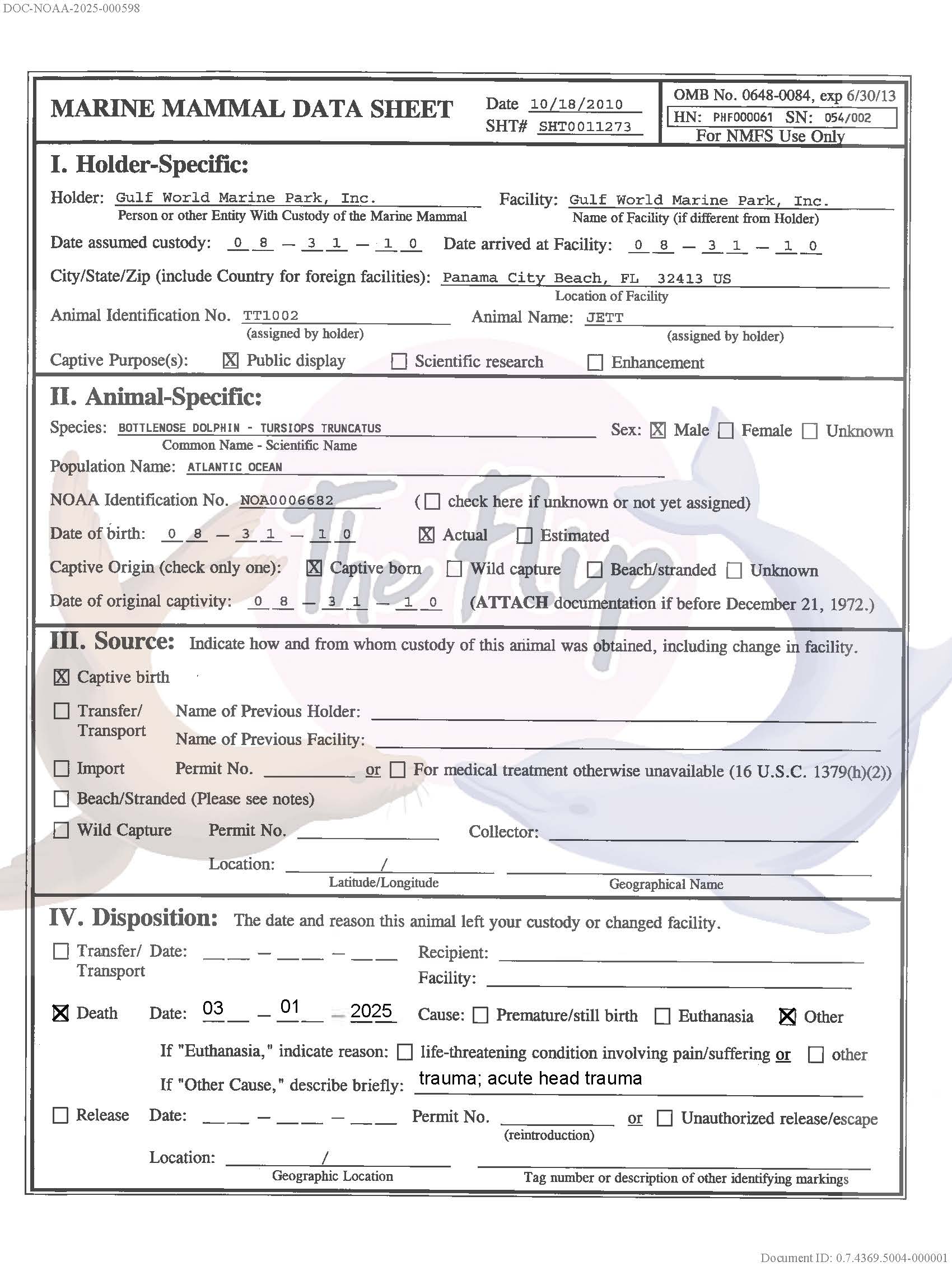
We have obtained documented confirmation from The Dolphin Company on Jett’s death, resulting from head trauma. Click to enlarge images.
A RISKY PROFESSION
Nobody ever said that being a marine mammal trainer was an easy profession. Trainers put their lives at risk every day on the job, dealing with large carnivores – not just orcas, but other types of whales, dolphins, and pinnipeds (I recall back in the 80s, as a kid on a visit to a marine life park, witnessing a male pilot whale pinning a female trainer underwater against the side of the tank during a show).
The risks for trainers and other staff are much greater when facilities are in disrepair. This is why marine mammal trainers should be thankful that they have a trade organization which advocates for their safety, as well as their physical and mental health. But that’s another post.
One such facility in disrepair is Gulf World Marine Park in Panama City Beach, FL, the first of four Florida dolphinariums purchased by The Dolphin Company.
THE USDA FINDINGS
Pay close attention. There are clues in here to a death.
The following excerpts are from a 14 January 2025 USDA Animal and Plant Health Inspection Service (APHIS) report of an 8 January 2025 inspection.
The facility did not have the required testing supplies and due to funding was not able to test for coliforms as per this regulation. Coliforms were not run on any marine mammal pools from October 19, 2024 through November 14, 2024. Timely and accurate testing for coliform counts is required to quickly identify harmful levels of bacterial counts and effectively maintain water quality standards. Water samples shall be taken and tested at least weekly for coliform count.
Coliform bacteria appears in the digestive tract of mammals. Excessive coliform usually means there’s feces in the water that is not being properly treated, and it could be indicative of bacteria, viruses, and parasites being present.
The facility has lost six maintenance employees in the past three months leaving them with two maintenance employees. Additionally the facility has lost seven animal care employees in the past three months. Based on the increased number of non-compliant items and the repeat items that have been cited and not addressed since the May 2024 inspection, it is evident that the facility does not have enough employees to maintain the prescribed level of husbandry practices set forth in this subpart which includes maintenance and repair of housing facilities under subpart 3.101(a), 3.103(b), and 3.106(d). Overall facility maintenance of pools, haul out areas for animals and filtration maintenance is vital to the health and wellbeing of marine mammals. The facility must have a sufficient number of adequately trained employees to address the physical environment the animals are living in.
At the time of the inspection, there is no working filter for dolphin east pool which went down on November 13, 2024. According to staff, the filtration for dolphin west is only functioning at 50 percent. Dolphins have been housed in dolphin east pool with no working filter and then moved to another pool when east must be “shocked” with granular chlorine due to lack of liquid chlorine. Dolphins were housed in east pool as recently as Jan 5, 2025. There is an abundance of algae growth in multiple dolphin pools with the inspector scraping algae off a step that was almost 6 inches in length. The algae growth has reduced visibility of the dolphins in all the pools. Water quality must be maintained by filtration, chemical means or other means to comply with water quality standards. The facility does not have a working filter on a large pool for the dolphins and the addition of granulated chlorine does not appear to be effective in mitigating extensive algae growth throughout the pools.
Mention of the lack of visibility due to excessive algae growth appears throughout the report.
THE UPSIDE DOWN
On 1 March 2025, a dolphin named Jett, born 31 August 2010 at the park, was performing a buoy jump, a maneuver where the dolphin leaps completely out of the water and touches a ball suspended above the tank with its rostrum. He missed the target and landed on the edge of the shallow area of the tank. While no photographic or video record has emerged as of yet, my associates and I spoke with a number of current and former trainers, park management, and guests at the 10:30 am show (the only show of the day) and were able to piece together an idea of what happened.
Imagine this jet was Jett the dolphin (credit NBC News):
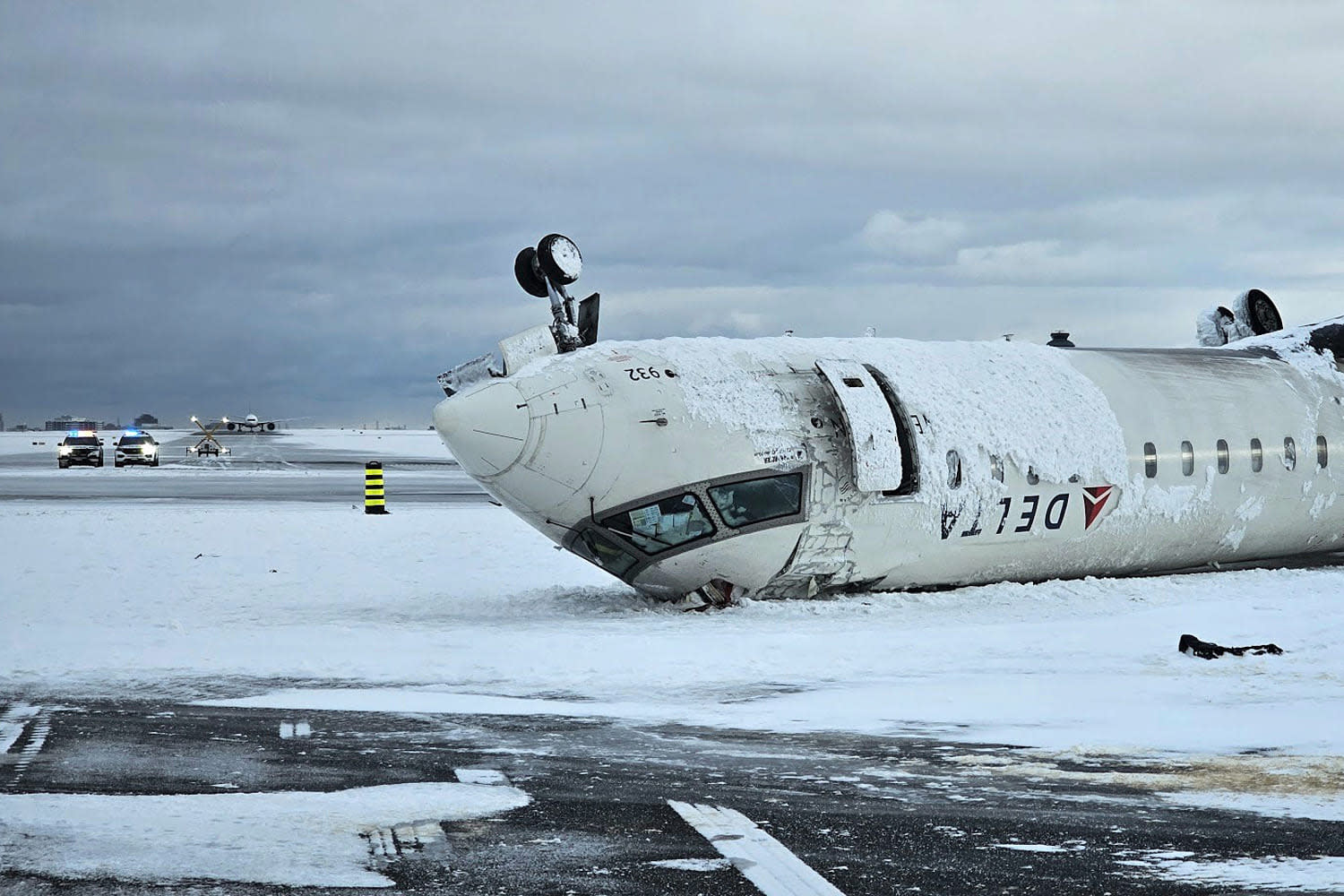
Jett was not so lucky as the passengers who survived this plane flipping upside down upon landing. He landed upside down in the shallow end, cracking his skull, and then slipped into the deep water (around 15 feet or so). Divers were called into the stadium to retrieve his body.
The lack of media evidence can be traced to four factors:
- The park was in its off-season, when most visitors were locals with kids in tow, many of them passholders. It is less common for them to film entire shows than it is for visitors to the big parks in Orlando and Miami.
- Multiple dolphins were performing in the show tank at the same time. It’s very likely if photos or video were being taken at the split second of Jett’s landing, they were of other dolphins in another portion of the tank.
- Guests were rushed out within minutes of the incident. One guest mentioned that he was attempting to corral his three daughters and didn’t have time to grab his camera.
- That pesky algae mentioned in the APHIS report would have obscured visibility.
This is what the shallow area looks like with proper filtration and maintenance. There is one shallow area on each side of the show tank, and each is about waist deep for a human. They are used for dolphin interactions.
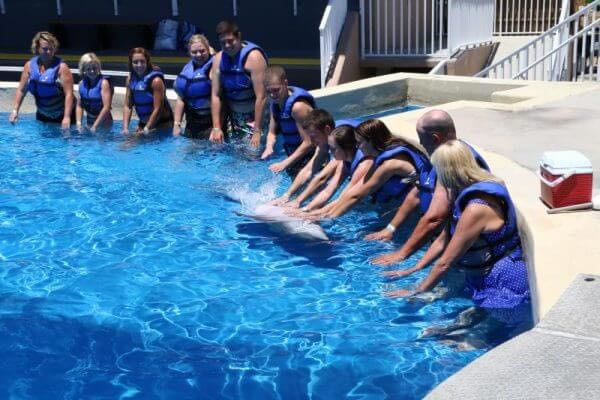
In this recent Facebook video, you can see just how obscured the dolphin’s body is by the algae:
https://www.facebook.com/100094548555392/videos/pcb.496964743465140/607982255387156
Here’s another comparison, using two mobile mapping services. The first is an older image from Google Maps, where the water is properly maintained.
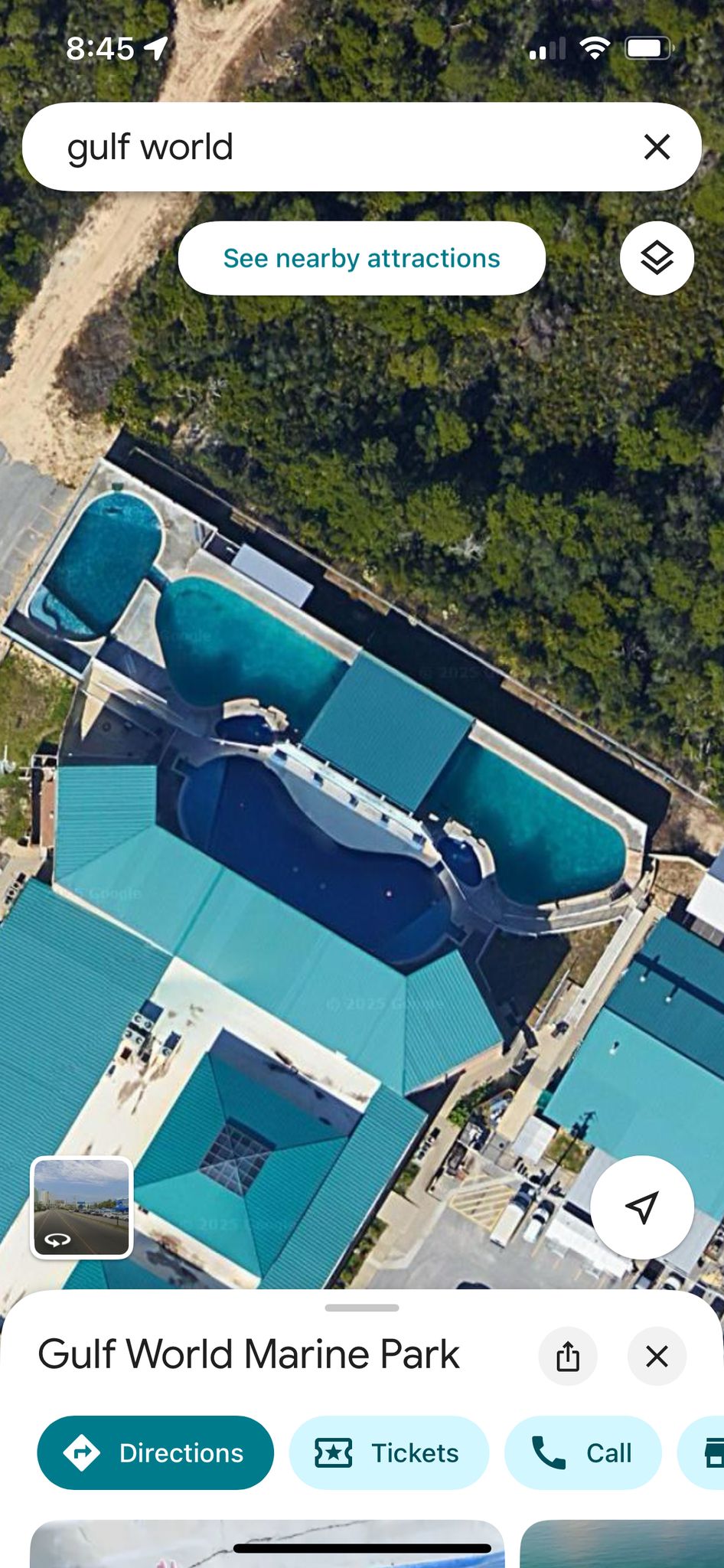
You can clearly see the ledges of the shallow areas on both sides of the show tank.
The second image is a later one from Apple Maps:
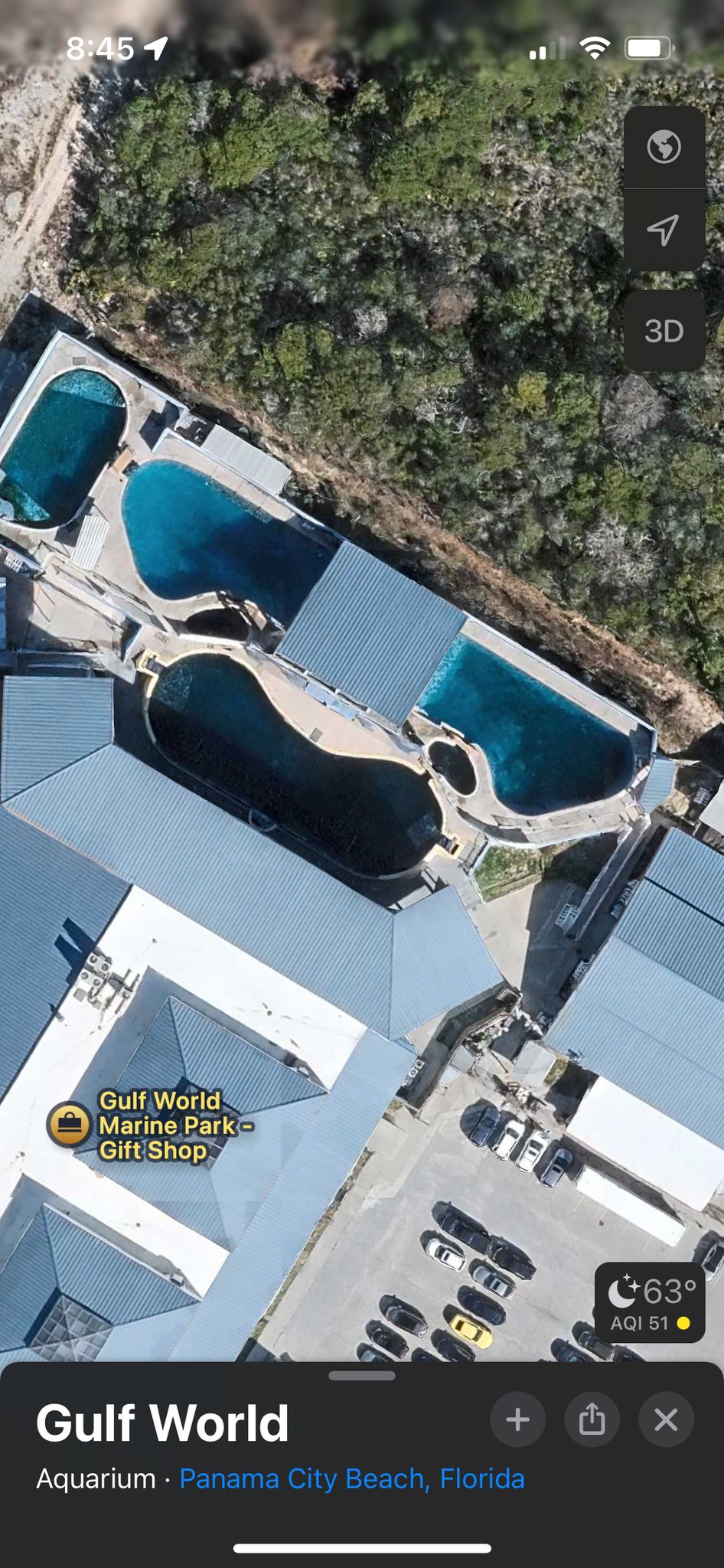
We have ruled out saturation levels of the images being a factor in the difference between the two. We have also ruled out the shadow produced by the grandstand roof as obscuring the tank’s clarity in the latter image, as in the Apple image, the shadow extends about halfway across the show tank, while in the Google image, the shadow covers the entire tank.
You will notice I use the term tank instead of pool. Pools are supposed to be nice.
THE OCTOBER THREE
What makes Jett’s death so bizarre is that he was born at the park and lived his entire life there. He knew every corner of that tank by memory. Was he ill? Was he suffering the same malady that took the lives of three dolphins within an eight day period in October 2024?
To explain, here’s marine mammal trainer Cat Rust:
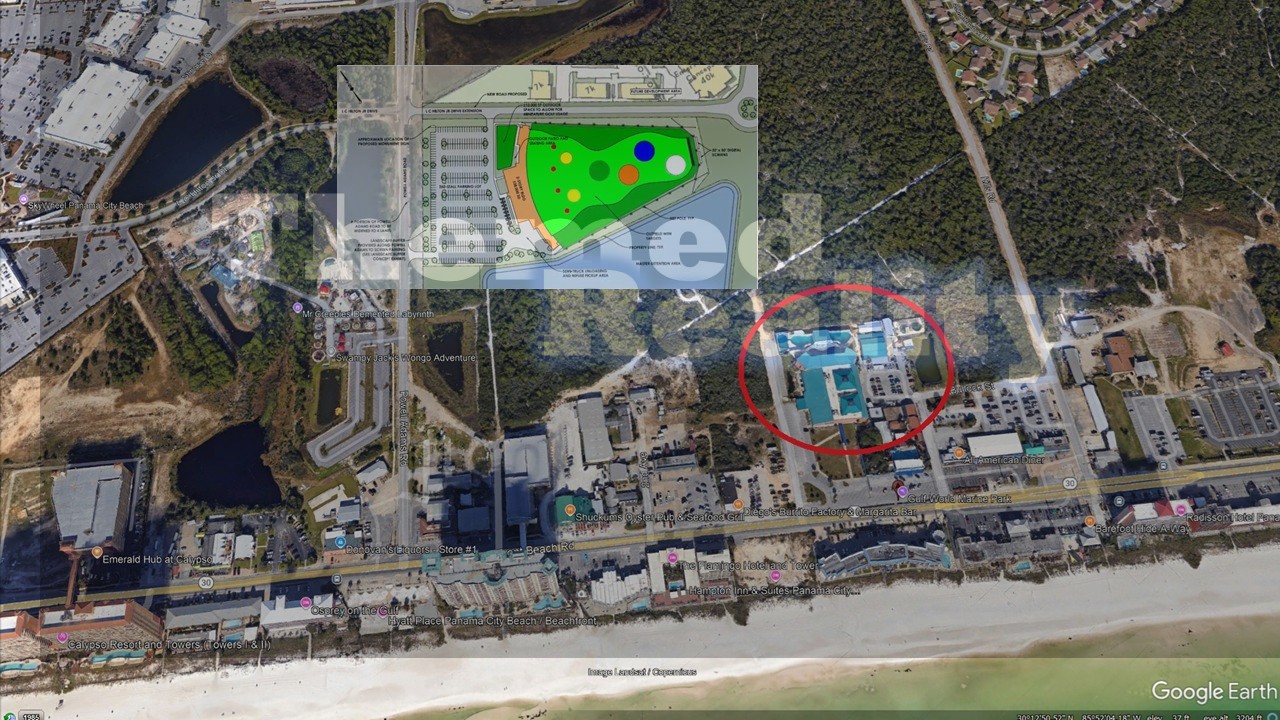
It is probable that the dolphins died as a result of construction on a Topgolf driving range near the dolphin tanks, which held its groundbreaking a month before the three deaths, with the wind carrying over dust, fungus, and other debris that could have entered their vascular systems through their blowholes. I’ve created the following image to show the proximity of the construction site to the tanks:
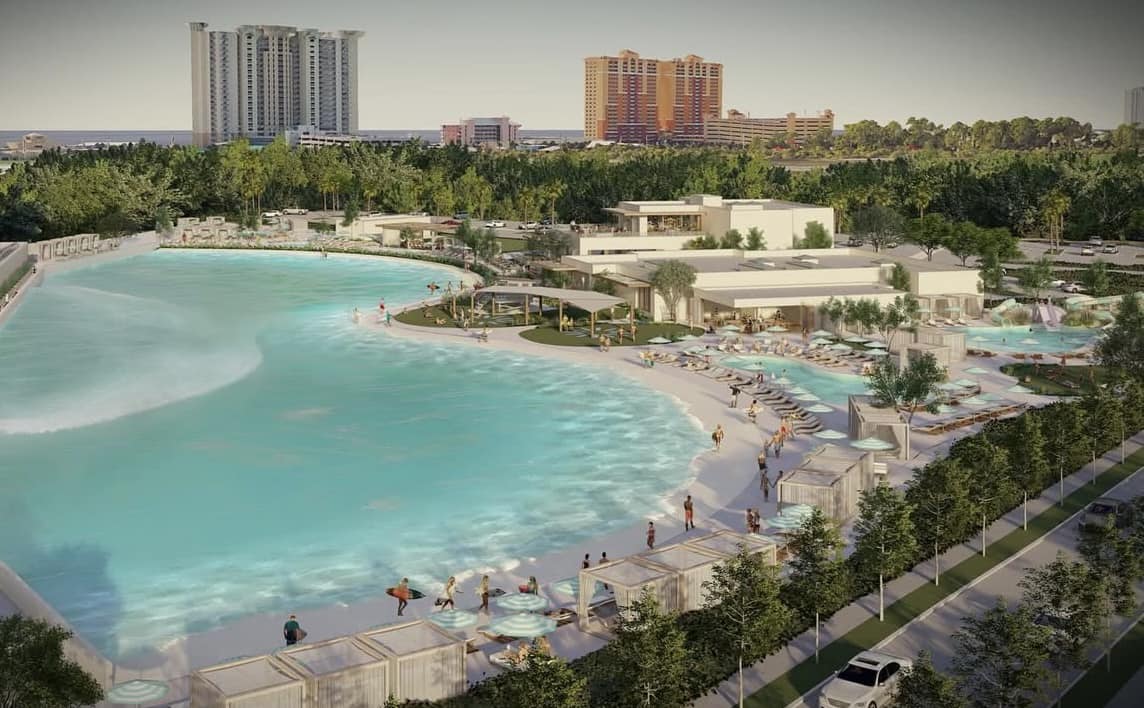
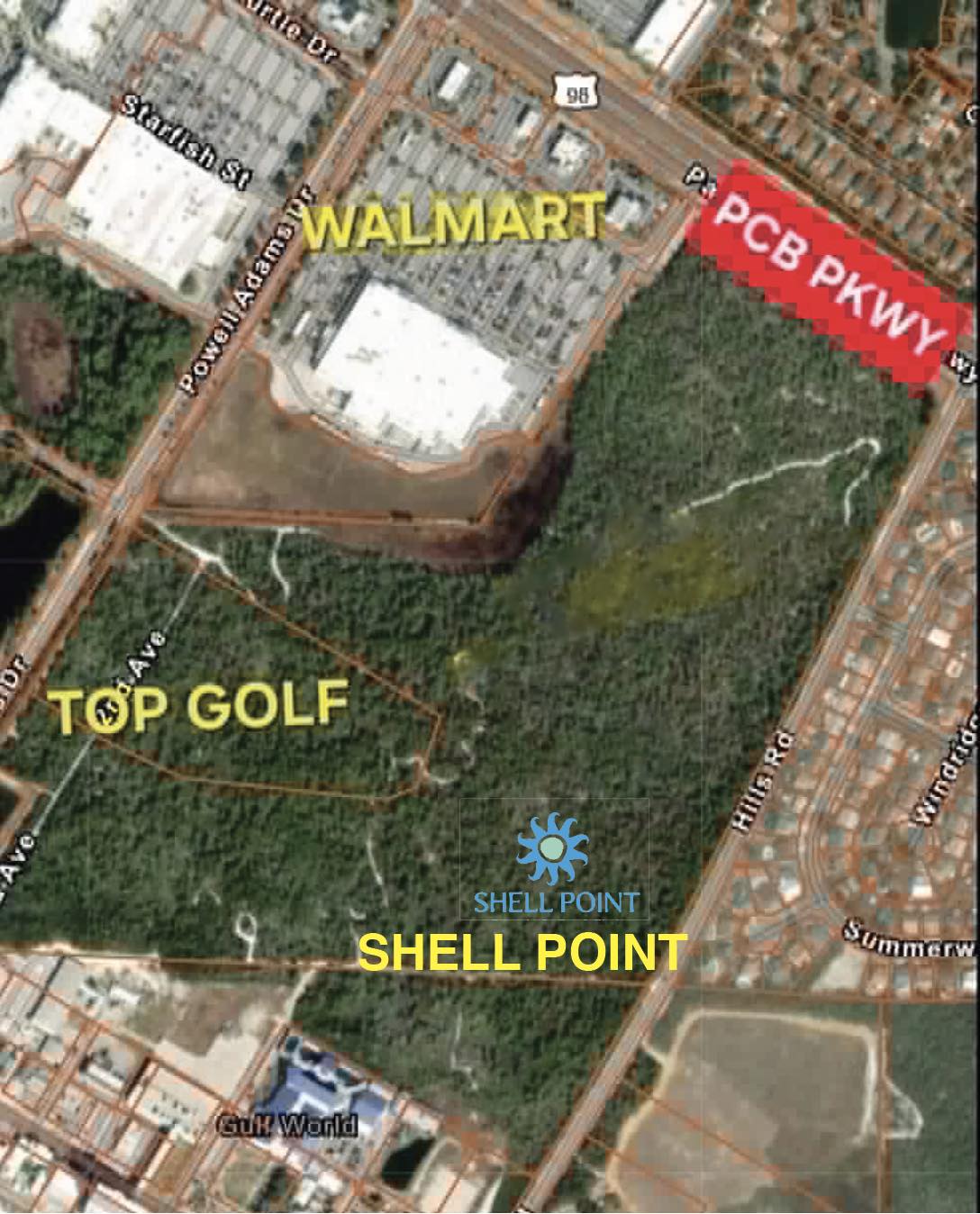
The remaining dolphins are currently at risk from future construction, as a surfing lagoon has now been proposed between Topgolf and the tanks.
Dolphins at another facility owned by The Dolphin Company are also at risk from construction debris, as an 80+ residential development has been proposed adjacent to Marineland Dolphin Adventures near St. Augustine, FL.
We’ll be visiting that park in the next instalment of Will & Ed’s Excellent Adventure.


Good work, Joe.
It’s refreshing to see someone police this industry.
– Ric