
Blogmeister’s introduction
Did I actually trigger people on both sides of the fence by suggesting Tokitae/Lolita be moved to SeaWorld? Apparently, I did.
Did I do it because, as some have suggested, I might be a diehard SeaWorld fanatic? Well, you’re more likely to catch me on a skiff out of Moss Landing. And although I have had hundreds of opportunities to visit SeaWorld parks over the past few decades, in the 36 years since my internship in the summer of 1987, I’ve been to SeaWorld parks a total of – wait for it – four times, and that’s including Abu Dhabi a few weeks ago. The last three of those visits were work-related. As a trade journalist for the experiential design industry, I was documenting media and zoological exhibit design in the parks.
When I mentioned SeaWorld in my prior writing, I threw all the options on the table – moving Tokitae/Lolita to a sea pen in the Salish Sea, to another park, to a newly constructed tank with no SeaWorld influence (likely too late now if the process hasn’t been started yet), and yes, even the dreaded “e” word. Like I said, all options. SeaWorld Orlando is the closest and most easily accessible option. That’s just undeniable fact. As you will see in this post, others, including those vehemently opposed to the company, have made the same argument before me. My sentiments are shared with my collaborators, as this has truly become a collaborative effort. Where she goes is not up to us. It will be based on the decisions made by The Dolphin Company, Friends of Toki, Jim Irsay, the Lummi Nation, and state and federal regulatory agencies. Where she goes is not our argument and Tokitae/Lolita, herself, is not the issue. What happens to her crumbling pool and to the dilapidated structure surrounding the pool is our primary concern, especially now that we’re in hurricane season. The degree to which these structures have been neglected since Irma hit in 2017 is astonishing and a testament to those charged with her care. As Pritam Singh said during a press conference in March, “She’s persevered the difficulties which we human beings enforced on her.”
I mentioned that my blogging has been a collaborative effort, and it’s just one part of a larger endeavor. Today, I present a guest post, only the second time I’ve done so in the decade I’ve been writing ThemedReality and its supplemental blogs.
My collaborator Valerie Greene is a former SeaWorld Senior Trainer, who worked with both pinnipeds and orcas. And she’s a lawyer. A few months ago, I was shocked by the death of Kiska, the lone orca at MarineLand Canada, who had been the centerpiece of a relocation project on which I had been a consultant (as I’ve mentioned in other posts, don’t bother asking for details. I’m still under NDA and respecting it). Shortly after, Valerie wrote a piece published in the Orlando Sentinel where she pointed out how IMATA members were partying at their annual conference the day Kiska died. She argued that the entire marine mammal exhibition industry had failed to take action to help Kiska and I was deeply touched. But I was exhausted from 16 months of intensive behind the scenes work on the Kiska project and was diagnosed with cancer around the time of her passing. I just wanted to walk away from the entire issue of cetacean captivity. But fate had other plans. A mutual friend pushed me for weeks to connect with Valerie, who ended up becoming one of my many trusted collaborators.
Before I read her Sentinel piece, I had encountered Valerie only once before – through her hand written testimony to an Orange County, Florida Sheriff’s Department deputy on February 24, 2010. Valerie was one of the first trainers to arrive at Shamu Stadium that day when the alarm sounded. She was tasked with distracting Tilikum and the other whales so that others could try and retrieve the body of her friend Dawn Brancheau.
Valerie has had the opportunity over her career to interact with both Tilikum and Tokitae/Lolita. I cannot think of a better person to tell the story of these two whales.
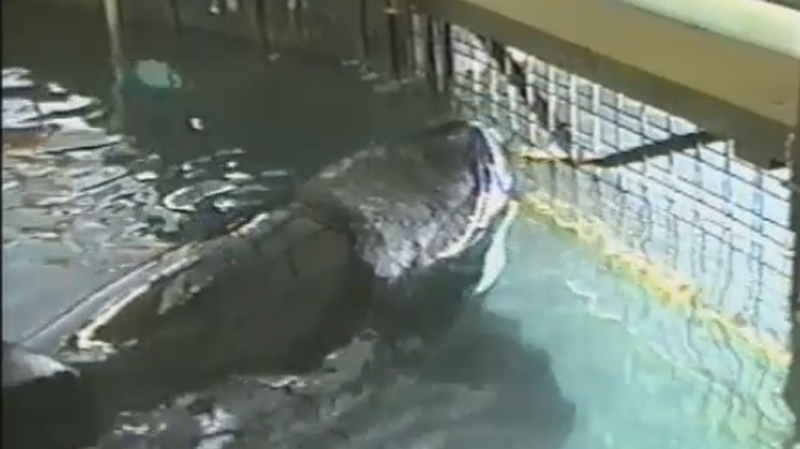
TOP Image: Tilikum in SeaLand of the Pacific Medical pool. From Russ Rector FOIA files via CTV.
A Tale of Two Whales, by Valerie Greene
Thirty years ago, SeaWorld was concerned for the well-being of a killer whale at another park whose health was at risk due to his deplorable conditions. They filed for an emergency permit to import the whale, named Tilikum, from Canada, and he went on to become one of the most prolific and profitable animals in history. Today, there’s a different killer whale at risk – this one just a few hours down the road from SeaWorld Orlando – but she’s much older and is tied in with the industry’s controversial origins, so the company is remaining silent.
The government chastises SeaWorld
In 1992, under section 109(h) (2) of the Marine Mammal Protection Act (MMPA), the National Marine Fisheries Service (NMFS) granted SeaWorld an emergency authorization to import the killer whale Tilikum from SeaLand of the Pacific in Victoria, BC, Canada to SeaWorld Orlando.
In a January 3, 1992 letter to Anne Terbrush, Chief of the Permits Division at the NMFS Office of Protected Resources, Brad Andrews, SeaWorld’s Vice President of Zoological Operations wrote:
“Prior to her delivery, Haida forced Tillikum and Nootka into the small medical pool. Tillikum and Nootka remained in the medical pool for three days under the direction and supervision of veterinary staff to allow mother/calf bonding to occur without interference. After three days, Nootka, described in the Application as sub-dominant to Haida, was released from the medical pool into the main pool which stimulated a high level of maternal protective activity by Haida. However, it appears for the time being that Nootka has been accepted by Haida in the main pool.
“Due to the potential harmful consequences of Tillikum being confined to the medical pool since December 24, veterinarians felt it necessary to open the doors from the medical pool to the main pool on December 31 in order to release him into the main pool. Since then, he has ventured into the main pool on seven occasions for a combined time of less than 60 seconds. Tillikum refuses to remain in the main pool, apparently due to the current dominance of the two females…
“…The management and health problems potentially associated with Tillikum staying in the medical pool are serious. The medical pool is 31 feet long, 23 feet wide, and 12 feet deep. Tillikum is 20 feet long. Confinement of Tillikum to the medical pool severely restricts his ability to exercise since the pool is only slightly larger than the whale itself.”
In its subsequent permit, NOAA states:
“It is our understanding that, based on medical tests of the killer whales held at SeaLand of the Pacific Ltd. in anticipation of Sea World’s permit application, both SeaLand and SeaWorld had at least two months advance knowledge of the imminent birth of at least one, and possibly two, killer whale calves.
“SeaLand is responsible for these animals and should have taken steps to ensure that arrangements were made to hold the adult male killer whale, ‘Tillikum,’ at or nearby the SeaLand facility or at another facility in Canada following such births. SeaWorld presumably has a significant interest in the well-being of these animals as well, and in the capacity of advising SeaLand on their care, should have taken such steps even if SeaLand had elected not to do so. Such temporary holding arrangements, whether they involved construction of temporary pens or other enclosures, should have been possible, at least for the few months necessary to consider and decide upon the permit application pending from Sea World for the import of these killer whales for public display. In this manner, the present need for an emergency import authorization could have been prevented. However, such reasonable and prudent precautionary steps necessary for the health and welfare of Tillikum were not taken by SeaLand or SeaWorld.”
[Blogmeister’s note: the permit and supporting documentation spell the whale’s name three different ways: Tillikum, Tilikum, and Tilicum.]
The other “T”
Fast forward to 2023. It’s been more than thirty years since Tilikum’s permit was granted and a decade since Blackfish was released. Yet, these days, SeaWorld wants little to do with rescuing a killer whale sitting in a crumbling, filthy puddle at one of the oldest marine mammal facilities in the world. The individuals in control of the killer whale, named Tokitae or Lolita, have not taken reasonable and prudent precautionary steps necessary for her health and well-being. Her situation was preventable.
A recently unearthed February 1, 2022 USDA inspection report documents that Tokitae’s tank failed inspection and violates subsection E of the Animal Welfare Act (AWA). The inspectors noted rust, flaking paint, disintegrating concrete, composite board, cracked plexiglass, and water leaks in the tank that’s been her home for more than fifty years. Beneath the whale stadium seating, USDA inspectors identified several areas where there is evidence of active leaks from the pool wall negatively impacting the structural integrity of the pool itself.
Contradicting decades of prior USDA reports, the inspectors also noted that the pool does not meet the minimum space requirements for a killer whale. The report states:
“Residing in a pool that does not provide adequate space is detrimental to the health and welfare of the animals contained therein. Marine mammals must be housed in primary enclosures that comply with the minimum space requirements prescribed by Subpart E of the AWA.”
Death becomes her
In a letter to NOAA on February 8, 2022, Charles Vinick and Jeff Foster of The Whale Sanctuary Project wrote:
“Following of the USDA inspection of the Miami Seaquarium in June 2021, and the subsequent USDA investigation which began in late 2021, it has come to light that there are a number of pressing concerns regarding Sk’aliCh’elh-tenaut/Tokitae/Lolita’s health and inadequacies with her pool which is likely to require significant repairs and modifications. While it’s critical that these repairs are made should a killer whale continue to be housed in the pool, the construction necessary may adversely impact the whale’s health and wellbeing should she remain in the pool during the process. Therefore, it is important that she be safely able to be moved as soon as possible, whether within the Miami Seaquarium or to another facility.”
Documents from a recent FOIA request show Miami Seaquarium’s veterinarian contacted one of NOAA’s veterinarians about necropsy protocols for Lolita on or before February 9, 2022, just a day after Vinick and Foster’s letter documenting the urgent need to remove her from the tank in order to conduct necessary repairs.
Vinick is a co-founder of Friends of Toki, tasked with overseeing the medical care and oversight of Tokitae for the past year. Under his direct supervision, this “critical” temporary relocation has yet to take place.
Fast swimming and high jumps
One of the reasons SeaWorld was granted an emergency permit for Tilikum was for the “purpose of providing medical treatment and care that is otherwise unavailable in Canada at this time.” On January 7, 1992, Seaworld’s Director of Veterinary Service (now retired) Dr. Jim McBain, who happens to now be one of Tokitae’s consulting veterinarians, wrote:
“Tilikum has been living virtually full-time in the small medical pool since the birth of the calf on December 24, 1991. This has resulted in a severe decrease in his level of activity. I am recommending that his food intake be temporarily decreased from his normal 200 pounds a day to 150 pounds. His appetite has been decreasing, so I recommend the decrease to minimize a possible complete shutdown of food intake.”
According to a USDA report for a veterinary inspection in June 2021:
“Toki, a 56-year-old whale, had been maintained on a fish diet of 160 pounds that was decreased to 130 pounds by the Training Curator…”
But there was a big difference between the decrease in food levels of Tilikum and Toki. While Tilikum’s diet was reduced due to a “severe decrease in his level of activity,” the USDA report points out that the Training Curator was incorporating “…fast swims and big jumps into training sessions and shows for this geriatric whale.” Tokitae was being fed less while her performance activity was being increased to levels she had never before experienced.
Tilikum arrived in Orlando under the emergency permit in January 1992, but was not placed on public view until the end of the year, when the park was issued an exhibition license. Right away, Tilikum became the park’s star attraction, performing in shows as “Shamu.” While in Orlando, he sired dozens of offspring and killed two humans (he had already killed a trainer in Canada prior to SeaWorld’s emergency permit).
SeaWorld knew how much of a risk Tilikum posed to his own trainers and still chose to seek an emergency import permit due to his substandard living conditions.
At least 30 years ago, SeaWorld cared about getting killer whales out of shitty situations.
The SeaWorld Effect
What’s happening now with Tokitae is the direct result of SeaWorld’s actions and culture. John Reilly, the former interim CEO of SeaWorld, was Palace Entertainment’s Chief Operating Officer when they sold the Miami Seaquarium to The Dolphin Company in early 2022. A former SeaWorld Orlando trainer was the Curator of Animal Training at the Seaquarium when the USDA issued a new license to The Dolphin Company. With this license, for the first time ever, the USDA excluded Tokitae’s 53-year old pool from government oversight. It’s not just management and trainers – two of Tokitae’s current consulting veterinarians come from SeaWorld – Jim McBain and Tom Reidarson.
Since Tilikum killed Dawn Brancheau, one of his trainers, at SeaWorld Orlando in 2010, and after the media blitz surrounding Blackfish a few years later, SeaWorld no longer wants to be associated with the species they argued were key to their business model. They don’t want the controversy. In 2016, the company voluntarily ended its killer whale breeding program with the intent of phasing out the species in its parks. Acquiring Toki comes with too much risk for a company that has publicly stated its intent to end its relationship with killer whales.
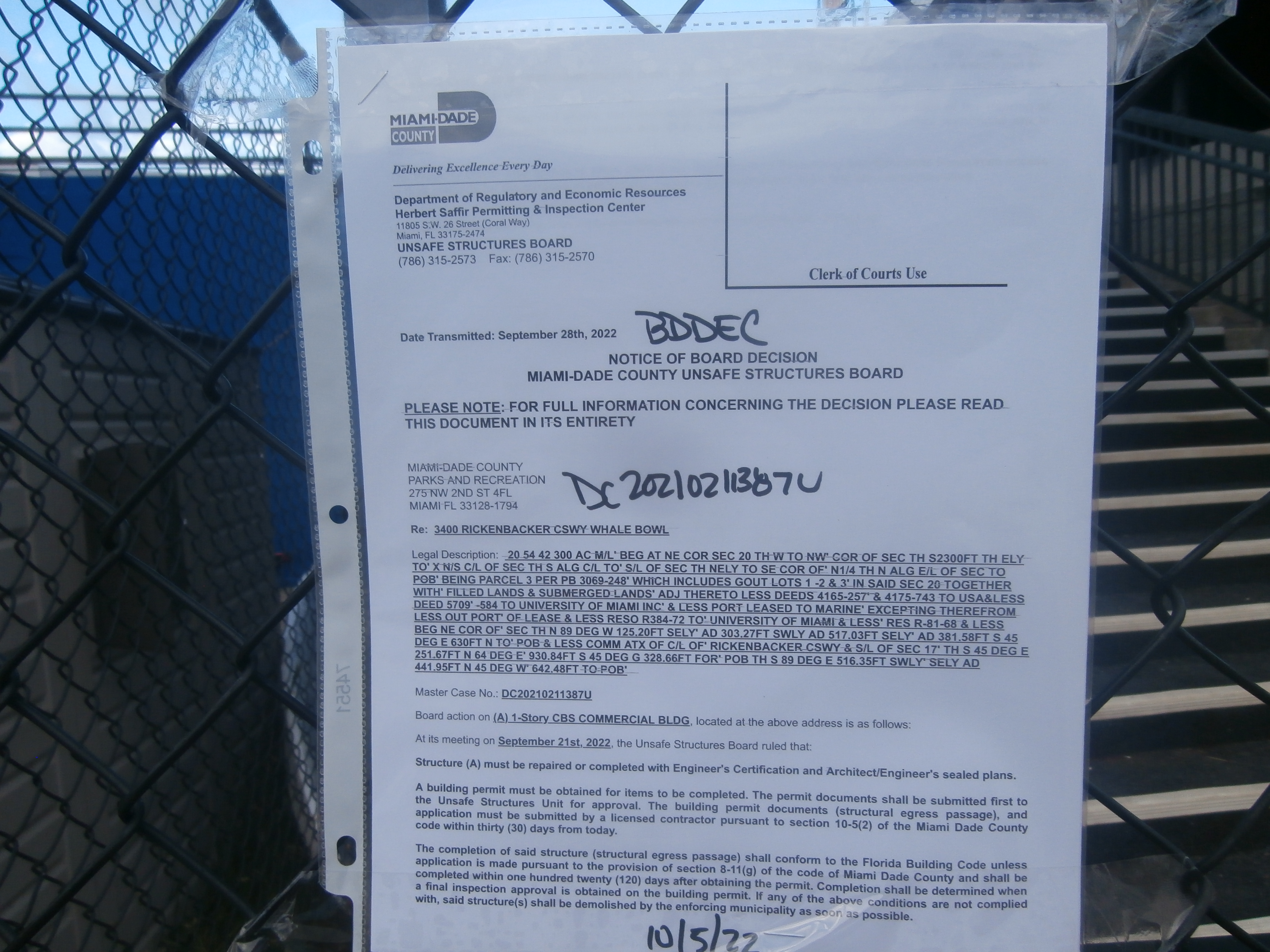
Just like NOAA rebuked SeaWorld for creating the emergency they needed a permit for in 1992, Miami Seaquarium and its partners have created the emergency circumstances for Toki. They were aware of the USDA’s inspection report condemning Tokitae’s pool in February 2022 and they had at least two years’ knowledge of Miami-Dade County condemning the stadium structure that surrounds it. The deadline to demolish the structure is fast approaching and prior arrangements, even if only temporary to conduct repairs as Vinick and Foster suggested, should have been made months, if not years ago.
Inclement weather
After Hurricane Irma hit Florida in 2017, there was concern that Tokitae hadn’t been moved to a safer location before landfall. Former SeaWorld killer whale trainer and star of Blackfish, Dr. Jeffrey Ventre, stated in Miami New Times:
“She [Tokitae] should have been moved, no questions asked. It was criminal animal negligence or animal cruelty…They could have put her on a stretcher, moved her to a truck, and then taken her to SeaWorld…It’s a bunker compared to the Miami Seaquarium.”
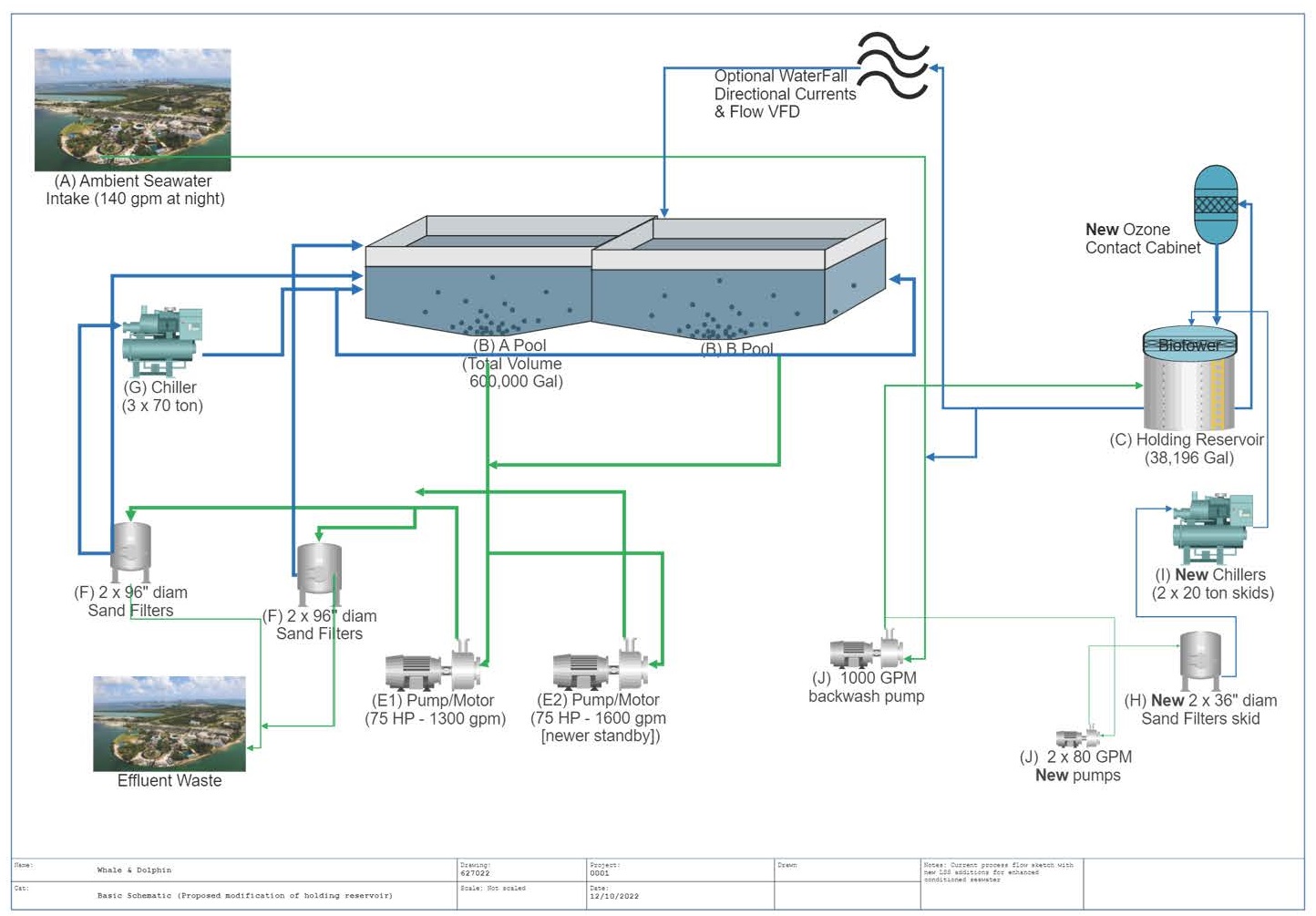
With hurricane season in Florida underway again, there is even greater need for an emergency permit to be issued for Tokitae’s relocation. Both the new chillers and ozone filtration system (supplied by Friends of Toki) are attached to the water reservoir that chills Tokitae’s pool. If this reservoir were compromised during a hurricane, it would adversely affect the water quality and temperature in the main pool. While The Dolphin Company may have a hurricane ride out team in place, there is little her trainers can do to protect her from potential injury caused by lack of maintenance to the structure.
Tilikum’s emergency permit was met with great public outcry during the mandatory public comment period and NOAA was well aware of the controversial nature of the permit request. In a memo to NMFS Director William Fox on authorizing the permit, Dr. Nancy Foster, the head of the Protected Resources division, wrote:
“Because of the substantial controversy associated with killer whales in captivity and, particularly, the controversy associated with this request by SeaWorld to import Tillikum on an emergency basis, I respectfully request your concurrence…”
Fox signed his concurrence.
Now it’s time for history to repeat itself. Tokitae needs an emergency permit out of the Miami Seaquarium – her welfare is more important than the controversy surrounding SeaWorld.
Wasting away
During the public comment period on Tilikum’s permit, attorney Roger Galvin wrote on behalf of Sea Shepherd Conservation Society:
“If the emergency request is granted, these and the other points will form the framework of a legal challenge, but the damage to this orca’s [Tilikum’s] well-being would have already been realized.”
As far as Tokitae’s story, we can wait for hurricane season to end, or the legal process to play out, or for a sea pen relocation, all of which add unnecessary time to the emergency that we, the industry, have created. She’s been sitting in that shit hole for far too long, and to paraphrase Attorney Galvin, the damage to this orca’s well-being has already been realized.
The industry tells us that these animals are ambassadors for their wild counterparts. Those opposed tell us they’re money making machines. Both sides are right, in a way, but stuck in the middle are the animals, who end up as commodities. Tilikum’s life was more than that. And so is Tokitae’s.
Stop wasting time and wasting Tokitae’s life. Get her out.


Was Sea World’s motivation to acquire Tillikum really coming from a place of caring about removing orcas from shitty situations? Given the population at the time, it really looked more like a need to acquire a breeding male.
That said, from all the information presented here and elsewhere, it doesn’t look like it would take much to completely destroy the Seaquarium’s stadium and put the lives of all their cetaceans, as well as staff, at risk. If they can’t relocate their animals quickly, they could at least tear down the stadium structure itself just for the additional risk it poses by flying apart in a storm.