
by guest contributor Valerie Greene of The Flip
The story of Miami’s lone killer whale leaving her tank does not begin with the founding of Friends of Toki. It does not begin with the Miami Seaquarium changing ownership. We can trace it back to June 2021, when a condominium collapse in Surfside, Florida killed 98 people. Three years before that, in 2018, a consultant urged managers to repair cracked columns and crumbling concrete in the complex. The repairs were about to begin, and then the building collapsed. Just last month, federal investigators released preliminary findings that determined a “severe strength deficiency” in the pool deck contributed to the building’s collapse, which made international news.
The 2018 report warning of “major structural damage” wasn’t initially disclosed. It detailed persistent water leaks and years of exposure to the corrosive salt air along the South Florida coast contributing to the damage.
The collapse in Surfside led to Miami-Dade county completing emergency inspections on buildings that were more than 40 years old at the behest of Mayor Daniella Levine Cava. After inspecting the Miami Seaquarium, the county issued orders to “repair or demolish” the dolphin stadium, sea lion stadium and the Whale Bowl, home to Tokitae (Toki), the only remaining captive member of the endangered Southern Resident Killer Whale population.
A recent Freedom of Information Act (FOIA) request unearthed a never before published USDA inspection that failed Tokitae’s pool. The USDA’s Animal and Plant Health Inspection Service (APHIS) conducted a pre-licensing inspection for issuance of the Miami Seaquarium’s license to new owners The Dolphin Company on February 1, 2022. For the first time in an official inspection, APHIS noted that the pool did not meet the federally mandated minimum space requirements for a killer whale.
Inspectors also noted rust, flaking paint, disintegrating concrete, composite board, cracked plexiglass, and water leaks in the pool that has been Toki’s only home for more than 50 years. Beneath the whale stadium seating, federal inspectors identified several areas where there is evidence of active leaks from the pool wall negatively impacting the structural integrity of the pool itself. Federal inspectors gave the owners 60 days to fix the issues at the Whale Bowl.
Something Smells Fishy
Because of the extent of damage and the requirement to bring the tank’s dimensions up to code, the only solutions would be to temporarily remove Toki from the tank while the necessary changes were made or to move her on a more permanent basis to another location. Just seven days after federal inspectors condemned her pool, Charles Vinick and Jeff Foster of the Whale Sanctuary Project wrote to NOAA urging Tokitae be relocated on a temporary basis “as soon as possible, whether within the Miami Seaquarium or to another facility” so repairs could be made to the pool.
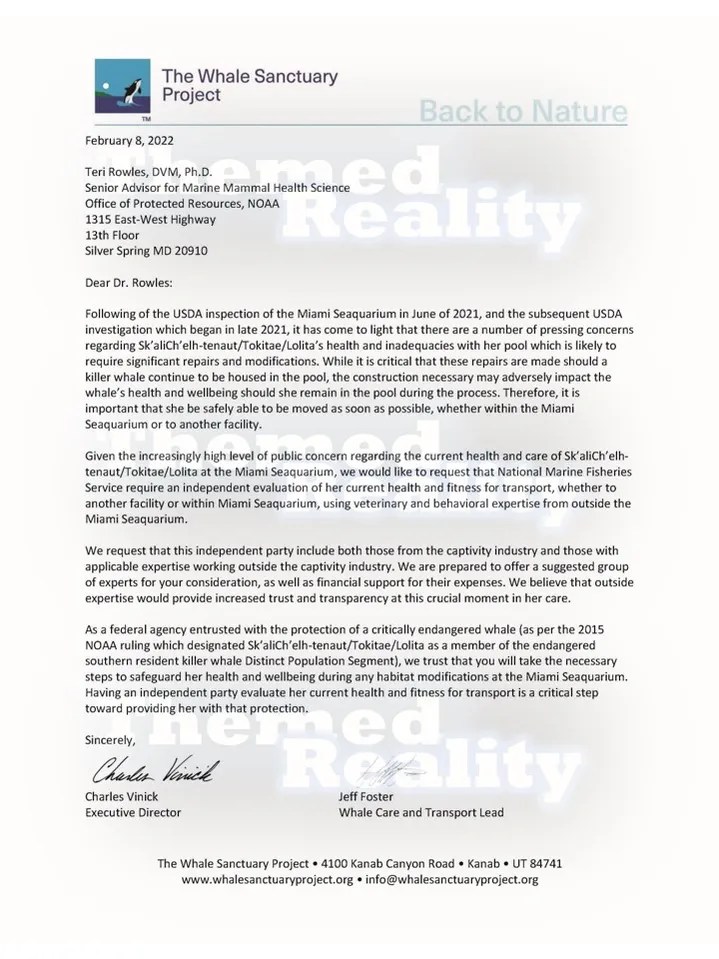
Whale Sanctuary Project letter via NOAA FOIA request.
A day after Vinick’s letter, on Feb 9, 2022,Tokitae’s veterinarian, NOAA staff began compiling killer whale necropsy protocols for the Seaquarium’s staff veterinarian, Dr. Shelby Loos.
On Feb 22, The Dolphin Company informed the USDA that it would not place Toki on display. A second inspection was made that day, excluding the Whale Bowl, and paving the way for a license. The following day, February 23, Friends of Toki was incorporated with Florida hotel developer Pritam Singh and Charles Vinick at the helm. On March 3, the USDA granted The Dolphin Company an exhibitor’s license for the Miami Seaquarium, excluding the Whale Bowl and the animals within it, as long as they are not on display. As a consequence, Toki and her Pacific white-sided dolphin companion, Lii, lost all federal protections under the Animal Welfare Act.
Then came the big flashy announcement of Tokitae’s sea pen retirement and Jim Irsay’s involvement.
The Miami Seaquarium needs to be demolished. Eduardo Albor, the owner of The Dolphin Company told journalist Louis Aguirre it’s “bulldozer time” a month ago. Charles Vinick knows this. Pritam Singh knows this. Miami-Dade County knows this. The mayor knows. The USDA knows.
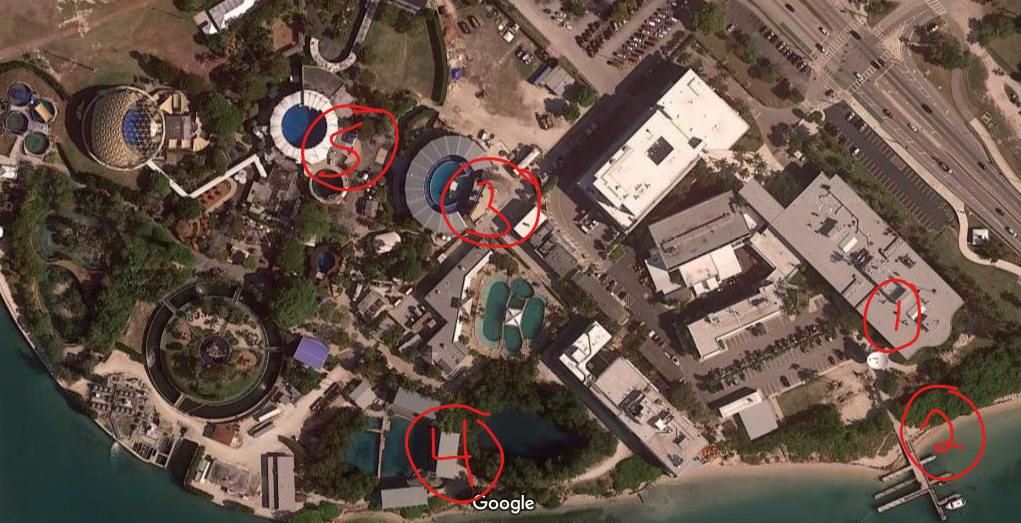
At the end of June 2023, Vinick announced on Toki TV, a weekly streamed program dedicated to returning Toki to her home waters in Washington state, that there is a hurricane plan in place based on Singh’s expertise as a hotel developer in the Florida Keys. Vinick stated that Tokitae’s trainers would stay with her in the event of a hurricane. He mentioned the only other, and less desirable, option was moving her to another facility, alluding that that other facility might be SeaWorld. If Vinick waits for a hurricane to hit, it’s too late. A move like this needs to be done well ahead of impending storms.
Vinick would have you believe killer whale transports between facilities are routine. The last ones outside of Russia and China were in 2012, when SeaWorld removed Ikaika from inhumane conditions at Marineland and transported him to their California park, and in 2013, when Shouka, unable to coexist with companion dolphins, was moved in the middle of the night from the San Francisco Bay Area to the same park in San Diego. Killer whale transports are no longer routine and there are a small handful of people who could get the job done safely. Those people are SeaWorld or former SeaWorld experts. The last time Vinick himself transported a killer whale was with Keiko in 1998 when he was moved from his intermediate pool in Oregon to a sea pen in Iceland, and he had former SeaWorld trainers and whale wranglers on his staff.
Vinick himself established the protocol of an intermediate rehabilitation pool for Keiko–why isn’t Tokitae given the same opportunity?
Who you gonna call?
I used to appear on a Saturday morning television show called SeaRescue that documented various animal rescues that SeaWorld was involved in. I felt privileged to be among the ranks of experts consulted in the show’s development and to be a small part of the important work SeaWorld was doing. Most of the rescues SeaWorld takes on are a result of human failures–humpback entanglements, dolphins swallowing plastic bags, sea lions with trash around their necks–Tokitae is in her situation as a result of human failure and she needs to be rescued.
The Miami Seaquarium and its partners have demonstrated a serious lack of expertise when it comes to caring for Tokitae and the other animals that are housed there. The last several years of USDA reports cite numerous violations of the Animal Welfare Act. The USDA has condemned Tokitae’s pool and the county has condemned the stadium surrounding it. It’s time to call this situation what it is–a rescue. Tokitae needs to be rescued.
Love them or hate them, SeaWorld and its former staff are the best when it comes to animal rescue. Friends of Toki knows this – two of Toki’s consulting veterinarians, Jim McBain and Tom Reidarson, and Jeff Foster, leader of her Enrichment and Care Team, are former SeaWorld employees. Killer whale transports are so unique that many of SeaWorld’s current staff have not been present for a move. SeaWorld experts, both past and present, need to be involved with Tokitae’s immediate emergency rescue. The former Seaquarium trainers that have had years of reinforcement history with Tokitae should also be present. It’s appropriate that the humans with expertise, who really know Tokitae the individual, be included.

On Toki TV, Vinick mocked the chain link fence prohibiting access to the grandstands. He shared that the most important hurricane precaution would be to remove this fence. The reality of a hurricane situation is that that’s the least of his problems. The shorings that currently reinforce the stadium so it doesn’t have to be demolished would have to be removed prior to a Force 2 or higher hurricane which would then render the stadium even less safe and illegal to access once removed. As of April this year, the shorings were shoddily constructed and not up to Miami-Dade County and State of Florida building codes.
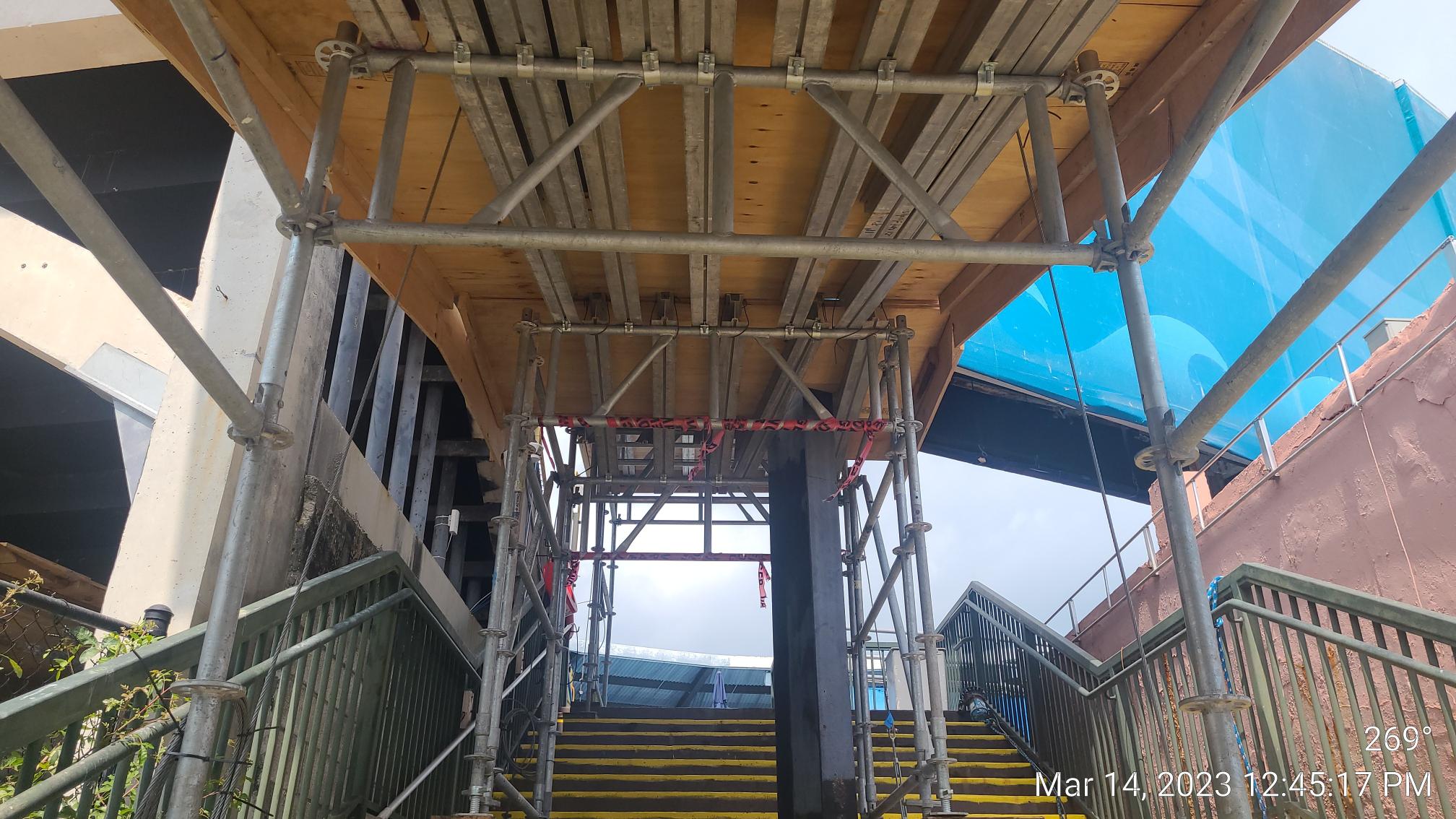
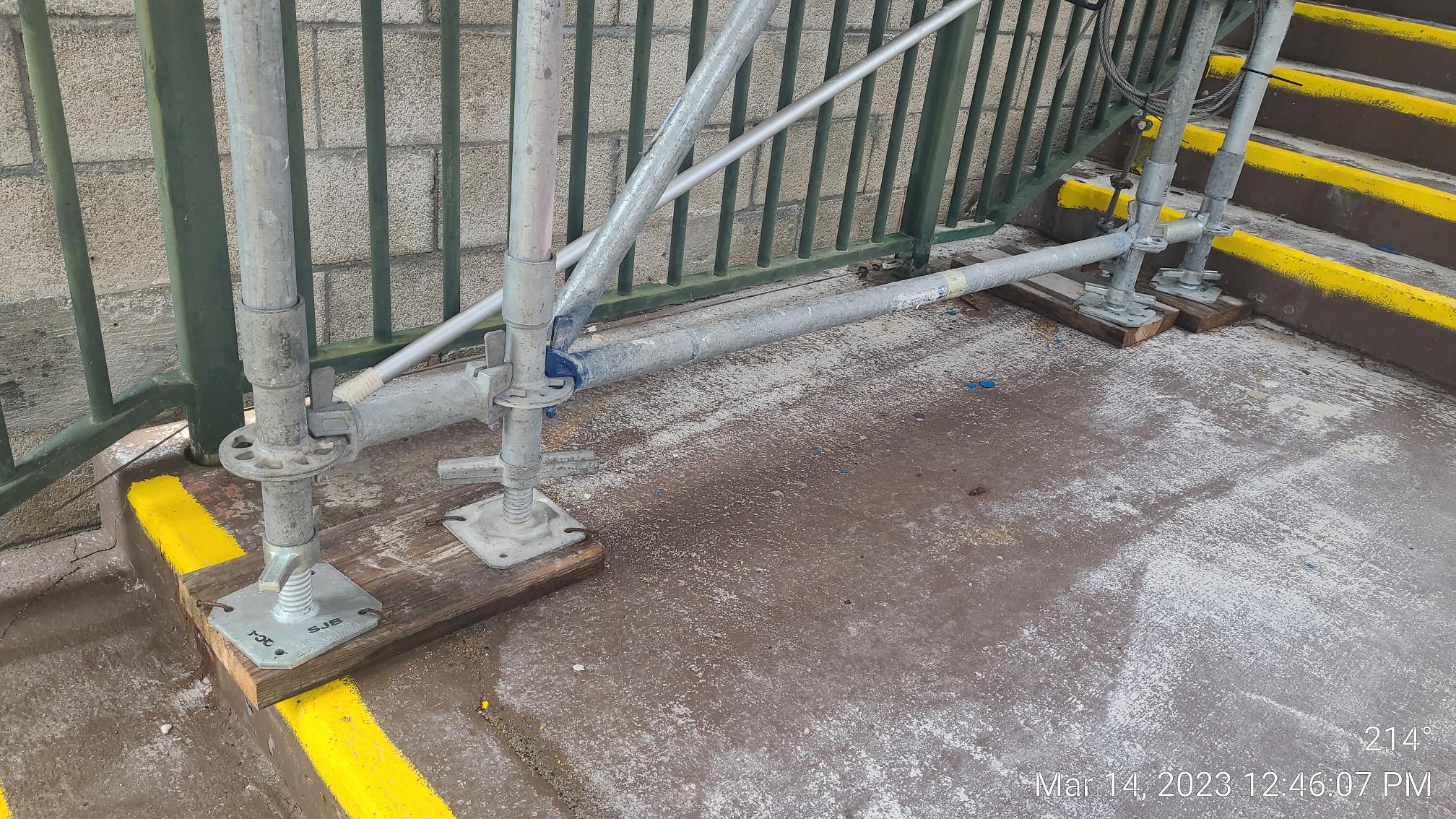
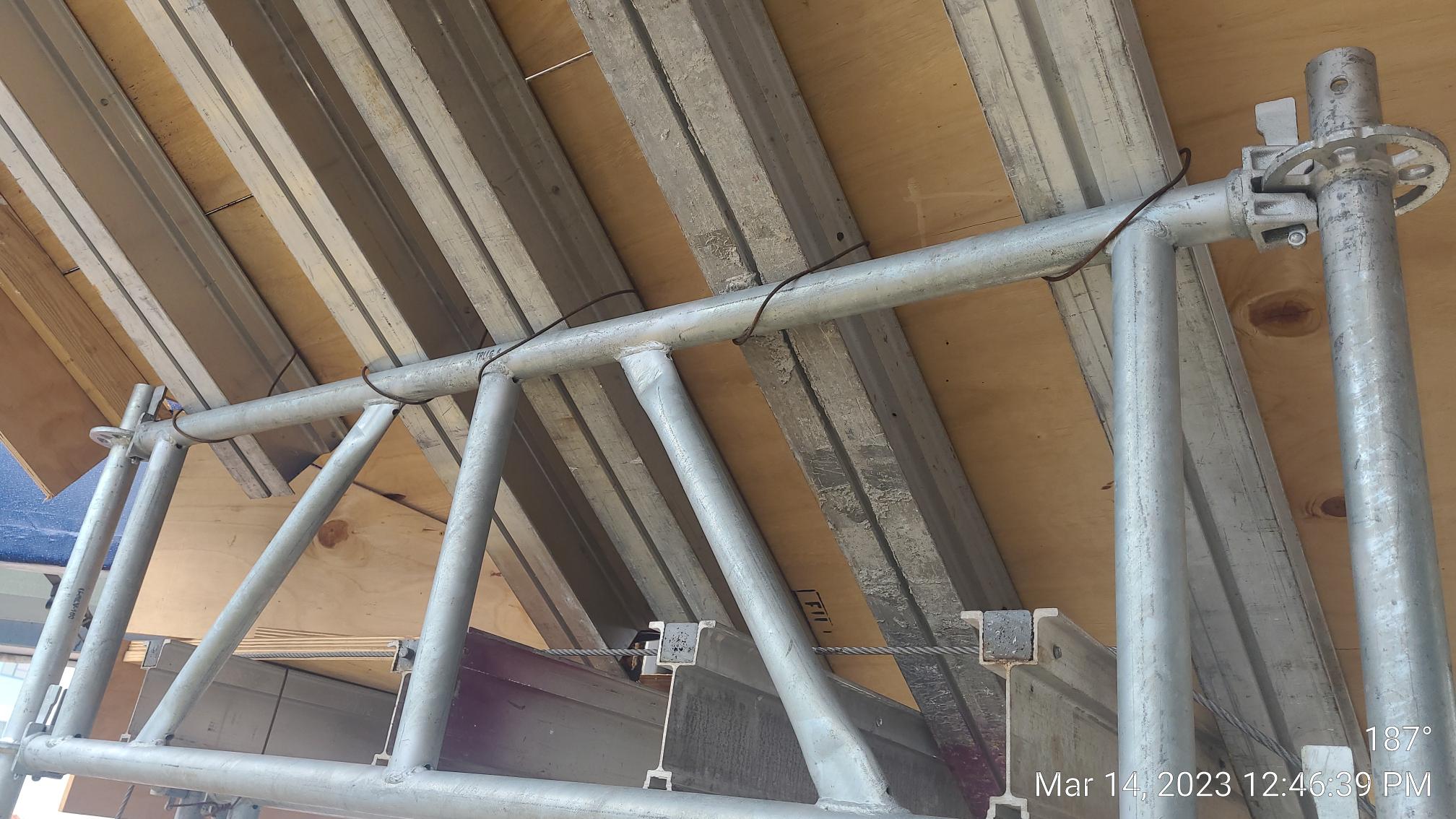
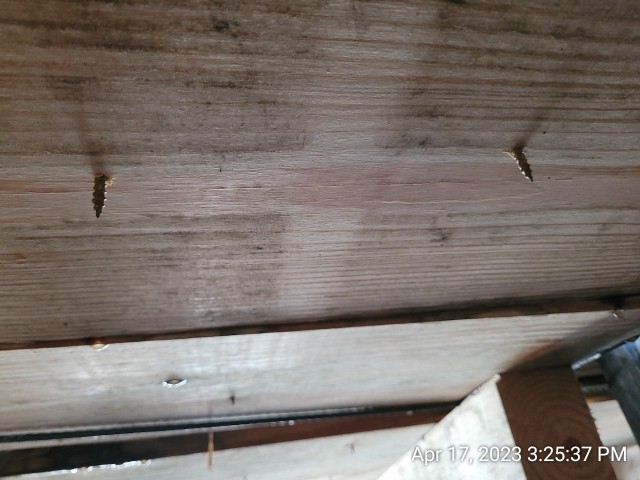
Images: Miami-Dade County Unsafe Structures Board case no. 20210211387.
Hurricane or not, Tokitae is still sitting in a crumbling, filthy, leaking tank that’s been condemned by the federal government, surrounded by a dilapidated stadium condemned by the County. If Key Biscayne and Virginia Key are evacuated like they were during Hurricane Irma in 2017, Tokitae will be left to weather the storm alone….again.
Deja vu but worse
“Do the best you can until you know better. Then when you know better, do better.”-Maya Angelou
The Miami Seaquarium has never been a hospitable place for its inhabitants during hurricanes–there’s been plenty of documentation of major animal issues during and after storms – including electrocution and water system failures resulting in the deaths of animals at the park. Because of concerns, there was great public outrage, and well justified, after Tokitae was left to shelter in place when Irma hit Virginia Key in 2017. Because of the mandatory evacuations, trainers were not allowed to stay with her. a
After Hurricane Irma, Dr. Naomi Rose, marine mammal scientist for the Animal Welfare Institute, wrote on September 7, 2017, “The only thing I see as a realistic possibility (rather than a fantasy) that might be better for her would be transporting her to SeaWorld, but…she has not been prepared for a transport.”
Miami Beach mayor Philip Levine passed a resolution to free Tokitae in October of 2017. He wrote: “During Hurricane Irma, she was left in harm’s way, her tank uncovered and exposed to potential 130+ mph hurricane-force winds and structural collapse (among other dangers). If Irma had traveled along its expected forecast along the eastern Florida coast, the resulting damage could have easily led to her death.”
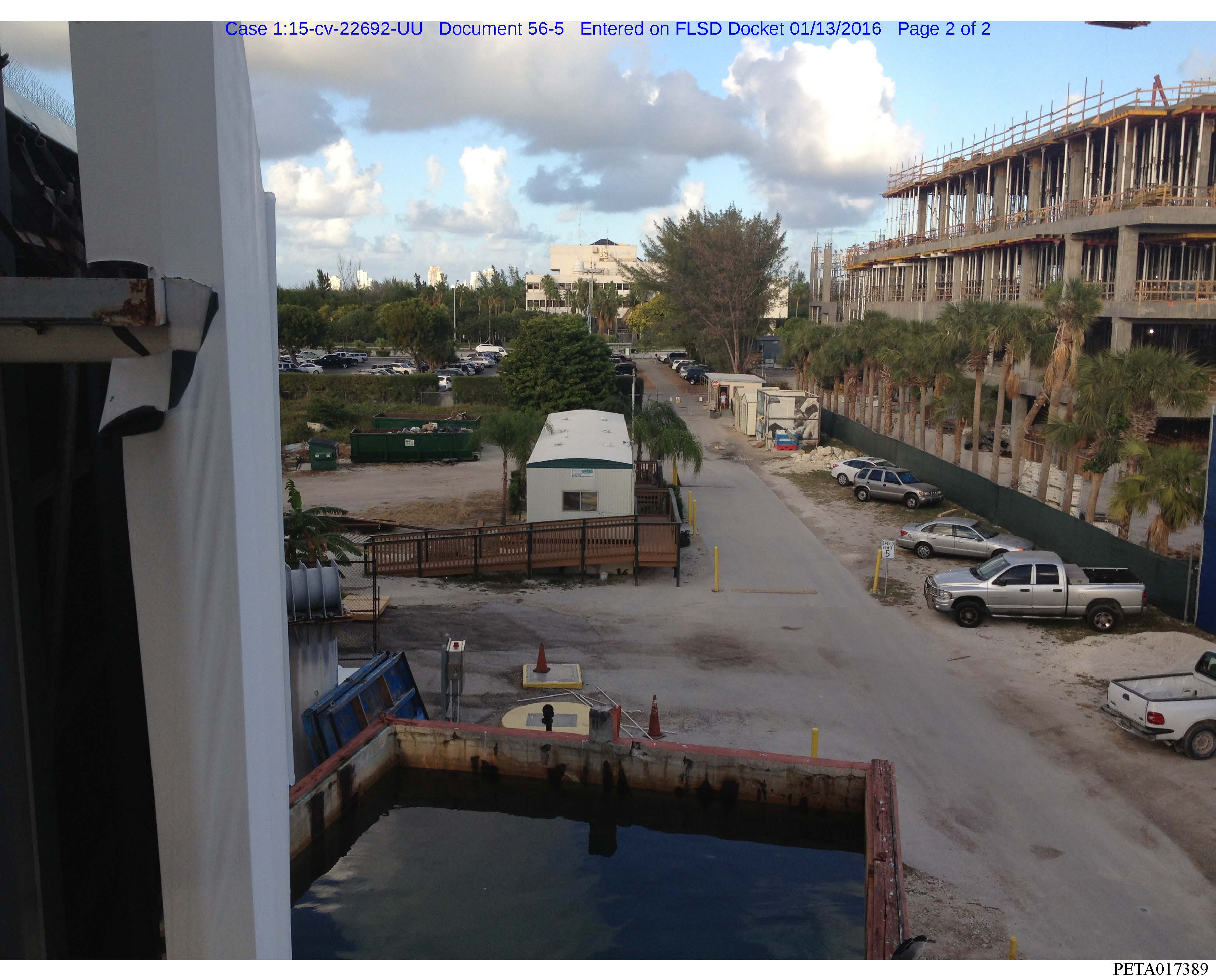
Ironically, the structure that protected Tokitae during Hurricane Irma was the recently constructed building housing the hurricane laboratory at the University of Miami’s Rosenstiel School of Marine and Atmospheric Science. Constructed in 2012, and opening in 2014, this research beuilding acted as a giant shield for the Whale Bowl during Hurricane Irma. Hurricanes by their nature are unpredictable, and only five years after Irma, the Miami Seaquarium is in far worse condition–with three of the four show stadiums now condemned by the county.
In order for Tokitae to be moved to another facility, or sea pen, she needs to be trained to enter a stretcher. Until recent weeks, the last time Tokitae saw a killer whale stretcher was when she arrived at the Miami Seaquarium in 1970 after she’d been brutally taken from her family in the wild, and again the following year, when she was moved into the Whale Bowl. In order for her to be trained on the stretcher, the water in B pool has to be lowered–an event that’s only occurred twice in the last 15 years (in 2011 and 2022) for medical procedures, and intermediately for training, though not for a number of years. The stretcher itself and the lowering of the water are extremely stressful for Tokitae – a fact that I agree with Orca Network’s Howard Garrett about – if she remembers the trauma of being ripped from her family in 1970, being placed in a stretcher again is certain to be stressful, so bring in the experts in behavior and experts in Tokitae herself to help with the process.
Colorado State University (CSU) has predicted a more active hurricane season this year due to the boiling hot Atlantic ocean. NOAA predicted a 40% chance of a near-normal hurricane season, a 30% chance of an above-average season and a 30% chance of a below-normal season. NOAA predicts that 12 to 17 named storms will form, of which five to nine will become hurricanes. CSU’s latest prediction (updated July 6, 2023) calls for 18 named storms, 9 of which could strengthen to hurricanes.
The experts want to help. Get her moved to safety. Involve them. We all want her move to be a success.
Crumbling concrete and water leaks led to the tragedy in Surfside. Let’s not have history repeat itself. We know better. Move Tokitae as soon as possible. I know that’s not the happy ending you were sold on – I get it. But it’s better than waiting for a hurricane to kill her. Or euthanasia.
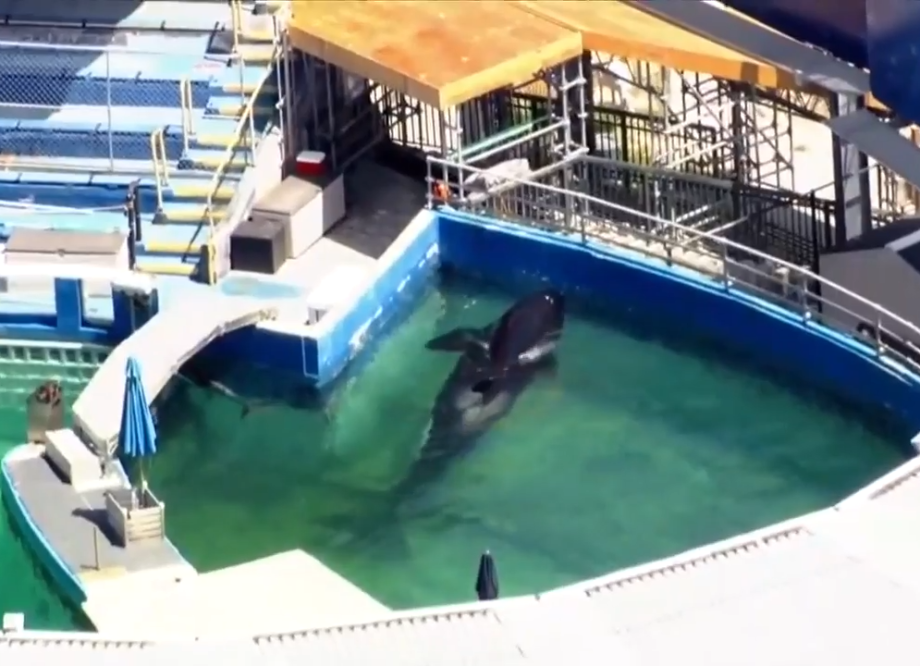
TOP IMAGE: Screenshot from a March 28, 2023 WSVN report showing Tokitae in B pool, and fencing and shorings mandated for staff safety by Miami-Dade County Unsafe Structures Board. Full report here.

