
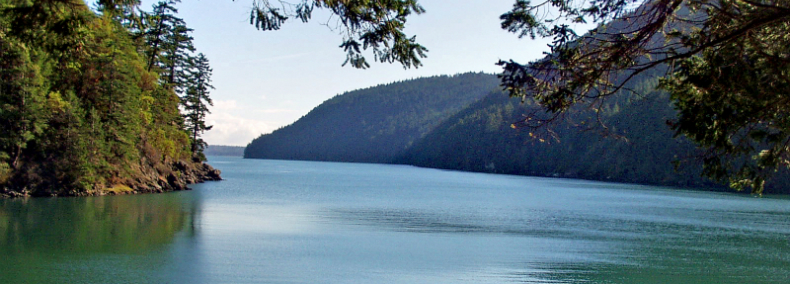
Before Kiska died, before anyone even heard the name “Port Hilford,” before COVID, there was a whale sanctuary proposed for Washington State. An online debate ensued between Orca Conservancy and The Whale Sanctuary Project. We don’t know if their stances have changed. We haven’t asked. Because for this post, we’re taking the time machine back to 2019.
July 21 – Orca Conservancy
Orca Conservancy attended the meeting held on Thursday, July 18, at the Great Hall at Green Lake LLC; 7220 Woodlawn Ave NE. First, it needs to be said that our decision does not change the respect and long-term friendships we have with Lori, Jeff, and the entire Whale Sanctuary Project team.
Orca Conservancy supports having a facility for rescue, rehabilitation, and release of killer whales. However, we have serious concerns over the value of a permanent holding facility, and prefer to focus our actions on efforts that will make a long lasting difference in the lives of wild whales — specifically, the endangered Southern Resident killer whale (SRKW) and the threatened Northern Resident killer whale (NRKW) populations — than moving a small number of captive whales to a facility that trades off increased space for more limited social lives.
As an internal background for the above, the Whale Sanctuary Project (WSP) design would have been an appropriate facility for the rehabilitation of A73 (Springer). On May 24th 2002 – an advisory panel of whale experts (including WA State, Canadian officials, and veterinary and killer whale experts ) concluded that the best course of action was to rescue and relocate, BEFORE the actual stranding took place. With support from the Orphan Orca Fund (a group or seven NGOs) and the Prescott Stranding Grant Program, NOAA announced plans to rescue, rehabilitate and return the orphaned killer whale, A73 (Springer), to its pod, Thereby, making A73 (Springer) the first wild killer whale to be captured and successfully reintroduced to her pod.
The WSP budget is $15 million for construction and $2 million per year for operation of a facility for 6-8 whales. WSP plans to deny family life to a species remarkable for the central role family plays in their lives. They also plan to keep males separate from females, limiting the richness of non-kin social interactions. Frankly, the $15 million estimated for construction, we feel, would be better spent on salmon restoration projects and mitigation efforts to increase both SRKW and NRKW growth and recovery.
The WSP plan lacks capacity to protect the whales from oil and sewage spills. One potential site is likely to have stressful levels of noise a large percentage of the time (and that assumes no one goes to their site to whale watch). We have concerns about whether their facilities will be storm-proof, but they do seem to have the competence to design a storm-proof facility, assuming they have adequate funding. Earthquake resistance is something they did not address.
The WSP came across as naive regarding potential for disease transmission and escape. They did not address waste management, although since they propose using the collapsed Cypress Island fish farm site, they should be aware of the issue. Orca Conservancy was deeply involved with the success of the Our Sound Our Salmon coalition which worked tirelessly in phasing out Atlantic salmon net pens in Washington state. To place another facility within Cypress Island comes across as being counter-productive in not only protecting SRKW critical habitat but Washington waterways as well.
The Whale Sanctuary Project (WSP) admittedly anticipates a rapid growth of the aquarium industry in China. By putting whales in sanctuaries, that would mean China will use wild captures to fill their aquariums rather than transferring in captive born whales. The negative impact of wild captures far exceeds the negative impact of ongoing captivity for whales that have already acclimated to it.
On a positive note, the WSP is being completely transparent that this is not a plan to put whales in the wild. The WSP acknowledges that captive whales are likely to need ongoing medical treatment. WSP conceded that captive born whales will lack the skills to survive in the wild, they also admitted that no whale owners have agreed to work with them, so they want to pursue a “build it and they will come” strategy, meaning their investment may never be used.
Finally, there are policy decisions that would affect the value of the project. Historically, National Marine Fisheries Service (NMFS), has only allowed intervention with Southern Residents once they’re on the beach. (Northern Resident, A73 (Springer) has been the only exception to date). This would mean the WSP facility would only be used for a couple months every 10-20 years. However, if NMFS allows intervention with free swimming whales, it would be used much more frequently. For that intervention to be meaningful, the overall habitat needs to be improved enough for the population to grow.
Therefore, based on the information most recently being discussed, Orca Conservancy does not support the current WSP plan.
July 24 – Whale Sanctuary Project
The Orca Conservancy has made a number of false statements about the work of the Whale Sanctuary Project that we wish to correct.
** First, the Orca Conservancy claims that moving orcas from concrete tanks to a large sanctuary would involve trading off “increased space for more limited social lives.”
This is an unfounded assumption that demonstrates little understanding of what orcas endure in entertainment parks and what an authentic sanctuary is. Orcas in entertainment parks already have “limited social lives.” They are forced into a confined space to interact with other orcas who are not typically members of their pod. They are bred by artificial insemination. Bonded individuals, such as mothers and calves, are regularly separated. The whales in the tanks are an artificial collection of individuals forced to endure their situation without any choice in the matter. Vivid examples of the poor social lives of orcas in tanks include Morgan, the young female at Loro Parque, who literally had to jump out of the water onto the concrete to escape aggressive males, and Tilikum, who was kept alone in a small holding tank at SeaWorld Orlando until he died a few years ago.
An authentic sanctuary provides the space for the orcas to form more natural social groups and to disperse when the whales decide to do that. If separations are needed, there is more than enough space for everyone and more than enough to honor each individual’s desires. And while breeding will not take place (because we do not want to perpetuate any form of captivity), the whales will be on birth control and still allowed the freedom to socialize in any way they choose.
** The Orca Conservancy claims that we are trying to “deny family life” in a sanctuary and to “limit the richness” of non-kin relationships.
Frankly, we find this claim to be incredible in view of the fact that there is no “family life” or “richness” in concrete tanks to begin with. At our sanctuary, we will be setting out to do the exact opposite: males and females will not necessarily be separated, and bonded individuals will reside together. Every attempt will be made to promote the formation of social groups within the sanctuary while respecting the personal space and autonomy of each whale.
** The Orca Conservancy states that we “lack the capacity” to deal with oil spills and similar events.
Not so. We develop contingency plans for such situations based on site specifics and will continue to develop ways to mitigate such risks. Ironically, if there is an oil spill or some kind of natural disaster, the sanctuary facility will likely be the only way to provide assistance to free-ranging orcas and other cetaceans, as we will have the capacity to house sick or injured whales in isolation.
Instead of making assumptions about our team’s preparedness, we invite the Orca Conservancy to educate themselves by discussing with us how we plan to deal with a range of situations that we continue to work through with a team of global experts.
**The Orca Conservancy says we are “naïve” about disease transmission and the possibility of escape.
Again, we are surprised to hear this since we outlined our sanctuary construction and approach to disease transmission at the community meeting and will reiterate it here: We continue to consult with a panel of marine mammal veterinarians and scientists from around the world and we review fundamental papers on modes of disease transmission. None of the panel experts have concluded that there is risk of unmitigable disease transmission. We take pathogen transmission very seriously and have extensive plans for a scientific and empirical approach to dealing with that issue as we go forward.
As for “escape,” the whales would have to do something they’ve never done before anywhere: jump not one but two nets and slip out of the area without anyone seeing them. Given that orcas do not jump nets and given that we will have 24-hour surveillance on the whales, this is a very remote possibility at best.
Also, the Orca Conservancy is incorrect in claiming that we are not addressing waste management at our candidate sites. Sites of interest have good flushing and water flow so that waste does not accumulate. There will be no dumping of antibiotics or food into the water directly. The whales will be fed fish directly into their mouths, as they have been throughout their lives. There will be no accumulation of waste. A whale sanctuary is entirely different from a fish farm.
Moreover, we will house 6-8 orcas in a 60-to-100-acre space, and we have chosen those parameters specifically because we have considered the carrying capacity of candidate sites and will not exceed it. We will continue to assess the ecological impact of the sanctuary once a final site has been selected with thorough hydrological assessment, and any adjustments to the carrying capacity based on data collected will be made.
** The Orca Conservancy has come to the unfounded conclusion that providing sanctuaries for currently captive orcas will somehow promote the capture of whales for Chinese entertainment parks.
We are truly astonished by this strange and illogical assumption. The Orca Conservancy seems to be claiming that if we left orcas in their concrete tanks, China would resort to transferring them into their 79-plus entertainment parks instead of capturing whales from the ocean. The evidence proves the exact opposite. China continues to promote the capture and confinement of wild-caught whales of all kinds. The Russian “whale jail” situation is an example of the fact that despite there being orcas and belugas already in captivity, Chinese entertainment parks have been commissioning Russian companies to capture and sequester close to 100 belugas and orcas for transfer to their facilities. (Readers can learn much more about our team’s involvement in this issue on our website). There is absolutely no evidence that retiring captive orcas to sanctuary would promote wild capture of orcas.
** Finally, the Orca Conservancy suggests that orcas at entertainment parks are “acclimated” to their lives in tanks.
There is a large body of empirical scientific evidence demonstrating that orcas in tanks live short, unhealthy and abnormal lives and that they are far from adapted or acclimated. They cannot thrive in tanks. Quite the opposite: Their life expectancy is less than half of that in a free-ranging environment. And they demonstrate behavioral abnormalities such as grinding their teeth down to the gum, poor maternal skills, hyper-aggressive encounters between whales and between whales and humans, opportunistic infection rates rivaling that in unhealthy free-ranging populations, and a range of other devastating impacts of tank-living on their brains, behavior and overall well-being.
We invite the Orca Conservancy to learn more about the plight of orcas living in concrete tanks and the features of an authentic sanctuary for whales by open discussion with our team instead of promoting falsehoods and unfounded assumptions.
Thank you.
Dr. Lori Marino, President, the Whale Sanctuary Project.
July 29 – Orca Conservancy
Regarding Orca Conservancy’s statement opposing the ‘current’ plan from the Whale Sanctuary Project which was discussed in town meetings over the past week in Washington. Orca Conservancy stands by our statement.
Orca Conservancy apologizes for not responding to the many comments on our stance sooner and we anticipate your patience and understanding as we were all living our lives over the past weekend. Living life in search of our passions is what keeps the organization grounded and ever present in the reality of the world in which we live.
Orca Conservancy was very dismayed with a few comments we feel are severely misguided and overtly personal attacks. Therefore, instead of responding to ALL the comments separately, we felt it would be easier to start a new thread regarding our stance on the Whale Sanctuary Projects (WSP) plan on possibly creating a permanent seaside sanctuary for orcas in the PNW.
Orca Conservancy fully supported having a facility for rescue, rehabilitation, and release of Southern Resident killer whales as long as we all continued to work towards restoring salmon habitat, removing harmful toxins, mitigating noise and the potential of an oil spill.
However, Orca Conservancy has serious concerns over the value of a permanent holding facility and will continue to focus our actions on efforts which will make a long lasting difference in the lives of wild whales — specifically, the endangered Southern Resident killer whale (SRKW) and the threatened Northern Resident killer whale (NRKW) populations.
To our members that actually followed the comments on our post: Orca Conservancy’s stance on the Whale Sanctuary Project creating a permanent seaside sanctuary for orcas in the PNW… we want to be ‘crystal’ clear that we only banned TWO individuals from the discussion. One temporarily and one permanently. One was banned temporarily, because they spent the entire day essentially turning our stance into arguing what fit their ideology. While we were trying to remain neutral, it was apparent that a time-out was needed. Furthermore, since we felt this individuals’ heart was in the right place, we unbanned them the next day and the comments are visible to anyone that wants to read them. The second individual was banned because they had absolutely nothing to offer but anger and projection. Since this individual actually took to projecting their anger to the OC boards personal pages; they will remain banned until further notice.
Apparently, Orca Conservancy has quite different view on the word ‘debate’ and therefore will continue to reserve the right to remove, delete, hide, and ban any and all comments that do not work towards finding a collaborative solution. If that does not fit into how others may conduct their page(s), business, etc., please feel free to unlike and/or stop following our page, as we do not have time to waste on petty differences that do not support orca recovery. That being said, we are very confident that our followers are more concerned with our work, and more importantly, how they can continue helping by making changes in their daily lives in assisting with the recovery of the critically endangered Southern Resident killer whale population.
While our mission statement clearly states that we are committed to the welfare of all whales and dolphins, and is an authoritative source for information on captive cetaceans and on-going studies on the feasibility of returning these remarkable animals to the wild … that does NOT mean we are haphazardly required to accept a plan just because other like-minded individuals and organizations do.
The mere fact that our stance went viral tells us many, many other individuals and organizations are feeling the same way we do. Meaning… there are many questions that the WSP has yet to acknowledge; let alone answer. In fact, the lack of transparency from the WSP is hurting the cause because many questions being asked remain unanswered.
Instead, the WSP flippantly directs questions and concerns to the WSP website where, again, many of the questions being asked are not provided. Additionally, while having big names within an organization is impressive; it doesn’t mean squat if the organization is unable to absorb constructive criticism from other organizations who are more than willing to jump onboard IF they are assured of the project’s success.
At the end of the day, having differences of opinions should have opened the door for all of us to work towards solving issues and creating a better plan. Instead we feel the WSP was caught with their pants down and publicly ostracized Orca Conservancy for not being a collaborative supporter because we chose to address our concerns in a public forum.
Finally, Orca Conservancy has never said we do not support the WSP. Instead, our stance clearly states: based on the information most recently being discussed, Orca Conservancy does not support the current WSP plan.
TOP IMAGE: Cypress Island, courtesy Washington state Department of Natural Resources

