
The Miami Herald has been on a blitz, publishing article after article on the death of Tokitae, the Miami Seaquarium’s lone orca, as well they should. She was an iconic member of the Miami-Dade community. One article in particular stood out above all others. I’m presenting the full thing here under the fair use doctrine for educational purposes only.
The third paragraph definitively states cause of death. My associate Valerie Greene, a former SeaWorld Senior Trainer, expressed our concerns to Linda Robertson, the author of the piece.

Hi Linda,
I recently read your piece “Before she died, Lolita’s former vets and trainers raised issues about her Seaquarium care” and I wanted to inquire [about] the third paragraph which states, “Lolita, known by her Native American name of Tokitae and nickname Toki, died Friday from kidney failure.” Yet, the necropsy results have not yet been published. I hope you will correct this statement, as it has not been verified.
Thanks for your time,
Valerie Greene
Robertson responded about 7 1/2 hours later.
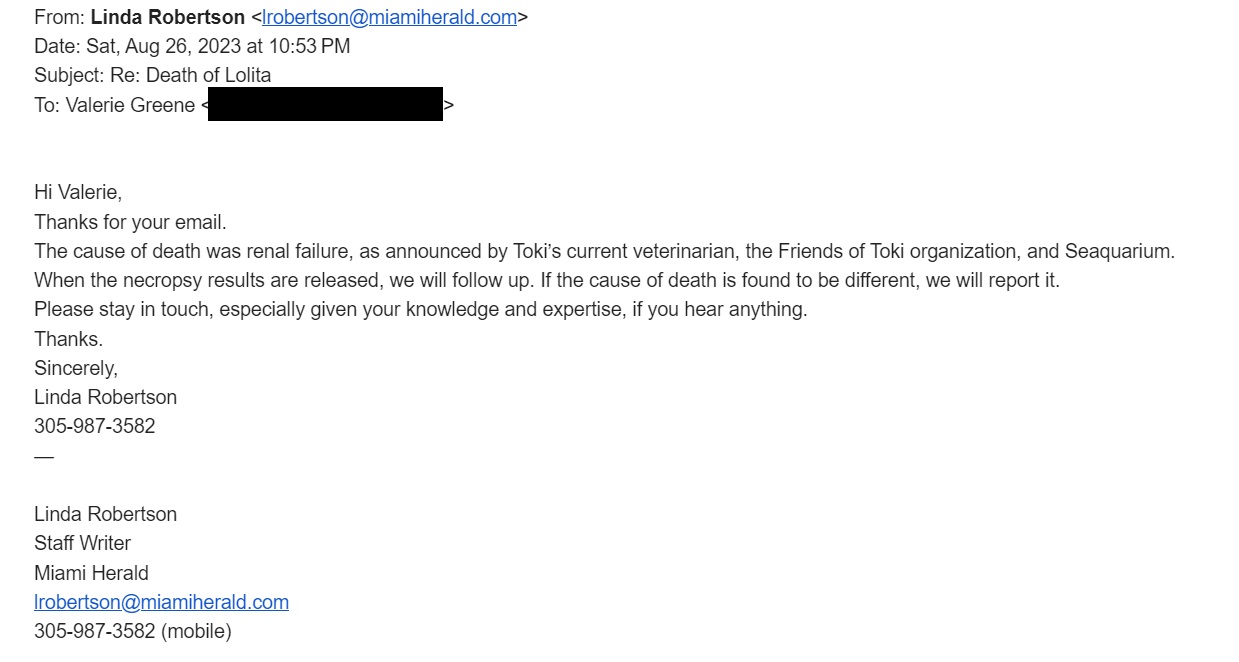
Hi Valerie,
Thanks for your email.
The cause of death was renal failure, as announced by Toki’s current veterinarian, the Friends of Toki organization, and Seaquarium.
When the necropsy results are released, we will follow up. If the cause of death is found to be different, we will report it.
Please stay in touch, especially given your knowledge and expertise, if you hear anything.
Thanks.
Sincerely,
Linda Robertson
In this case, Valerie defered to my knowledge and expertise – which is deep dive research, pattern correlation, and being a professional journalist with numerous researched, vetted and published articles on zoo and aquarium design and operation.
Let’s take a deep dive, shall we.
The term “announced” connotes “to make public.” While it’s possible that the Herald may have privately been given statements differing from those made to the public, the nature of Robertson’s statement alludes that these were stated to the public at large. But were they really?
Did the veterinarian announce she died from renal failure?
There were two veterinarians present for the death that we’re aware of, per news helicopter footage. One was Jessica Commoli, the Seaquarium’s staff veterianarian. I have not seen a public statement made by Dr. Commoli. The other was Tom Reidarson, consulting veterianarian to Friends of Toki. Dr. Rediarson is actually quoted in Robertson’s article:
“I think its best to see what the evidence from the necropsy tells us,” he said. “I believe in the truth, not unfair accusations. I am deeply saddened by the loss of Toki. I knew her well and we gave her the highest standard of care. Now is not the time to throw stones.”
One would imagine that a veterinarian rushing to judgement on cause of death before necropsy and lab panel results are finalized would be jeopardizing their license to practice veterinary medicine.
Did Friends of Toki announce she died from renal failure?
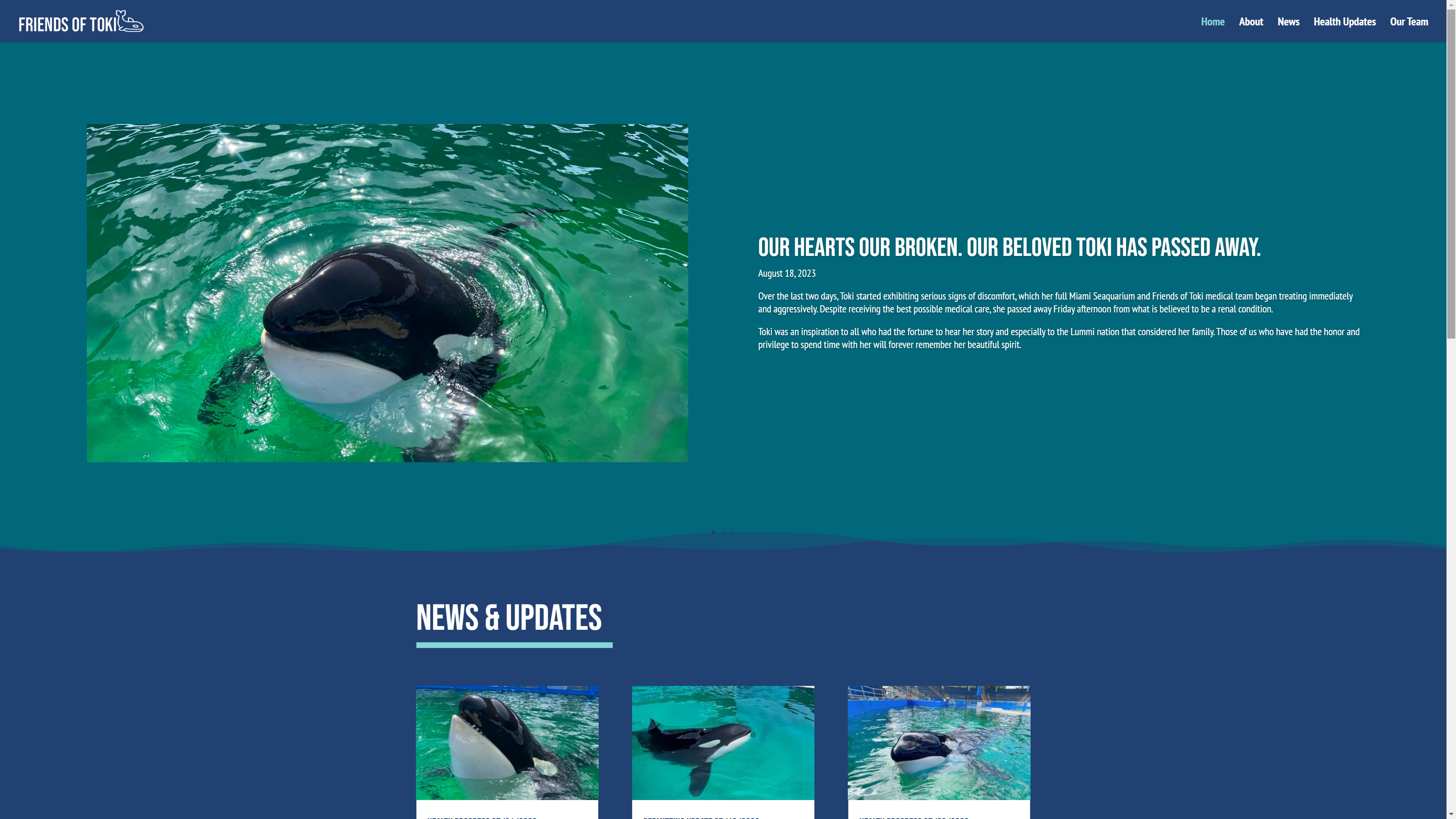
. . . she passed away Friday from what is believed to be a renal condition.
“Believed.” This is not a definitive statement that renal failure was the cause of death. “Believed” is similar to the term a lot of journalists, such as myself, use when reporting on claims that have not been fully vetted – “alleged.” Terms like “believed” and “alleged” are used to protect individuals or parties from potential litigation over false claims, claims of defamation, or violation of laws, regulations, or ethics.
Did the Seaquarium announce she died from renal failure?
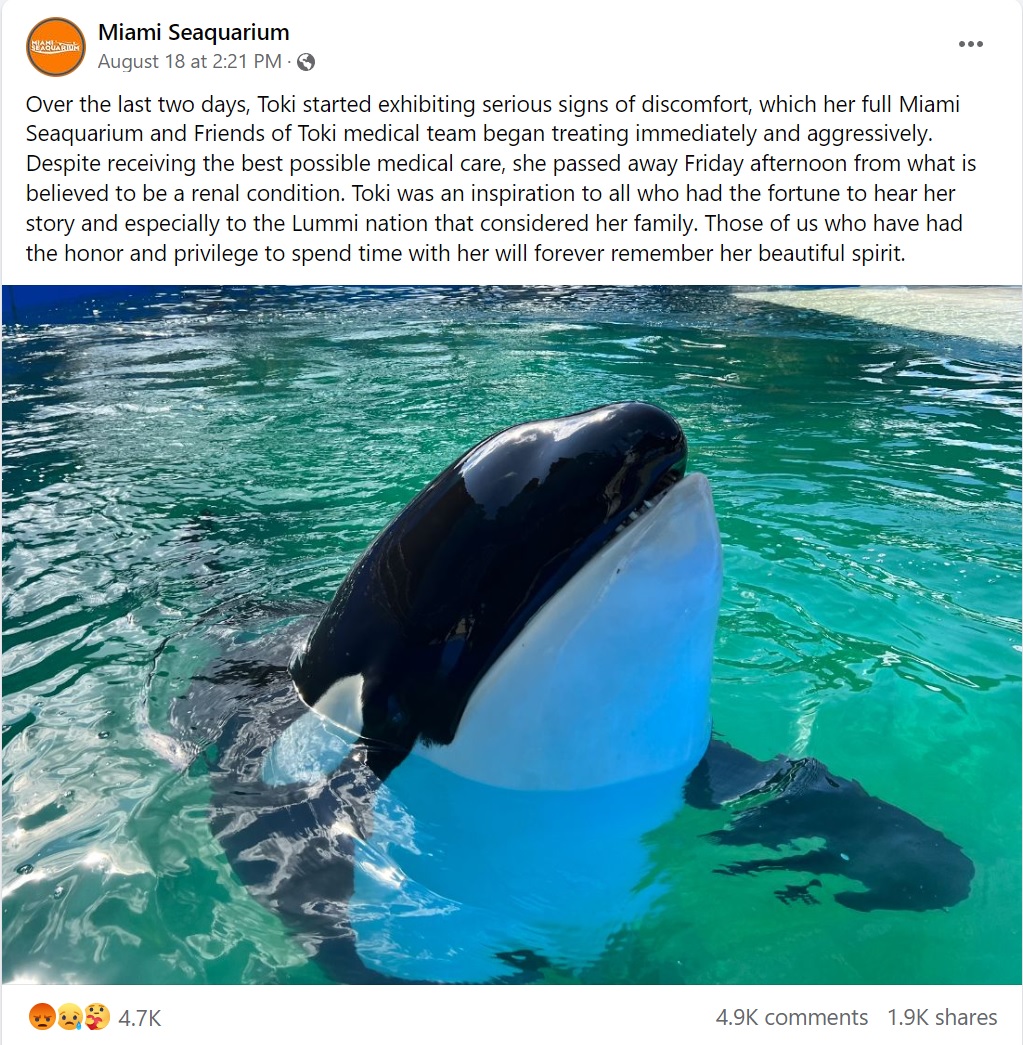
Again, “believed,” and therefore not definitive cause of death.
Supporting statements or manipulated interviews?
There’s a point in the article that really concerns me. I have no reason to doubt the quotes from the former vets and trainers in the article, but their statements appear manipulated in order to support the concept she died from renal failure.
A cut in Toki’s daily diet starting two years ago was likely a factor in her death from renal failure, said Wood, Wallace and Toki’s former vet of 23 years, Dr. Magdalena Rodriguez. Toki’s food intake was reduced from 160-165 pounds of fish per day to 120 pounds because Seaquarium’s new curator and head trainer at the time decided Toki was too fat.
“Her food is where she gets her water and she wasn’t getting enough water,” Wallace said. “She had pre-existing renal disease, and she had elevated kidney enzymes in 2021, exacerbated by a decrease in her diet. When cetaceans become dehydrated, they can also become prone to illnesses such as pneumonia. I suspect she was chronically underfed and dehydrated over the last two years and never fully recovered and had the appetite she had previously.”
As with Reidarson, no veterinarian in their right mind is going to definitively endorse a cause of death before necropsy and lab results are released. I also doubt that Wood, who has a strong reputation as a trainer, would make such an unsubstantiated accusation. Based on the email sent to Valerie, and being someone who conducts interviews for professional and trade publications on a regular basis, it’s my belief that the three were asked, and apparently, I’ve been told by one, independent of each other, what could lead to renal failure and then those statements were subsequently positioned to support it as the definitive cause of death.
I’m not certain why this happened. Ms. Robertson is a sports reporter by trade. Perhaps she’s unaware that reporting on Ken Griffey Jr. pulling a hamstring is a much different kind of article than one on the potential – yes, potential – cause of death of a high profile, controversial endangered animal.
What do the Herald editors say?
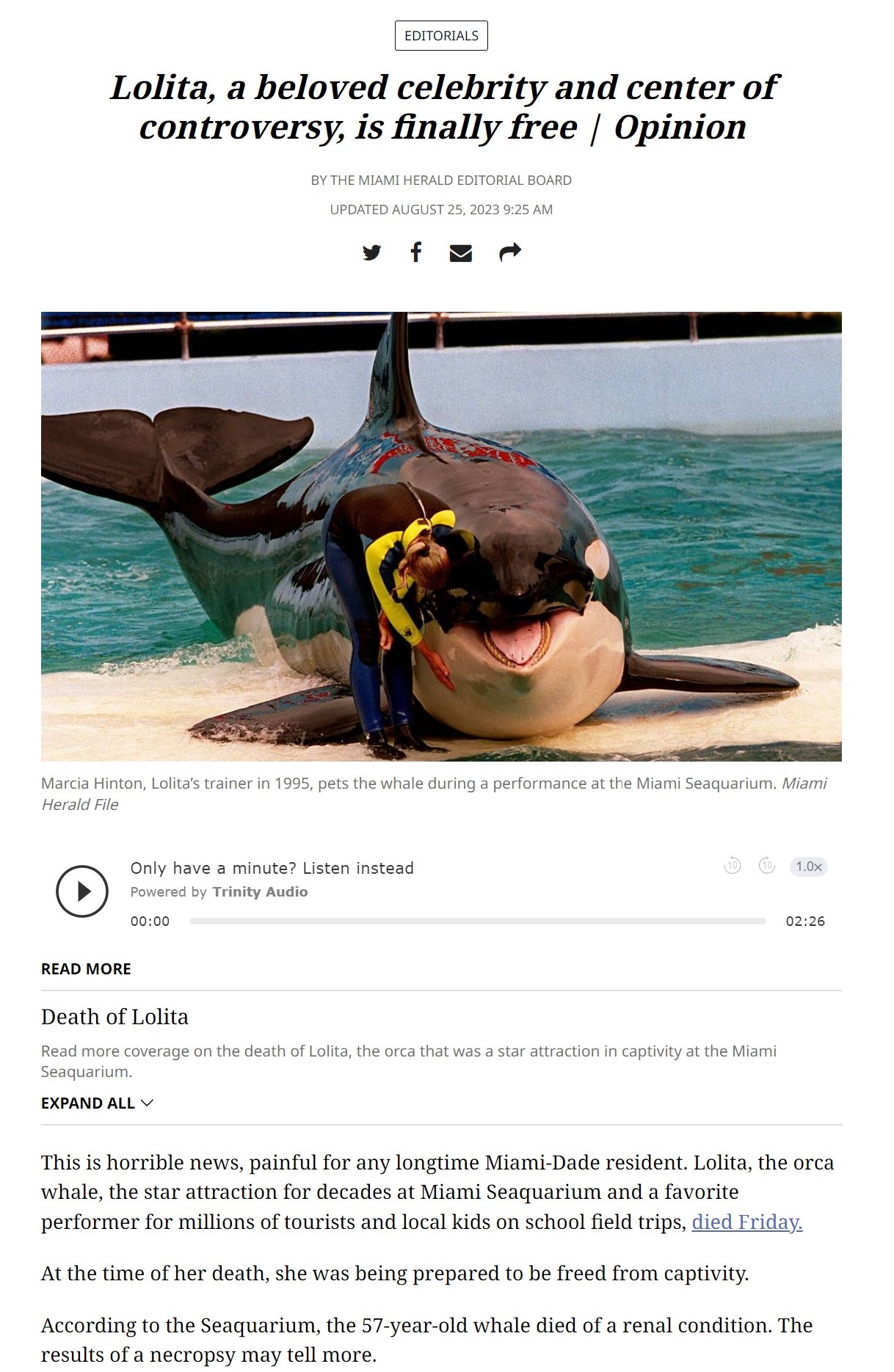
The August 25 op-ed piece by the Miami Herald’s Editorial Board is not much better. They do place the onus on the Seaquarium, but again it’s presented as definitive cause of death, which implies that either the Seaquarium is telling the Herald staff a different narrative than what they’ve told the public, or the paper just has sloppy editing. Any crime beat reporter, and I’ve known a few in my day, uses terms like “believed,” “assumed,” “alleged” when reporting on a death until the trial or investigation, including the autopsy, is complete. Same policy should be in place for an endangered whale. Something smells fishy, like the 115 pounds of fish Tokitae was supposedly eating daily on the week she died.
Eduardo Albor in real time
We watched as the Miami Seaquarium developed a website in real time three days before Tokitae’s death. It started out with an ad for a Mexican park owned by The Dolphin Company, but eventually became a health update on Tokitae, still called Lolita by the company.
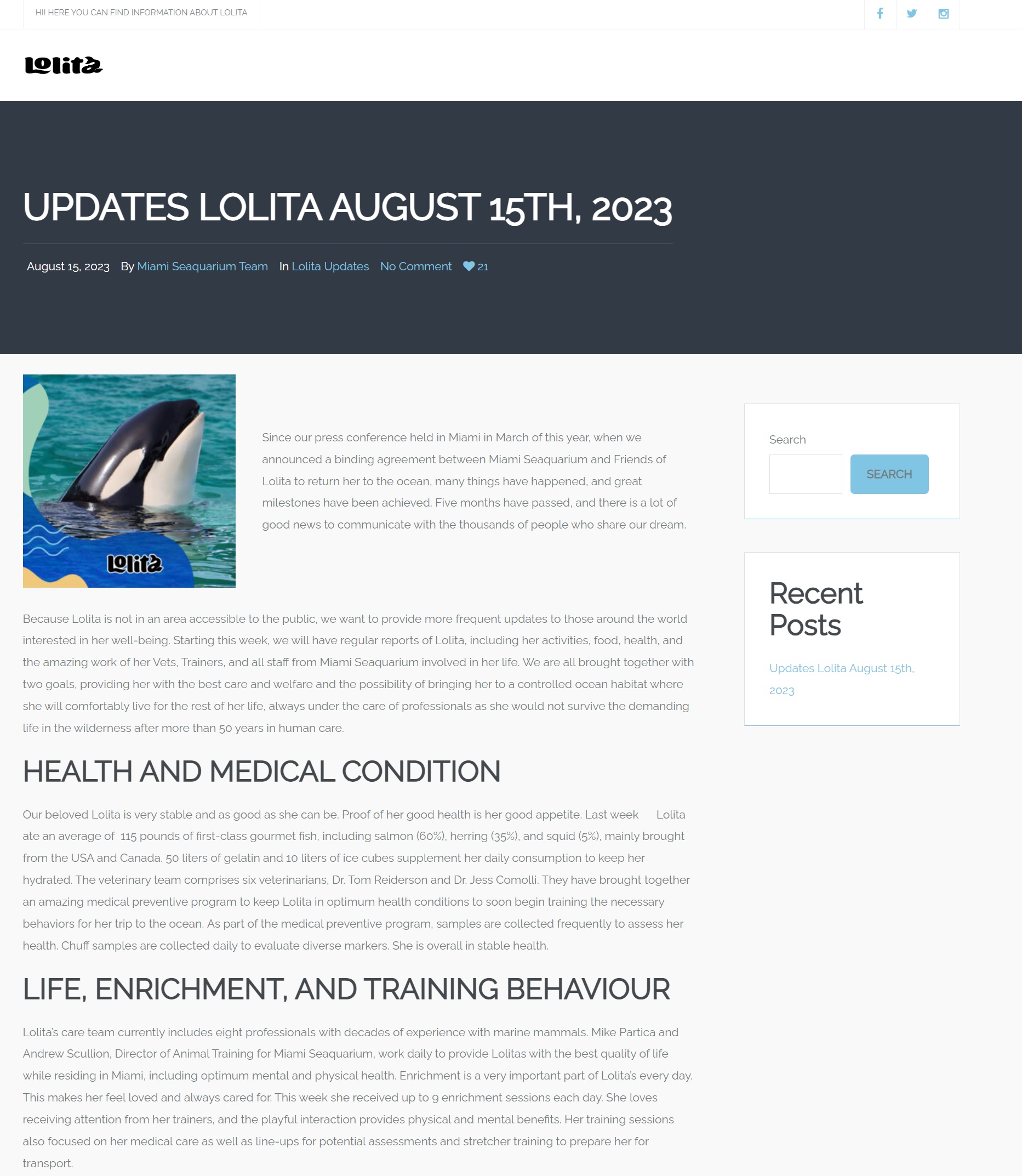
The public relations industry has a term for this – “rushed.” An accompanying press release even had the month of the press conference misstated as February. Why the rush to show just how healthy she was?
We know two things. According to independent observers monitoring the Whale Bowl, ballasts were in place by Wednesday. We estimate there may have been two to three water drops in B pool for veterinary procedures between Wednesday and Friday. The other thing that we have is an August 22 article written by John Pacenti of the Key Biscayne Independent:
Charles Vinick, co-founder of Friends of Toki, defended the relocation plan, saying talks were ongoing with the state of Washington and the National Marine Fisheries Service. He also defended the staff taking care of Lolita, saying the suspected renal failure was unrelated to the treatment for gastroenteritis earlier last week.
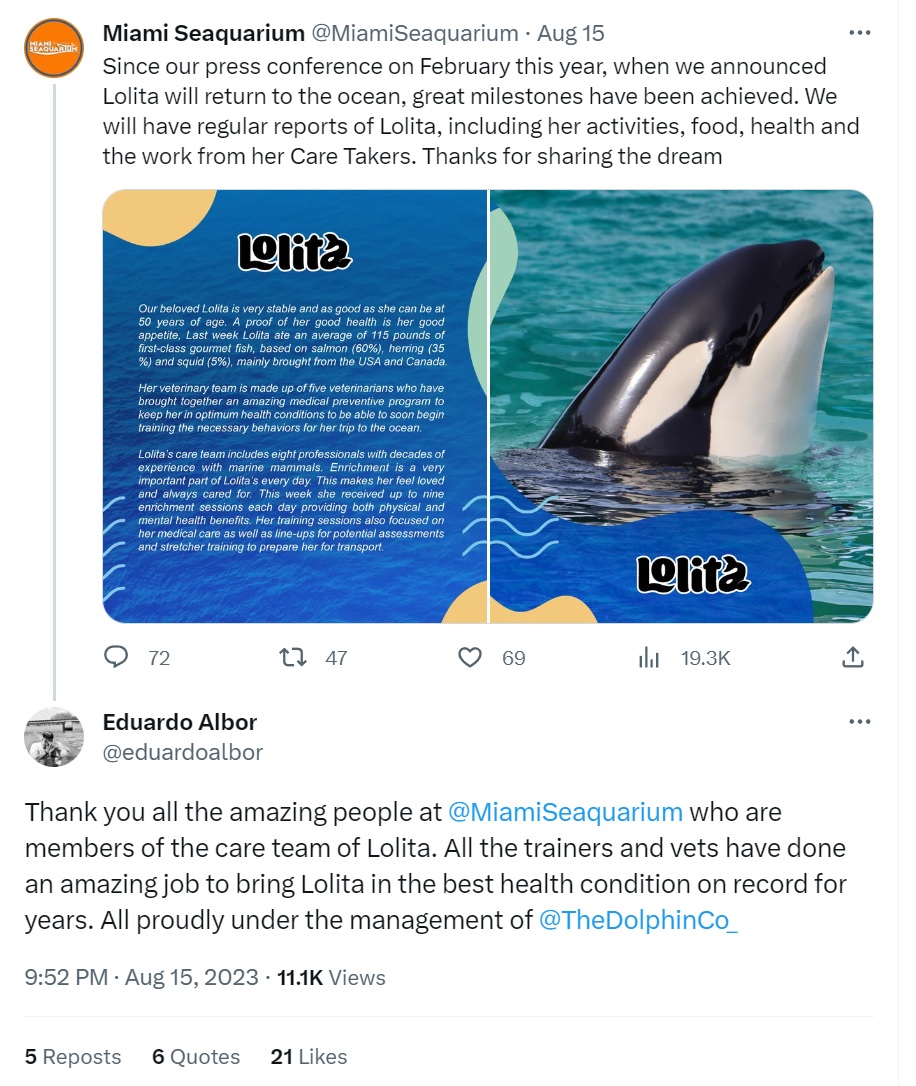
So she had another medical issue going on earlier in the week? At the same time that Eduardo Albor, CEO of The Dolphin Company was stating this?
Will we ever know?
I’m assuming with the high ethical values of both The Dolphin Company and Friends of Toki, that they invited NOAA to send a representative to observe the veterinary procedures. There was a man walking around with a Go-Pro and I believe he might have been the NOAA representative. I’m told by a number of people that he arrived early and seemed to be filming everything throughout the day. It’s good to know that NOAA has a video record and will make it public at some point. Of course, I could be wrong, which is why I used the word “believe.”

The Catalina Problem
A major issue with Robertson’s article is this paragraph:
After her food intake was reduced, the orca began acting aggressively, and she accidentally killed Catalina, the Pacific white-sided dolphin that was her companion, by ramming her.
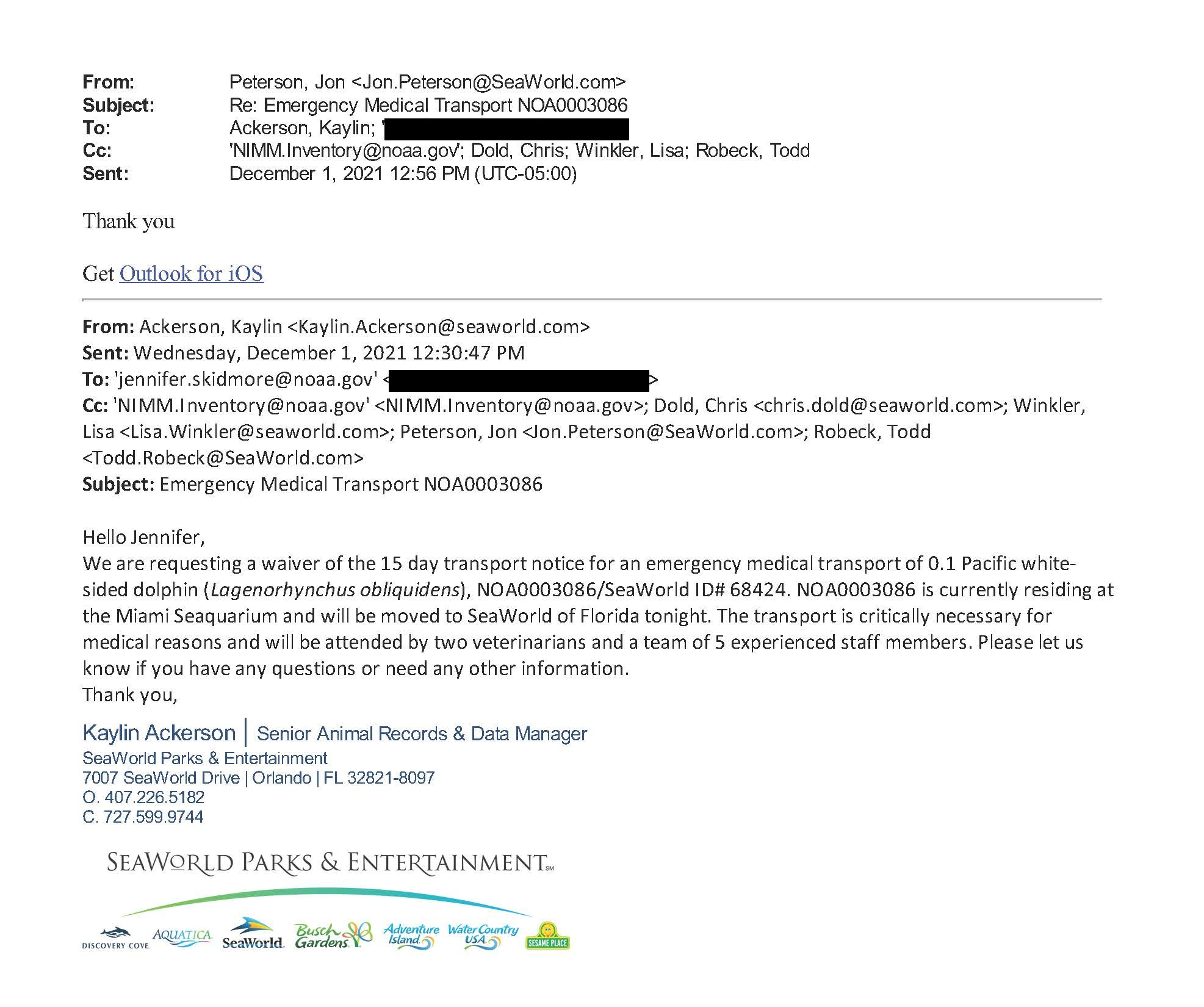
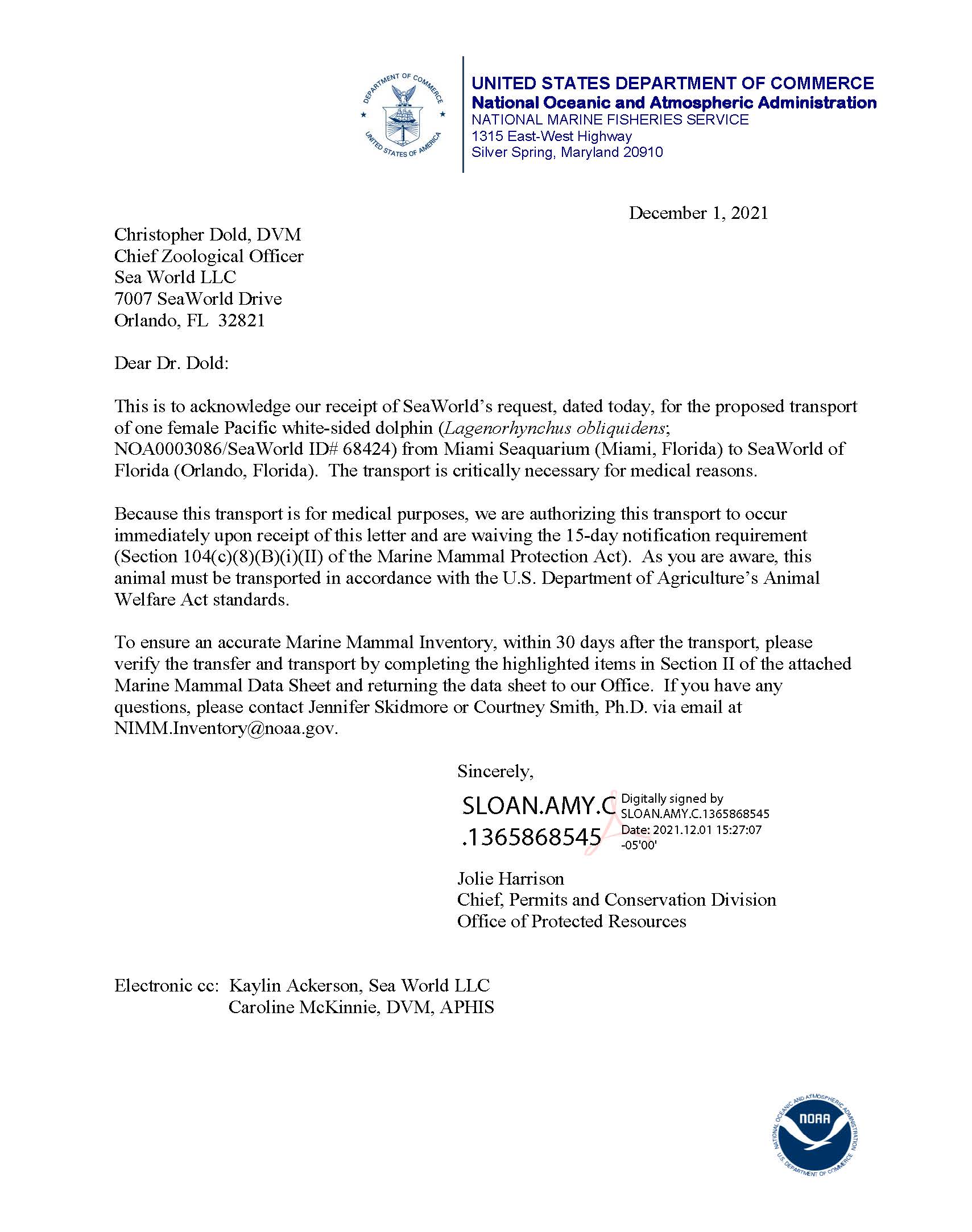
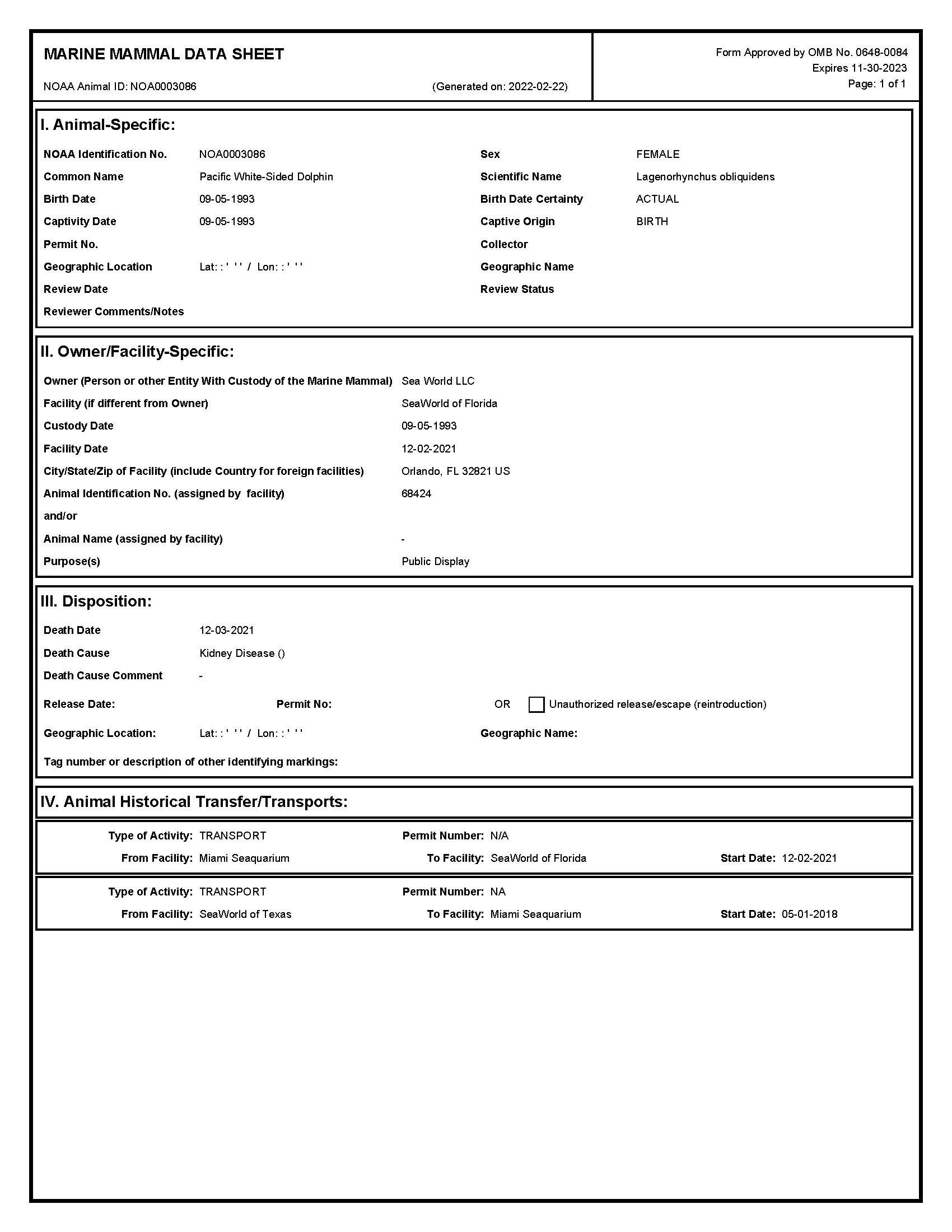
This is news to us. We don’t know Robertson’s source, since it’s not cited, but the following documents popped up in one of our FOIA request with NOAA, which means either there’s inaccurate documentation regarding her death, or there’s a reporter at the Herald who doesn’t understand the concept of due diligence and an editor who failed to vet the facts before approving the article for public consumption.
I should add that the cause of death, date, and location is mentioned in the Marine Mammal Index Report, a publicly available document. Anyone can get this information without a FOIA request.
Miami Herald bulding photo by Marc Averette. Shared under CC BY-SA 3.0


I follow your monitoring of Tokitae’s death closely, and want you to know how much I appreciate the truth and your dedicated, hard work! Keep up the awesome work! You are a rock star!
We are just wanting the truth!!!!poor Tokitae just wanted to go home alot of people are smelling something very fishy about the” story” of her death .