
IMATA (International Marine Animal Trainers’ Association), when it does what it’s supposed to do, serves an important role in the marine animal park industry. Developing standardized training techniques that can be shared throughout the marine mammal display industry reduces animal stress for veterinary care and research (especially pinnipeds). Networking ensures that these standards are spread throughout the industry and that the latest best practices are in use.
According to IMATA’s website: “IMATA is dedicated to providing and advancing the most professional, effective, and humane care of marine animals in all habitats.” And this is where it has failed. The question is not how it failed, but why?
Why has IMATA not spoken up about the current conditions at the Miami Seaquarium?
In October 2021, Zoo Miami Director Will Elgar stood before the Miami-Dade County Board of Commissioners and encouraged the transfer of the county’s lease of the Miami Seaquarium to The Dolphin Company. He introduced himself as “the sitting President of the International Marine Animal Trainers’ Association.” If it were not for that, I would have been looking at him solely as President of an AZA Zoo and a county executive, but he brought IMATA into the equation.
IMATA gave us two public statements after the Seaquarium’s lease had changed – and both of them were more than a year after the sale of the park. The first was on April 2, 2023, which read:
“By now, you have likely heard the news that Miami Seaquarium announced their intention to relocate their resident killer whale, Tokitae (also known as Lolita), and two Pacific white-sided dolphins to the waters of the Pacific Northwest.
“The announcement was made at a press conference on Thursday, 30 March 2023, by the owner of Miami Seaquarium (The Dolphin Company), the mayor of Miami-Dade County, and representatives from a non-profit group named ‘Friends of Toki.’ The three entities involved provided only general information about the proposed effort; the publicity event did not include specifics on an actionable, science-based plan to relocate the animals.
“IMATA’s initial reaction and understanding is that these animals are not suitable candidates for return to the wild, and any plan to relocate these animals would take a tremendous amount of thought, planning, coordination, and consultancy with experts and stakeholders from multiple organizations including the International Marine Animal Trainers’ Association (IMATA), the Alliance of Marine Mammal Parks and Aquariums (AMMPA), the National Oceanographic and Atmospheric Administration (NOAA), and the International Association for Aquatic Animal Medicine (IAAAM) among others.
“That said, many important questions about the viability of this initiative remain unanswered. IMATA’s board of directors will be reaching out to our contacts at Miami Seaquarium to fully understand the specifics of these animals’ future care, behavioral management, and the opinions of the expert veterinarians who have been consulted as to whether any potential move could jeopardize their wellbeing. As we await responses to our queries, IMATA will continue to advocate for our members and the animals in their charge.
“We thank current and former Miami Seaquarium trainers, veterinarians and caregivers for their hard work and decades-long dedication to assure the best care and welfare for these beloved and iconic animal ambassadors.”
But IMATA did not make another public statement on the matter until an August 4, 2023 update from Elgar that featured highlights of a May 30 meeting with management of the Miami Seaquarium and The Dolphin Company. The somewhat generic Q&A format presented by Elgar held no new information and was released two months after the meeting took place. It was solely on the killer whale Tokitae, nothing mentioned about the other animals in the park.
In his update, Elgar stated: “IMATA reiterated that our organization wants to ensure that the best possible care and wellbeing is provided to these animals. If that meant relocation, IMATA offered our support with providing experts and consultation on training, conditioning, and behavioral management. In short, IMATA offered up the wealth of knowledge and expertise within our organization to provide these animals with the utmost welfare.” Tokitae died exactly two weeks after his statement was published and Li’i, the Pacific white-sided dolphin who was the only other occupant of the tank, remained alone after her death for more than a month.
On March 30, 2023, Mark Simmons wrote a piece in Soundings, the IMATA magazine, titled “Ignoring Learned History: A Significant Oversight in Animal Welfare Decisions.” The piece was not IMATA leadership speaking, but rather Simmons. In it, he wrote: “Given the high profile and high-risk nature of the move announced for Tokitae, it seems obvious that consultation with IMATA would be pursued. To my knowledge, no such consultation has been sought by anyone involved in the proposed endeavor, including Miami Seaquarium, FOT [Friends of Toki] or the City of Miami.”
He’s absolutely right. While the standard defense of those supporting Friends of Toki is “It’s wrong to attack a group that did so much for her out of love,” love is meaningless if standardization is thrown to the wind and oversight is intentionally lacking. Joe Exotic loved his private zoo animals and used the same defense for his treatment of those in his care.
While Miami Seaquarium’s training program was accredited by IMATA (instead of IMATA avoiding the Seaquarium’s accreditation, the two agreed to allow it to remain in effect until it lapsed), Friends of Toki’s was not. By the time Friends of Toki came onboard, Tokitae had already lost her protections under the Animal Welfare Act and her oversight by USDA. It happened when Friends of Toki’s partner, The Dolphin Company, made a backdoor agreement on February 22, 2022 with the USDA to not include the whale stadium under the park’s license, the easiest way to avoid costly reconstruction of Tokitae’s tank to meet federal standards.
When did IMATA protest that action which had a negative impact on welfare?
Here’s where I note that the term “welfare” does not appear in IMATA’s Mission Statement nor its Code of Professional Conduct at all. “Humane care” does, but humane care is just one part of the animal welfare equation.
Why didn’t The Dolphin Company ask for a variance on its license, permitting the continued operation of the pool in its current state but with the return of AWA protections, especially once it was announced Tokitae would be returned to the Salish Sea?
Why hasn’t IMATA’s leadership spoken out against the actions, or more accurately, inactions of The Dolphin Company in its handling of the Miami Seaquarium?
There are clues.
The treatment of Tokitae was a blight on the history of animal welfare. The handling of the Tokitae/Seaquarium fiasco by its multiple partners (Friends of Toki/Whale Sanctuary Project, The Dolphin Company, Miami-Dade County, Jim Irsay) was as chaotic as the gold mine wildcatting in the Wild West (or Nova Scotia, if you prefer).
Then there were the other animals, in situations just as, if not more, precarious. Made even worse by decisions of The Dolphin Company, who failed to upkeep infrastructure (three of the four stadiums at the park were deemed unsafe for human occupancy by the Miami-Dade Unsafe Structures Board), starved animals to “improve” performance, and allowed iguanas to poop on sea lions in inadequately small holding pens. Almost forgot to add one important part: ….among many other things.
More than ⅓ of facilities with IMATA accredited training programs are controlled by The Dolphin Company. In 2022, IMATA was just $3.00 short of $164,000 for revenue on its program services. Of that, $149,806 came from fees for its annual member conference. That’s 91% of paid revenue. When we factor in contributions and investments, the annual member conference alone brought in 62% of the organization’s entire revenue. One can only imagine the financial implications if a company with such a large membership in IMATA were to forbid its members from attending that annual conference because the organization publicly took a stand.
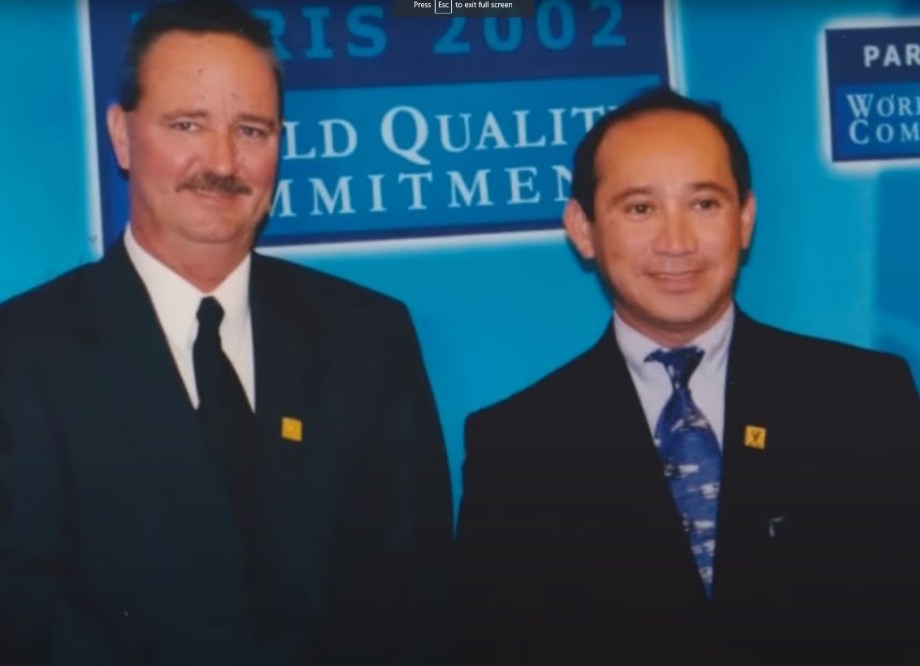
Then, there’s Shelley Wood, who provides training to IMATA members at facilities owned by The Dolphin Company. The Dolphin Discovery (aka The Dolphin Company). Dolphin Discovery often refers to the company’s North American operations, but the two names have been used interchangeably by the firm) website states: “In 2012, IMATA president Ms. Shelley Wood, who also serves on the Dolphin Discovery Board of Directors, recognized the company for excellent teamwork and persistence.” Meanwhile, Mike Wood, a founder of Dolphin Discovery, is a former board member and recipient of IMATA’s professional achievement award and serves on the Board of Directors of The Dolphin Company, being one of its largest shareholders.
To speak out is to ruin a legacy behind your organization. It is to bite the hand that feeds you. When accrediting organizations like IMATA, the Alliance of Marine Mammal Parks and Aquariums (AMMPA), the Association of Zoos and Aquariums (AZA), and American Humane remain silent to protect the vested interests of the existing fraternal order, it places the welfare of animals, caretaking staff, and facility guests at risk.
In Mexico, dolphinarium owners have pushed the federal Senate to allow the capture of wild dolphins for their swim facilities for “educational purposes” should proposed legislation render breeding illegal.
A good portion of those dolphinariums are owned by The Dolphin Company, and owner Eduardo Albor has been seen lobbying the Senate.
In many countries where IMATA trainers work, the capture of cetaceans is illegal, however the United States is not one of them. Capture for public display in US waters is still legal, just not practiced. In Mexico, it is only allowed for research and education, thus the “education” request.
The only IMATA prohibition to membership is if a trainer participates in the killing of cetaceans, and specifically only in a drive fishery. It’s ok to purchase animals from a drive fishery as long as the trainer did not participate in killing any animals – and it has to be deliberate killing. A few years back, I asked then IMATA leadership Michael Hunt and Kelly Flaherty-Clark about the policy and was given two complementary explanations: “It ensures the animals that are bought and brought into facilities are saved and not left to be killed like others in the fishery” and “Allowing membership to those who work with dolphins acquired through drive fisheries like Taiji ensures that they are providing the best and most current training practices with the animals.”
By this logic it’s acceptable to IMATA to allow the acquisition of dolphins from drive fisheries, or belugas and killer whales from Russia for Chinese parks, and for The Dolphin Company to capture in Mexican waters under the premise of education. It makes sense considering a number of IMATA members are involved in the capture of animals and their brokering (brokering, of course, being a good thing, as it ensures that intergovernmental standards and treaties, such as CITES, are adhered to. <<shrug>>).
IMATA won’t speak out against wild captures, because it’s the bread and butter its industry was founded on. Pretty damn progressive. It won’t speak out against The Dolphin Company because it’s the bread and butter the industry eats.
On this Christmas Eve, carolers around the world will sing “Stille Nacht, heilige Nacht,” known in English as “Silent night.” It is rooted in religion, but the lyrics are of hope and faith.
On this Christmas Eve, I have no hope or faith that the leadership of IMATA will take a public stand against The Dolphin Company. I anticipate many more silent days and nights ahead, and, as a consequence, the animals will continue to suffer.
IMAGE: Former IMATA Director and Professional Achievement Award recipient Mike Wood with Eduardo Albor, The Dolphin Company. Source: IMATA

