“Censorship is the tool of those who have the need to hide actualities from themselves and from others. Their fear is only their inability to face what is real, and I can’t vent any anger against them; I only feel this appalling sadness.”
– Charles Bukowski
On August 5, I wrote a post on the new ThemedReality Facebook page critical of the movie “Resident Orca.” On August 14, I was notified by Facebook that the post had been removed due to a complaint about an alleged copyright violation. The alleged violation was solely based on my use of a photo, but the complaint itself resulted in the removal of the entire post. I’ll get into that in detail in a moment. But first, I’m going to share the entire notification email from Facebook, which includes the full text of the post. There’s no copyright or confidentiality notice on the email, so I feel comfortable doing it this way.
Hello,
We removed the following content you posted on Facebook because we received a notice from a third party that it infringes their copyright:
“I have not seen the film “Resident Orca”, so I can’t comment on its quality nor content.
I’ve seen a number of people upset over its inclusion at Jackson Wild, arguing that the film is about Raynell Morris of the Lummi Nation and her “relationship” with Tokitae the orca, when it should be, according to these complaints, exclusively about the whale and her life story. From what I’ve read, it seems to me it’s about both Raynell and Tokitate, and it’s a buddy film. It’s also a race against time, a race that was fabricated by Friends of Toki’s board members, including Morris. Frankly, a film can be whatever the filmmakers want it to be and film narratives often change during production. If that’s the case, then “Resident Orca” deserves to be seen and be eligible for awards.
But that doesn’t appear to be the case. And this is where the problem lies – not with the content of the film, but with the fact that it was made under what appear to be false pretenses. The film was produced by Morris’s organization, Sacred Lands Conservancy, in conjunction with James Costa, Vice President of the Board of Directors of Sea Shepherd Conservation Society( SSCS), the organization run by Friends of Toki co-founder Pritam Singh (not to be confused with any organizations aligned with Captain Paul Watson).
“Resident Orca” was always going to be about the Lummi and their efforts to return Tokitae to Washington state. The film’s production pre-dates both the founding of Friends of Toki and the Miami Seaquarium’s purchase by The Dolphin Company. However, this important fact was never disclosed to a number of key interviewees for the film. For example, the directors flew to an island in the middle of the Pacific Ocean to interview one of Tokitae’s former caregivers. That interview material was cut from the film and replaced with a news clip of the interviewee, unidentified and in silhouette, once that interviewee became vocally critical of Friends of Toki’s actions.
Tax filings suggest that Friends of Toki was created to allow access to Tokitae for Morris, the filmmakers, and Morris’s associates at Whale Sanctuary Project, which played a key role in managing the Friends of Toki project, funneling money directly from Pritam Singh through their organization (and I question – and this is purely hypothetical – if any of the $1 million pledged by Singh came from SSCS and, if so, how it’s recorded in their books). Further, the sale of the film to an international distributor constitutes economic gain, and as the filmmakers appear to have filmed onsite (such as the drone footage of the Oct 2022 medical assist which appears in the film trailer) with the knowledge and permission of Seaquarium and The Dolphin Company management, it constitutes a violation of the park’s Class C Exhibitor license, which prohibited photographic or media exhibition for profit. However, I doubt USDA will do anything at this point.
So what can you do?
**You can email Geoff Daniels, the Executive Director of Jackson Wild – geoff@jacksonwild.org. Work with others to create and present to him a mass email or a petition to get the film removed from award contention and screening. Just remember – time is of the essence, since the awards are only a month away. But I’m going to warn you about the dirty nature of film festivals here — Bo Stehmeier, the CEO of Off the Fence, the distribution company that now owns most global rights for “Resident Orca”, is a member of the Board of Directors of Jackson Wild. It’s going to be an extremely difficult uphill battle.
**Do not donate to groups that were accomplices and apologists with Friends of Toki. This includes Sacred Lands Conservancy (doing business as Sacred Sea), Orca Network, and of course, Whale Sanctuary Project.
**Donate to Lummi nonprofits actually helping the community. https://lhaqtemishfoundation.org/ supported Sacred Sea, but it does so much more with cultural and community service programs for the Lummi Nation. https://se-si-le.org/ applies indigenous knowledge to protecting natural resources.
**Watch something other than “Resident Orca” to learn about Lummi culture: https://www.youtube.com/watch?v=GQKYsKsgjAI – a symposium on Lummi sovereignty; https://www.youtube.com/watch?v=M733XkdVr5U – Lummi perspectives on the environment;
https://www.youtube.com/watch?v=PgccdV93KuA – this 1990 PBS film looks at three indigenous nations, including the Lummi, and the precarious relationship between being in the United States and maintaining individual sovereignty.
**Participate in campaigns and volunteer with organizations that assist wild orca populations, such as https://damsense.org/ and https://www.orcaresearch.org/

Off the Fence”
If you believe that this content should not have been removed from Facebook, you can contact the complaining party directly to resolve your issue:
Report #: 1574331606481315
Rights Owner: Everyday Films
Email: ddonohue@greenbergglusker.com
Copyrighted Work: Photo
If an agreement is reached to restore the reported content, please have the reporting party send us a retraction through the appropriate channel.
Facebook complies with the notice and takedown procedures defined in section 512(c) of the Digital Millennium Copyright Act (“DMCA”). If you disagree with this decision and believe that the content should not have been removed, you can submit a DMCA counter-notification by filling out our form:
https://www.facebook.com/help/contact/778051911009417&b=1574331606481315?ref=cr
We strongly encourage you to review the content you have posted to Facebook to make sure that you have not posted any other infringing content, as it’s our policy to terminate the accounts of repeat infringers when appropriate.
For more information about intellectual property, please visit the Help Center:
https://www.facebook.com/help/intellectual_property?ref=cr
Thanks,
The Facebook Team
The image in question still appears on a number of other websites and social media posts, many of which fail to credit the image’s distributor as the source. Since I don’t want to be accused of violating copyright a second time, here is an approximation via my minimal art skills of what the image looks like:
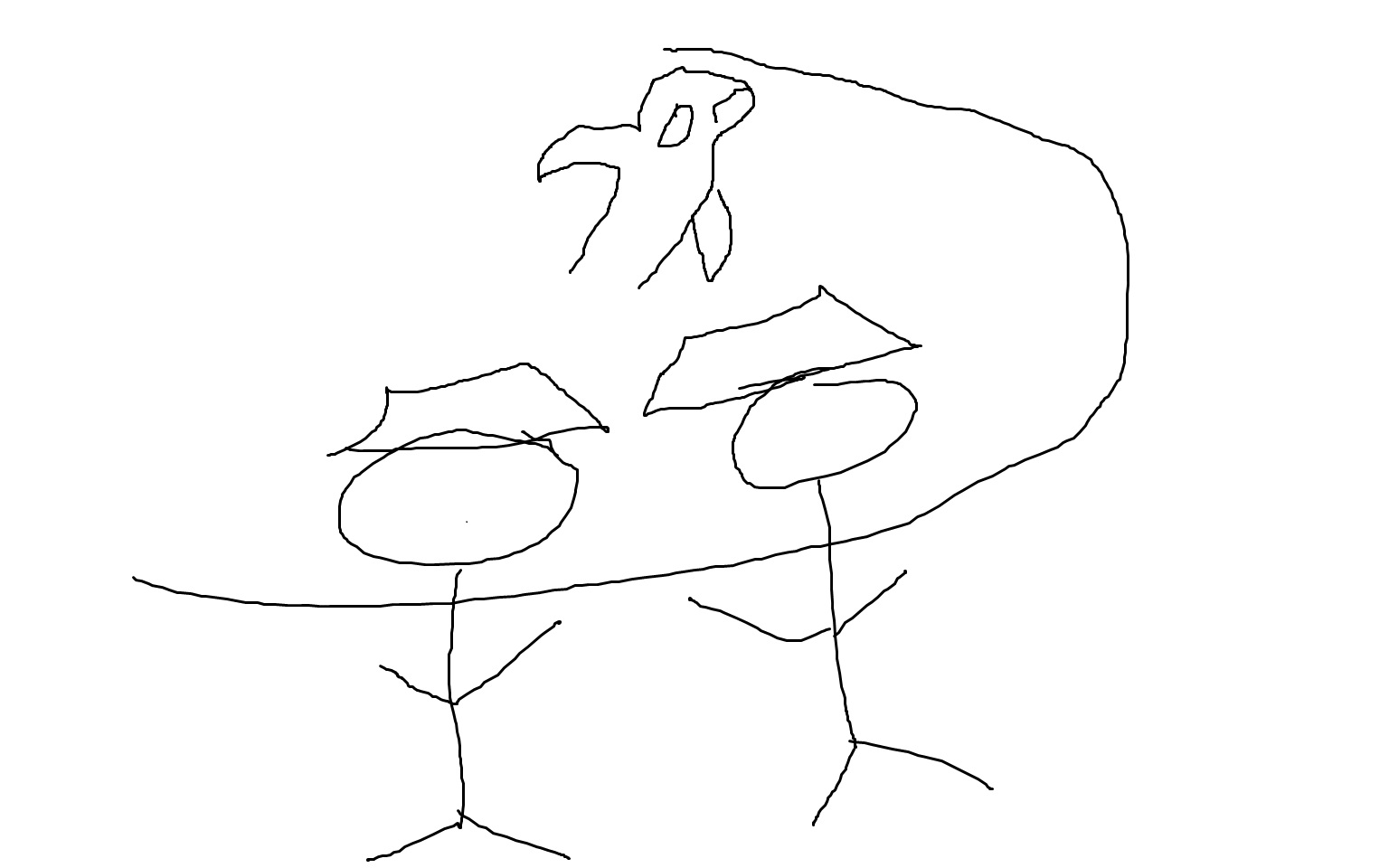
The great irony of the situation is that I have been accused of copyright infringement by film directors Sharah Sharkey Pearce and Simon Schneider in what appears to be a targeted effort to remove my post solely through a publicity image that itself appears to violate a USDA ruling. Based on prior court cases, this could make Sharkey and Schneider subject to charges of aiding and abetting the violation of a federal order. I’m hoping that their lawyer, Daniel Donohue, fresh out of law school and an associate attorney at Greenberg Glusker Fields Claman & Machtinger, is able to explain to his clients how the USDA violation works.
As a professional journalist, something I do when not blogging, I have long had to monitor the who, what, when, where, and how of image procurement. It’s not uncommon for individuals or companies to ask for images to be withdrawn, either because it’s confidential material or because of copyright. Therefore, I will typically use, for both my professional articles and my blogging, publicity images or images I license from a photobank. These are images that are released publicly, often to promote a project or occasion. The image I used was a publicity still from the film released by distributor Off the Fence, whom I credited for the image. There was no mention anywhere of the image being copyrighted by Sharkey or Schneider or their company. If I am considered to be in violation of the copyright, then Sharkey, Schneider and Donohue, if they are ethical and righteous individuals, are obligated to file copyright violation complaints against all other websites and accounts using the image.
It is obvious that I was targeted solely to silence my criticism. Unfortunately for Sharkey, Schneider, and Donohue, they don’t know me well enough to understand I’m a hard person to silence.
Which brings me to a “Resident Orca” production story.
In November 2022, Sharkey and Schneider flew to the Hawai’ian paradise of Maui to film Dr. Jenna Wallace, former Miami Seaquarium veterinarian turned USDA whistleblower, at her home over a two-day period. Here are images of the visit, taken by and courtesy of Dr. Wallace.
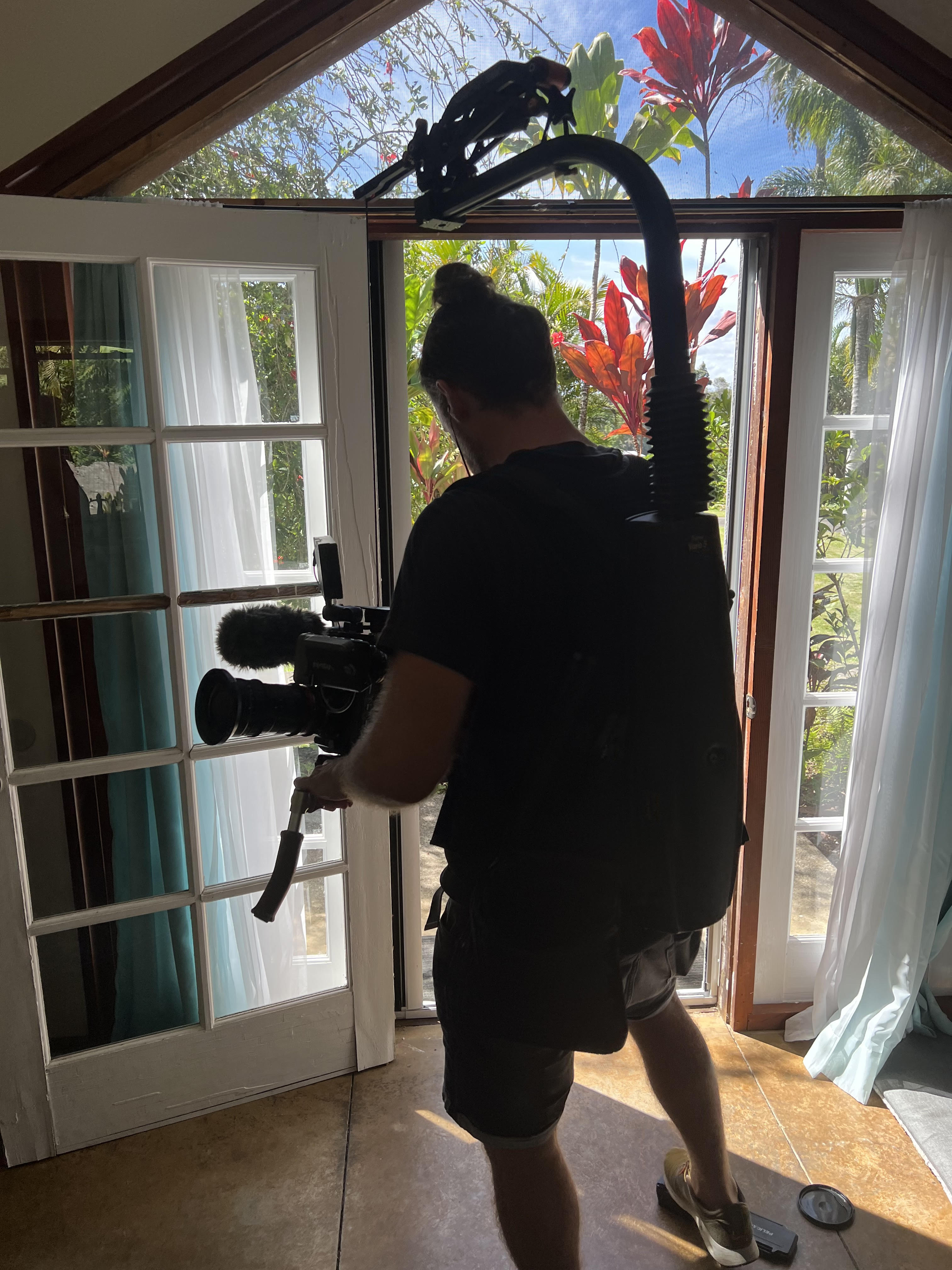
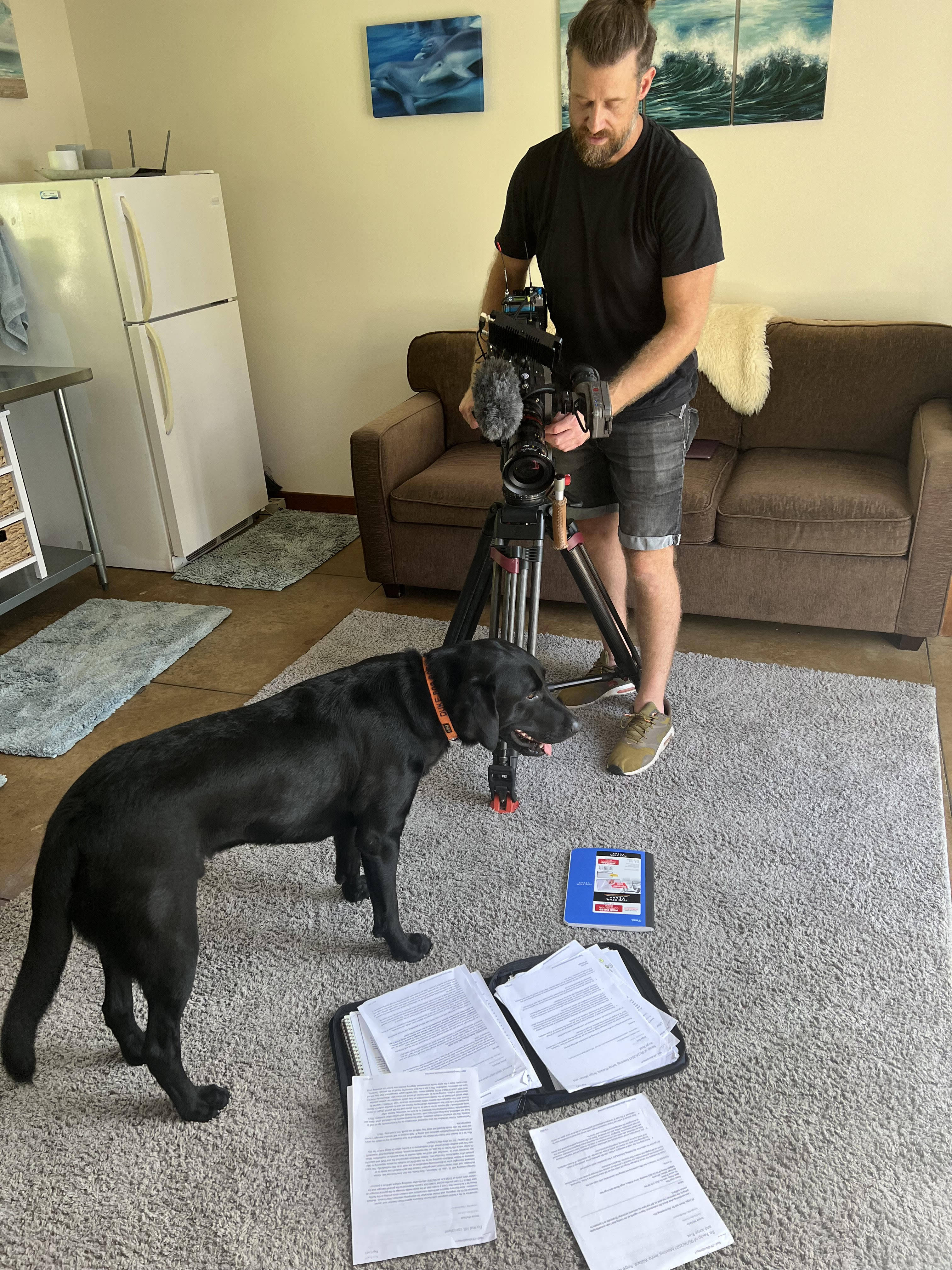
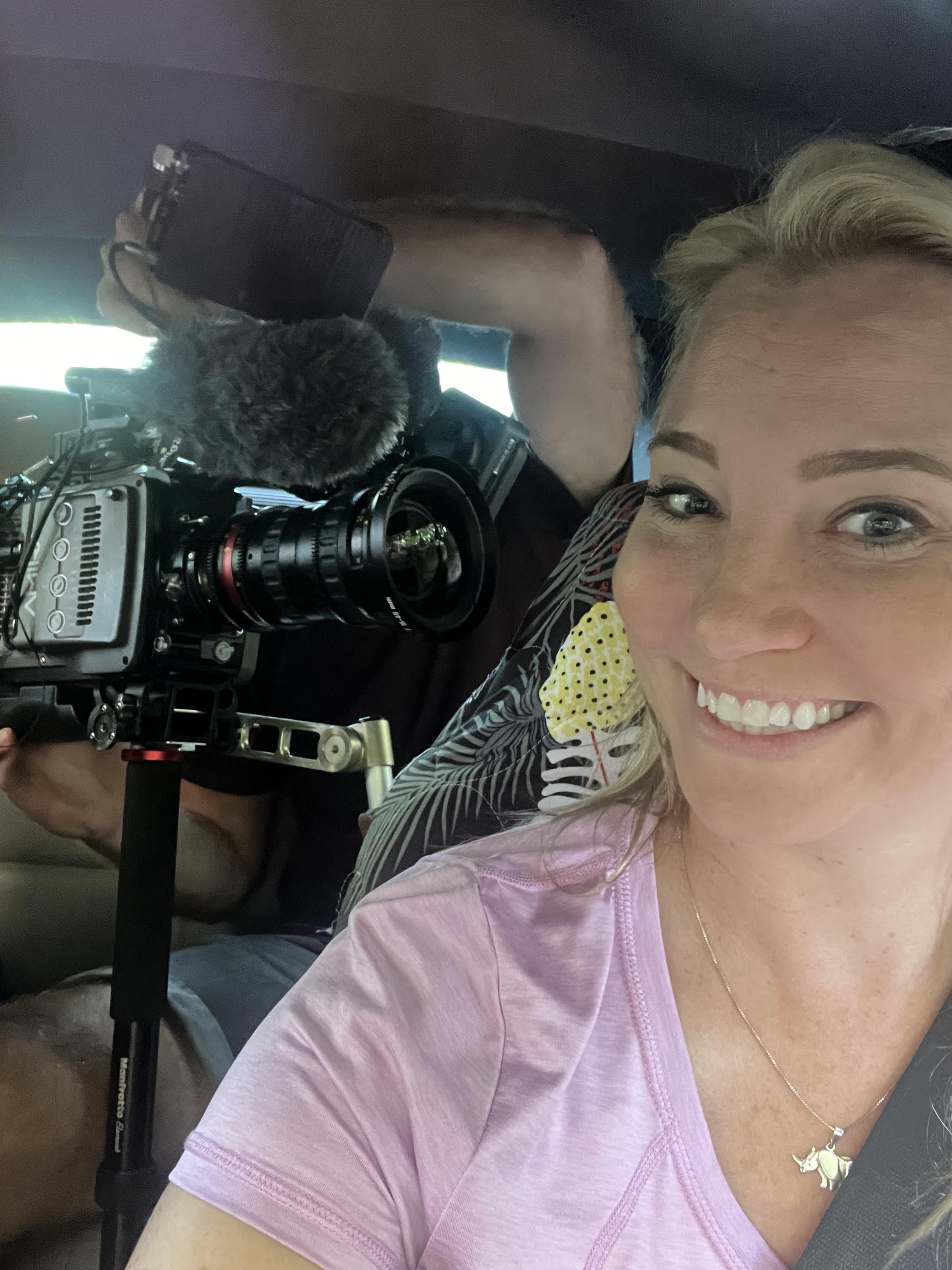
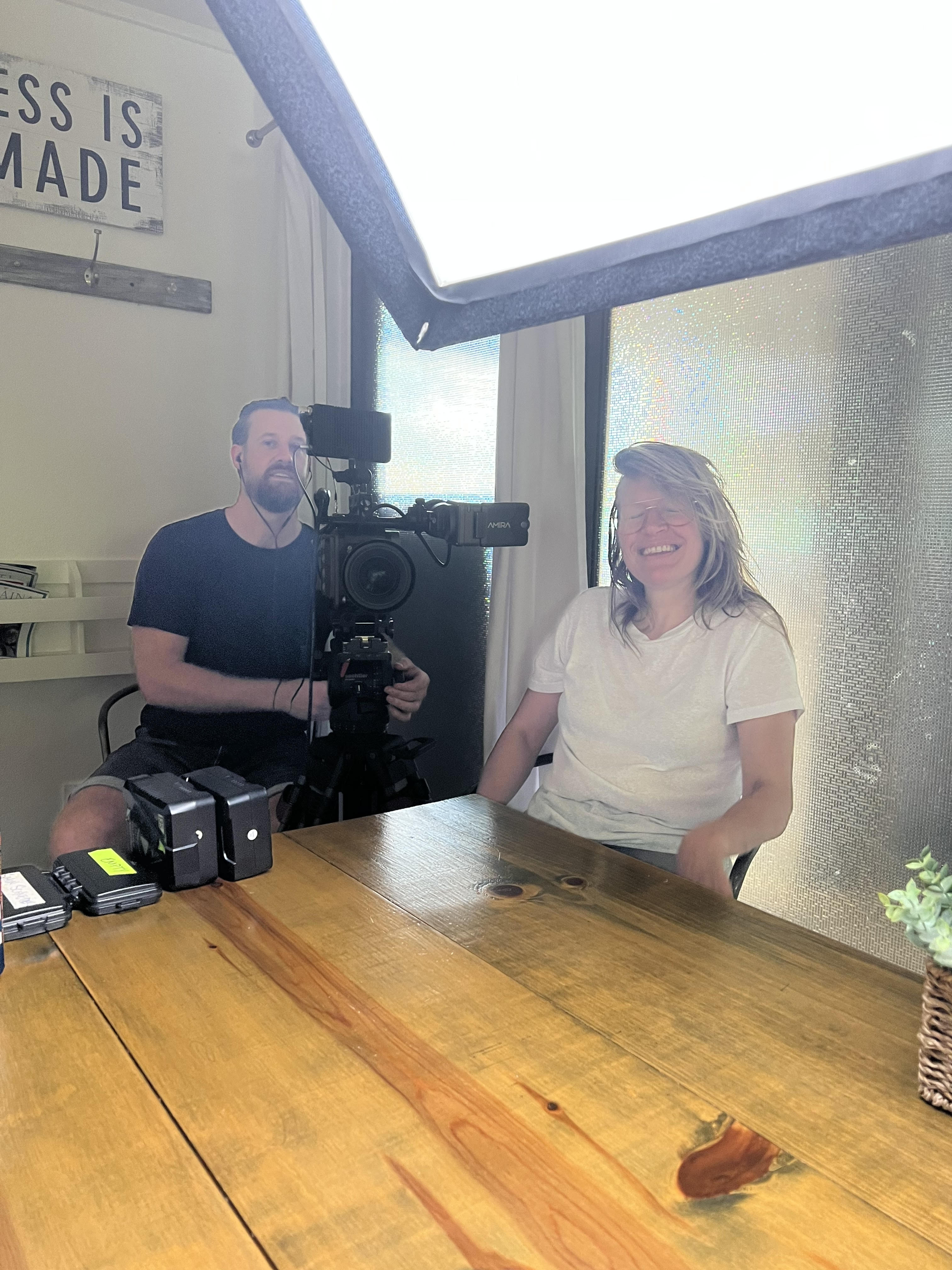
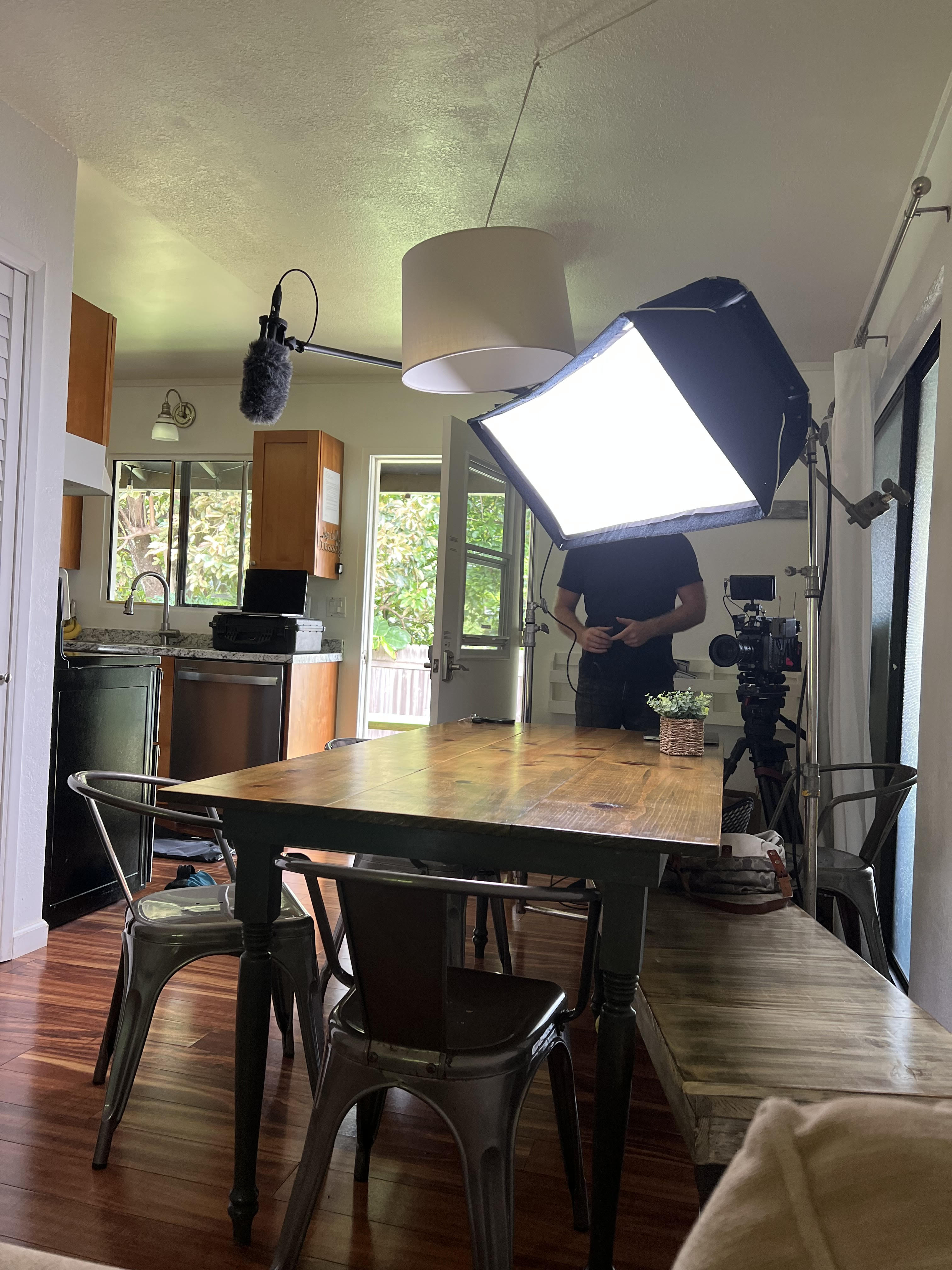
According to Dr. Wallace, the directors informed her that they had been making a film about wild orca and learned about Tokitae, the endangered orca at the Miami Seaquarium, during the process. They had decided they wanted to make a movie about the Miami whale and her life in captivity.
Even though it’s stated in Sacred Land Conservancy’s 2021 tax filings that the film is about the relationship between Lummi elder Raynell Morris and Tokitae, and that it was funded by the nonprofit and its associated organizations, this was not disclosed to Dr. Wallace, who had no reason at the time to look up an indigenous nonprofit’s tax returns, where she would have learned the truth.
Dr. Wallace was also never told that the filmmakers had been given access to Tokitae and were already filming her for their documentary. Footage of an October 2022 medical assist in the film’s trailer indicates this was happening before the November 2022 meeting in Hawai’i.
After Dr. Wallace spoke up publicly against Friends of Toki, of which Raynell Morris was a board member, the footage from Hawai’i was dropped, and according to a text from Sharkey to Dr. Wallace, was replaced with a news clip from one of her first appearances as a whistleblower, where she was not identified and was seen wearing a hoodie in silhouette. Was this punishment?
Months before the Hawai’i interviews, Dr. Wallace had been a signatory of a letter to members of Congress expressing concern over actions of The Dolphin Company and Friends of Toki – and their inactions as well – in the care of Tokitae. Her concerns proved valid when the care provided resulted in the whale dying in a condemned tank surrounded by a condemned stadium structure, despite having millionaires and billionaires involved in the effort. So something else might be at play here.
As both a nonprofit and corporate manager and executive, and as a journalist, I have been interviewed hundreds of times over my career. Whether it’s audio for podcast, or video for newscast, if it’s prerecorded media, there is always a simple solution. For numerous long-distance interviews, I have gone to local studios to be recorded or had cameramen or audio technicians come to my office or even my home. For example, for Walter Isaacson’s podcast, I was recorded in my living room by an audio technician from the local public radio (npr) station while the producer interviewed me over the phone.
There was absolutely no need for the directors to fly to Maui with their expensive equipment.
Except they both are Canadian and there’s nothing better for a Canadian than a fully paid trip to the paradise of Hawai’i – a trip I’m alleging was paid for through the various non-profit and government grants they received to make the film. If you donated to Sacred Seas (the operating name of Sacred Land Conservancy), you may want to enquire how much of the money donated to the organization went to the Hawai’i trip.
Now I’m just making an allegation here. Sharkey and Schneider can certainly discount me by being fully transparent and making the production’s funding, expenses, and travel receipts public. I’m certain Donohue can explain to his clients how that works.
It may appear that I’m pissed the post was taken down and this whole diatribe is anger. It’s really not. I strategically posted my thoughts on a new Facebook page that has only fifty followers to see who would take action and what action they would take. And now I know – the ones who made the post disappear are Sarah Sharkey, Simon Schneider, and their personal production firm, Everyday Films.
Let me tell you about EVERYDAY:
EVERYDAY, I and my associates around the world collect more and more documentation about Friends of Toki, Sacred Land Conservancy, Whale Sanctuary Project, The Dolphin Company, and Sea Shepherd Conservation Society, all linked together in the great circle of death of an endangered killer whale. EVERYDAY, more and more evidence is uncovered. EVERYDAY, a new person gets added to my watchlist. On August 15, it was two.
A simple “Please remove the photo from your post” message would have sufficed. But Sharkey, Schneider, and Donohue knew that by issuing a complaint – and a complaint only against me – that the entire critical text would be removed as well.
People who do that usually have something to hide.
But I have good news for Sharkey and Schneider. There are other filmmakers that were given access to Toki in potential violation of the USDA ruling. They’re on the watchlist as well.
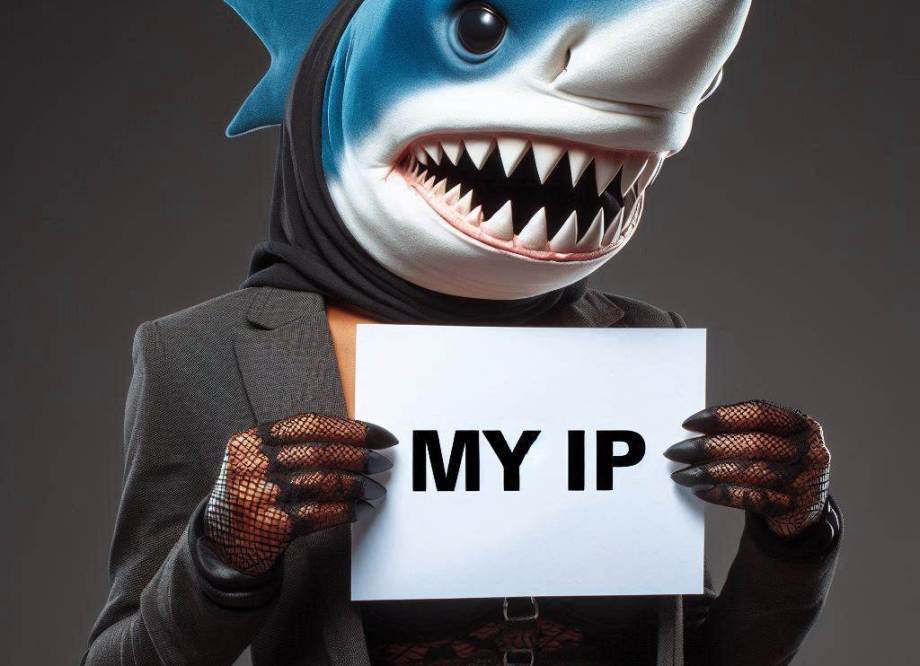
TOP: In order to prevent claims that I’m committing copyright violation in using a publicity headshot of Sharkey, I have asked an AI program to create an approximated image of her protesting my alleged violation.
NOTE: Per the disclaimer on this website, all material in this post is copyright the author unless stated otherwise.

