
BRIEF SUMMARY
- Recent global economic events could have a major impact on the North American tourism market.
- As a result, the possibility exists for mass layoffs within zoos, aquariums, and other animal attractions.
- For animal caretakers, their first priority should be themselves.
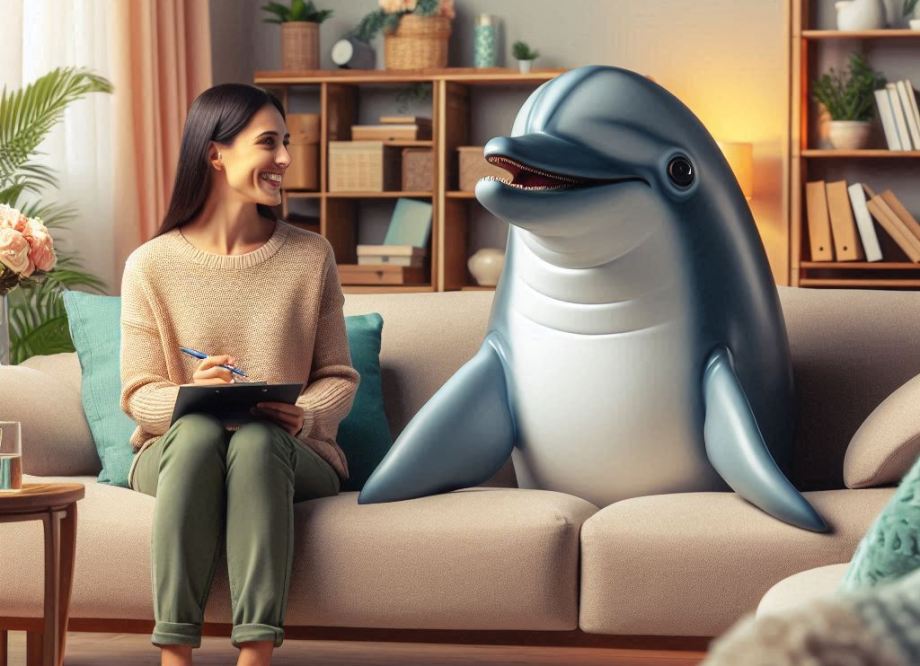
- Options are provided for animal caretakers to deal with mental health issues resulting from changes in the workplace.
I’m writing this to the animal caretaking staff ar zoos, aquariums, and other attractions in North America – the keepers and curators, the trainers, the veterinary staff, and those maintaining facilities and life support systems.
We don’t know what the global economy is going to be like in the months ahead, with the ever changing landscape of whatever’s going on with the tariff wars. Things could be resolved by next month, or it may take the rest of the year or longer.
When the global economy and markets become as volatile as they are now, with sudden and drastic drops, we historically see patterns begin to arise in the tourism market. The value of retirement funds tends to drop, as many are based on the value of stocks, while the cost of living increases (also a side effect of tariffs). When costs increase, and there is not an increase in the living wage, and political altercations take place between the US and other countries, both domestic and international tourism experience a steep decline. If another pandemic evolves, it will decline even further. For nonprofit institutions, donations decrease significantly, resulting in more nonprofits competing for the same limited funding.
If you work in the United States, with the exception of Montana and those states that honor contractual covenants regarding termination (if you’re fortunate enough to have such a contract), you are “working at will,” which means that you can be legally terminated at any time and for any reason. If you work for a company that’s filed for bankruptcy protection, your job security is even that much more at risk. Think back to the furloughs and layoffs during Covid, especially at the big theme park companies.
Those risks to your job security keep increasing. In 2013, when it became a publicly traded company, SeaWorld’s first annual report featured fifteen pages discussing risks to the company’s business. In the latest annual report, filed two months ago under the company’s new name of United Parks & Resorts, the risk discussion was a whopping twenty-two pages.
While I greatly appreciate your dedication to the animals, as uncertainty lies ahead within the tourism market, I want to remind you to not forget about yourselves and your wellbeing as well.
My personal experience
I’m writing this post because I’ve personally been in a situation where everything in my life suddenly went upside down.
In 2006, years before I was hired to write professionally about theme park and attraction design, and years before this blog existed, I was co-owner of a media services company. We had a great project that we were pitching to studios and networks about a couple of amateur wrestlers who would tour the US, Mexico, and Canada, visiting local wrestling leagues and operations along the way. We had a lot of interest and were close to a deal when outside forces interfered. The project was dropped, the clients left, and my company began to disintegrate.
Around the same time, I was riding my motorcycle up Highway 1 near Bodega. Two cars racing each other zoomed around the corner of a hill at high speed and I was flown from my bike, cracking my helmet on the pavement. I began having issues with memory. When I speak, I grasp for names and it can take a long time for me to properly convey concepts. I often forget when I’ve already shared information with someone. That’s why I quit doing television, radio, and podcast interviews. It’s why I took to blogging. It’s a way for me to share my thoughts in a refined manner, where I can take the time to put my thoughts together and I can edit them into something much more powerful. And I’m grateful to have partnered with retired animal trainer Valerie Greene, who has the amazing ability to vocalize eloquently what I’m thinking.
In 2006, my world was falling apart. Between the loss of my company and the complications from the accident, I entered a deep depression. I kept that depression to myself, hiding it to the outside world. The pain continued to close in on me and, one day, I called one of my best friends in a panic and told her I wanted to end it all. She encouraged me to go to the police right away. I didn’t listen. When the call was over, I went home and tried to kill myself.
I am a suicide attempt survivor.
I’m not ashamed of it. It’s part of who I am and I’m very open about it. I’m not saying that everyone who suffers depression will be suicidal, and most people who are suicidal don’t really want to kill themselves. I didn’t. It’s a response to not knowing how to cope with pain, be it emotional or physical, and thinking there’s only one final way out.
Shortly after I was discharged from the hospital, I adopted a rescue dog and began volunteering as a zookeeper assistant at the San Francisco Zoo. These two actions were life saving as they kept further depression at bay. I completely understand that working with animals is not only beneficial to the animals, its beneficial to you as well. It’s important to be in as close to a true positive mental state as possible when working with animals, because they will pick up on a negative state of mind, even if you’re trying to mask it, and your moods will impact their moods.
If you end up losing your job, or because of layoffs you experience a drastically increased workload, it’s not the end of the world. Two years after my suicide attempt, I was hired to open a new $109 million museum on the other side of the country and was earning a very substantial salary doing it. Life has been very good and stable since. I continue to go through therapy and participate in groups for those with depression and for suicide attempt survivors. I even married a beautiful woman who just happens to be a licensed therapist (purely coincidental), so what I’m about share isn’t being pulled out of a hat. I made sure to consult with experts on this material first.
Your mental health is YOUR mental health
If you feel stress, anxiety, or depression over your work, keep in mind that your mental health is YOUR mental health. You can be as open or private about it as you want. If someone mocks you for it or tries to weaponize it against you, know that their actions are not about you. It’s a reflection of their own insecurities, and they’re projecting those insecurities on you. It can also be an indication of sociopathic behavior, but that in itself is a mental health issue. I get such attacks every once-in-a-while and I’m past the point of letting them bother me. I don’t feel anger or hate. Instead, I do what those attacking me are unable to do. I empathize with them for the pain they must be suffering inside. And I move on.
However, keeping emotions bottled up is a recipe for disaster. Trust me, I know. Your best support is those closest to you – your family and friends.
Therapists are there to help you through
State or provincial certified therapists and counselors are trained to discuss your emotions and guide you on a path to stabilization. I’m hesitant to include life coaches here, since they tend to follow a much different formula. State or provincial board certification IS important because it protects your interests in case there’s any malfeasance on the part of the therapist. If you don’t feel the therapist you’re talking with is helping you, there’s nothing wrong with seeking out another. Therapy is not a one-trick pony. It’s not something that suddenly “cures” you. If you end therapy because you’re in a good place, there’s a great possibility the negative emotions will return. The solution is simply to talk again with your therapist. Our emotions are like a river that ebbs and flows. One day, it will take you towards one shore, and the next to the other, and sometimes we flow down the middle. Finding balance is the goal.
If you have health insurance, most plans also include coverage for mental health. Your insurer will have a list of available therapists covered under your plan.
Other options
If you don’t have insurance or if you lose coverage, there are a number of alternatives available, many of them low-cost.
- Houses of worship, including churches, synagogues, and temples, are often affiliated with faith-based mental health programs. This is actually how I found my first psychiatrist and therapist – both board certified – after my suicide attempt.
- Most county health departments offer mental health services. Some counties have separate mental health departments. In most communities in the US and Canada, you can access public resources by dialing 311.
- In the United States, you can contact the National Alliance of Mental Illness (NAMI). Note that “mental illness” is a term that’s centuries old, which is now largely disused because of its negative and inaccurate connotations. NAMI’s mission is to help those experiencing a mental health crisis. It’s not a matter of illness. It’s a matter of balance.
- In Canada, contact the Canadian Mental Health Association.
- If your emotions hit the point where you being feeling despair, call 988 in the US or Canada, which is the Suicide and Crisis Hotline. You don’t need to be suicidal to call this number. 988 operators are trained to guide you through an emotional crisis, including severe depression, or heavy drinking or medicinal usage, which is often a response to depression or anxiety, but only intensifies the condition.
- Finally, if you feel the urge to physically harm yourself or others, please call 911.
Take care of yourselves. If you lose a job, it’s not the end of the world. It can also be a new beginning.

