
And the Germans kill the Jews
And the Jews kill the Arabs
And the Arabs kill the hostages
And that is the news
And is it any wonder that the monkey’s confused
These lyrics were written by Roger Waters, one of the founders of the legendary rock band Pink Floyd. Regardless of how you feel, they’re pretty profound, considering they were on an album released 7 September 1992, exactly thirty-one years and one month before the 7 October 2023 Hamas attack on Israel.
The lyrics are profound in another way. They tell us that the same shit keeps happening over and over and over again.
Many of you don’t know much about me. Dr. Naomi Rose has positioned me as someone who’s been blogging about theme parks for decades. And I get it. It’s a wonderful way to paint me as someone who goes to the parks, rides the coasters, tries all the food, and buys the merch. That’s what a theme park blogger is.
It’s also an intentional attempt to discredit what I do and what I’ve had to say about Dr. Rose and the organizations she’s involved with. I write professionally about attraction design. That’s what I do to pay the bills. Most of what I do involves interviews over the phone or internet with designers and operators. Theme parks are a small portion of what I cover. In fact, last month, when I recently visited a local family amusement park to cover the launch of its 20th anniversary celebration, it was my first time visiting a theme park in two years.
My blogging is completely unrelated to my professional writing, and there are disclaimers to that effect on the blogs.
A year after I began writing professionally, I started ThemedReality to discuss issues in the attractions industry that others were not or may not have been aware of. It segued into marine mammal welfare because that’s a topic that interests me, and it interests a lot of the readership.
Even though I may have been “late to the game” in speaking publicly about Kiska or Tokitae or the Antibes whales, it doesn’t mean that I wasn’t paying attention and speaking behind the scenes with both industry experts and welfare advocates. The reality is that most of what I do is what you don’t see. For the first decade, what I primarily covered on ThemedReality was the dolphinarium trade in pre-Zelenskyy Ukraine, Russia, China and Japan, the international trade between these four nations, and the links between the government, billionaires, and organized crime in each of them. Many of you were likely in college or even high school when I was doing this and if you missed it, no worries. Nothing’s changed.
Dr. Rose is right about how long I’ve been doing something, but she was wrong on what it was. What I did do for decades was manage both commercial and nonprofit attractions and arts organizations. I take that experience of creating business plans and budgets, working on new construction projects, partnering and negotiating with government agencies, and creating extensive marketing campaigns, and I look at both the overall and individual situations regarding animal welfare, and I’ve determined one simple overriding factor exists – the three-fold system of government oversight, industry participation – including through its trade associations, and NGO participation DOES NOT WORK and needs to be radically reinvented.
Over the past decade, I’ve seen the terms EXPEDIENCY and URGENCY used to describe moving animals to other facilities, or even to sanctuaries, but it appears that those using the terms often either don’t understand the meanings of the terms expediency and urgency, or the system has created a barrier to their claimed attempt to achieve these two goals.
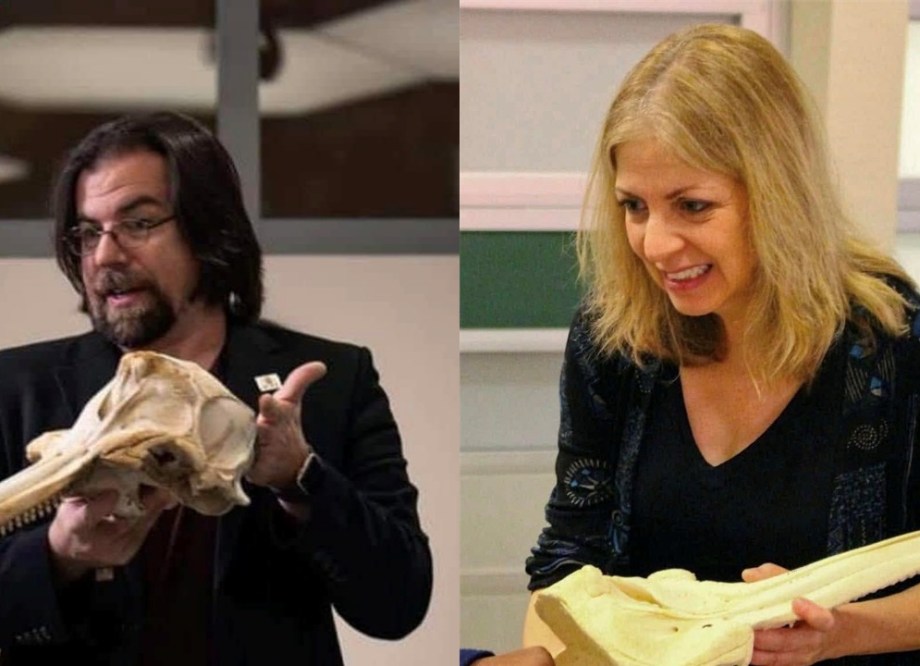
There is a new episode of the podcast Zoo Logic, hosted by former IMATA President Dr. Grey Stafford, with guests Billy Hurley, who’s the former Executive Director of IMATA, and Dr. Jason Bruck (pictured top left), a researcher who partners with IMATA trainers, wherein they discuss the accrediting associations’ limited roles in oversight, which apparently belongs to the government.
Meaning no disrespect to two of the three gentlemen, as I’ve never met or spoken to the third, there’s something that strikes me about the participants. When there’s a controversial issue, it’s not uncommon for organizations or corporations to ask someone with an auxiliary relationship to speak on its behalf. In fact, lawyers I’ve spoken with while I’ve been in management have encouraged this practice as it creates a sense of distance – an expert who can speak on your behalf, yet whose statements can be discarded as being their opinion and not the policy of your organization should backlash occur (this sometimes backfires, as with a recent opinion piece Dr. Bruck wrote for IMATA’s journal “Soundings,” since Dr. Bruck’s piece was published as an opinion piece, yet included statements positioned as fact that were published by the organization). Where are the public statements on Gulf World or Antibes by the Presidents or Executive Directors of IMATA or AMMPA?
When I say “oversight apparently belongs to the government,” I’m not kidding. In the US, responsibility keeps getting pushed around, between different federal agencies, state agencies, and local governments Many foreign government ministries and agencies, including France, Greece, and Spain, are just as screwed up.
Whale Sanctuary Project, which, according to their own statements, didn’t exhibit a need for urgency until whales started dying in France, has screwed the pooch by taking an animal rights approach to criticizing marine mammal facilities and then playing the victim card when parks won’t enter into talks. Charles Vinick, the group’s Executive Director, has actually mentioned publicly that his group has taken the wrong approach.
The industry shot itself in the foot years ago by creating every objection possible about sanctuaries, since it was the activist organizations that were pushing for them. The industry could have created sanctuaries by now, but when industry claims activists are the villain and activists claim the same about the industry, a never-ending barrier exists, shit fails to happen and animals die.
Dr. Lori Marino, the founder of Whale Sanctuary Project (top right, stealing Dr. Bruck’s pose with a dolphin skull), recently responded to an online comment about Ric O’Barry’s sanctuary in Indonesia by stating: “I can tell you that. Rick [she can’t spell] has a few sea pens where he keeps dolphins for release. That is not an authentic sanctuary. Rick has said that he thinks it would be ‘easy’ to create an orca sanctuary. He doesn’t know what he is talking about.”
Here’s the problem with Marino’s approach. She and Whale Sanctuary Project continually talk about their mission to create an “authentic” sanctuary for orcas and belugas – the “gold standard,” as they call it. This reminds me of restaurants that feature “authentic xxxxx food” on their signage and menus. What is authentic? There is “traditional,” but even that differs in definition. Authentic is truly an ever changing concept based on changing social norms and the fusion of ideas. Lori Marino’s idea of “authentic” is the one she and he cohorts created.
O’Barry’s sanctuary is a cooperative effort with the government. And it exists. WSP, on the other hand, has pledged not to use any government funding and its Canadian nonprofit does not accept donations. The only reason I can consider for such actions is that doing so would require reporting data that would be available to the public, data which WSP does not want made public. Can you imagine if WSP had partnered with the Nova Scotia government five years ago on a sanctuary – not just permitting, but an actual partnership – there very well likely could have been one built by now. And there wouldn’t need to be an urgency to build one while whales die.
Government, the industry, and activists need to stop looking at this issue as “we’ll get to it when we can” or “it’s someone else’s responsibility.” Animals in poor conditions, and on an individual basis, need to be looked at as true urgent and expedient emergency rescues. Where the animal is needs to play a larger factor.
This is footage was taken above Marinland Antibes a few days ago. These two whales are lucky to have made it a year past the most recent death.
When the bulkheads burst during a medical procedure on an orca at the Miami Seaquarium, preventing the waters from properly rising, that’s an issue with the environment. When two whales die within months of each other at Marineland Antibes, that’s an issue with the environment. When three dolphins die within an eight day period at Gulf World and a fourth lands on its head months later, fracturing its skull and breaking its neck, that’s an issue with the environment.
Simply doing short term fixes to the environment does not solve the problem. The only viable solution is to remove the surviving animals from the environment, and as rapidly as services are provided to their wild counterparts in destress.
The system needs an overhaul. Team ThemedReality/Shadow Warriors™ and our partners at The Flip and TideBreakers will continue to do what we’re doing. TideBreakers will continue to film and collect outstanding footage of facilities with poor environments, The Flip will continue to collect documentation, I will continue to blog about the issues right here on this blog, and Shadow Warriors™ will continue conversations with mainstream media, lawmakers, and regulatory and enforcement agencies.
But we’re also going to pivot. We don’t know what will happen with the Antibes and Gulf World animals. We don’t know how far our outreach will influence those with the power to do something about these issues. So in addition to working on the now, we’re going to also work towards the future, to prevent situations like Gulf World and Marineland Antibes from happening again. We’re going to work on changing the status quo.
That begins with a proposal to the AMMPA and IMATA, which I’ll be presenting next week – a proposal that would truly make the two organizations the gold standard in animal welfare and sanctuaries.

