
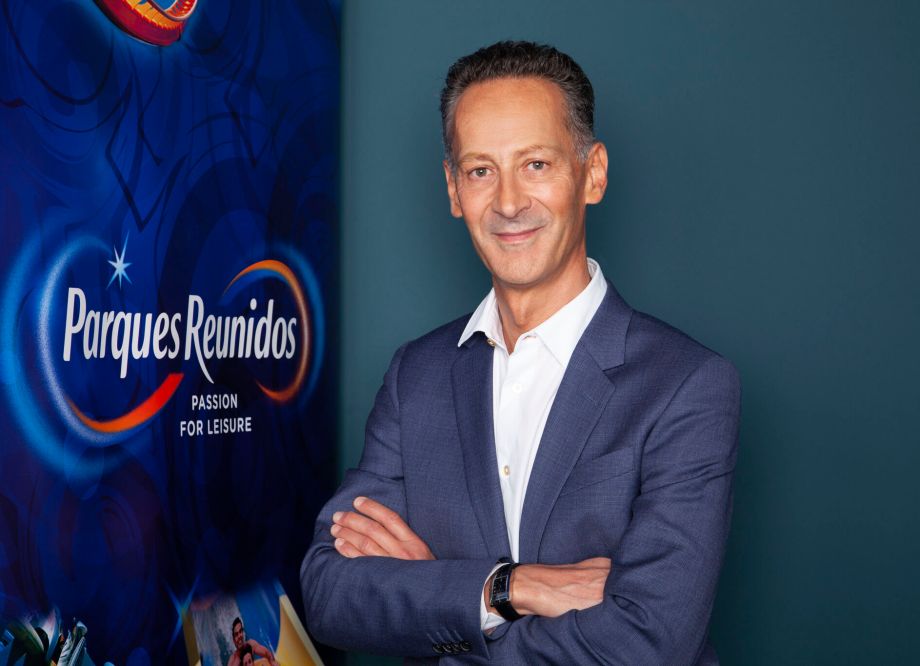
On February 27, 2026, Whale Sanctuary Project posted a piece on its blog titled “Report from Our Meeting with the French Government.” Reading this piece, and using data we’ve collected over the past ten years, we would like to address two key components.
Parques Reunidos
A paragraph in this Whale Sanctuary Project blog post reads:
“Because the captivity industry sees the sanctuary as a threat to its business model, Wikie and Keijo have become the thin end of a potentially very large wedge. Beyond Marineland, Parques Reunidos also owns about 60 other parks and is itself owned by powerful investment groups, whose primary interest is in profit rather than animal welfare. For that reason, they are aggressively trying to keep the two orcas from being transferred to the sanctuary in Nova Scotia and even to prevent this sanctuary from being established at all.”
To begin, this rather hostile paragraph includes outdated information. Parques Reunidos currently owns 31 parks and attractions in Europe and a waterpark in Australia, with less than 1/3 being zoos or aquariums. A quick check of the company’s website shows the following statement on its home page: “Parques Reunidos is one of the leading, fastest-growing leisure park operators in the world. With 50 years’ experience, it owns and operates over 30 leisure centers across Europe and Australia.” Additionally, there is a link on the home page to a press release about Parques Reunidos selling its American subsidiary, Palace Entertainment, to Herschend Family Entertainment. The press release is dated March 19, 2025.
This means that Whale Sanctuary Project staff did not confirm existing outdated information before publishing the blog post, or if they did, they performed a web search that presented outdated information or, more likely, used AI.
NOTE: Whale Sanctuary Project likes to correct errors after we point them out. Here’s the link, but in case they do change it, we do have timestamped screenshots.
Why this matters
There are some that might argue that for the purposes of Whale Sanctuary Project’s claim, it really doesn’t matter if Parques Reunidos owns 30 parks or if it owns 60. While this might be true under ordinary circumstances, these are EXTRAORDINARY circumstances, where Whale Sanctuary Project is ATTEMPTING TO ACQUIRE two orcas OWNED by Parques Reunidos.
The post is unattributable to any particular individual, so it was either written by an executive or board member OR by support staff or an advisor or third party publicist. Either way, it’s inconceivable that the post would have run without the approval of Lori Marino, Charles Vinick, Michael Mountain, or Matt Maraynes.
These four should know by now that it’s never a good strategy to criticize a company you need to negotiate with by using outdated information. It’s even worse when it’s part of a pattern of incorrect statements. Over the past few weeks, in addition to the above statement, Whale Sanctuary Project has confused the number of dolphins at Planète Sauvage (9) with the number at Marineland Antibes (12) and has erroneously mentioned the chillers in operation at the orca stadium in Antibes as part of its temperature acclimation plan for Nova Scotia. This is extremely problematic as the chillers have not been operational for a decade and the ambient water temperature between Antibes and Nova Scotia varies on average twenty degrees.
We are seeing a pattern where Whale Sanctuary Project has shown a lack of knowledge or desire to attend to the facts regarding the situation at Marineland Antibes and its parent, Parques Reunidos. And if we’re noticing this pattern, so are the executives at Parques Reunidos.
The profiteers
There’s no question that Parques Reunidos wants to sell the whales. It’s been wanting to do so for a decade, first to the Dubai Oceanarium, a project that was cancelled, then to R&F Ocean Paradise in Hainan, a project that was very much behind schedule and eventually filed for bankruptcy (there’s no evidence Marineland Antibes itself has filed for bankruptcy, even though claims have been made within the activism world).
Over the years, we’ve been forwarded correspondence written by Charles Vinick, Whale Sanctuary Project’s CEO, Lori Marino, its founder and President, and other members of management and the board. Three years ago, we were sent one particularly interesting email written by Marino in response to an inquiry. We have been granted permission to reprint it here, which we will do in part, on the grounds that the recipient remain anonymous.
In response to an inquiry on who the trainers and veterinarians would be that would be working on a daily basis at the sanctuary site, Marino responded:
Regarding the sanctuary care team, the training and veterinary team with whom Charles has worked in Miami with Tokitae (Lolita) and formerly in Iceland with Keiko are eager to work with us in Nova Scotia for transport of whales, conditioning of whales for transport and relocation as well as onsite training and veterinary care. These include:
Dr. Tom Reidarson – an experienced field vet
Dr. Jim McBain – the foremost orca vet in the world
Dr. Stephanie Norman – an epidemiologist from Washington State
Jeff Foster, our lead transport and training supervisor
Mike Partica, experienced orca and dolphin trainer
Laney Reiter, experienced orca and dolphin transport specialist and trainer
Matt Tartaglia, in-water animal operations specialist
Stephen McCollough, whale/dolphin rescue and whale trainer
Katy Foster, field operations coordinator
In addition to these individual specialists, all of whom Charles has personally supervised, there are several veterinarians and trainers whom he can engage to work with us.
Here’s a problem. In 2022, Parques Reunidos sold a marine life park in Miami to The Dolphin Company. This included the sale of the park’s beloved killer whale, Tokitae. Less than 18 months later, under the care of Whale Sanctuary Project staff, in a project managed by Whale Sanctuary Project CEO Charles Vinick, the whale was dead. Parques Reunidos executives are well aware of this.
If the list Marino provided is accurate, then matters are complicated further, because not only is the organization managed by the man who oversaw the care and death of a whale Parques Reunidos had just sold a few years prior attempting to gain control of two more of the company’s whales, but the people that will be involved in the transfer and care are the same ones that failed the whale in Miami.
Fundraising
Another two paragraphs of the Whale Sanctuary Project blog post read:
“If we can demonstrate that we have a confirmed path to the funding to be able to welcome Wilkie and Keijo by the end of summer, then the Ministry will be able to bring Parques Reunidos (the owners of Marineland Antibes) to the table to meet with us.
“If we cannot provide evidence of immediate funding and a path to sufficient sanctuary construction funding to be able to take the orcas, Wikie and Keijo will likely end up in Loro Parque zoo, where they will continue performing and will be fully exploited in the zoo’s breeding program.”
Over the past month, we’ve been reviewing documents in the Earth Island Institute archives at the University of California, Berkeley (click here for a disclaimer on how we are allowed to use this material). We noticed a pattern that seems to parallel what’s going on with Whale Sanctuary Project. For those not in the know, three of Whale Sanctuary Project’s board members, and some of its staff, were involved with the Free Willy Keiko Foundation, which later merged with the Jean-Michel Cousteau Institute to become Ocean Futures. The Keiko project was managed by David Phillips, currently Whale Sanctuary Project’s Treasurer, and Charles Vinick, the current organization’s CEO.
In carton 16, folder 13, we came across an October 1995 letter from an attorney for the Craig and Wendy McCaw Foundation to Rob Friedman, then President of Worldwide Marketing at Warner Bros., which states:
“Our problem at this point is cash flow. As you will recall, the vast bulk of the cost of Keiko’s rescue must be incurred before Keiko can be moved. Because of the urgency of moving Keiko before his condition further deteriorates, we have pushed a very fast pace for construction, and we will soon reach the point where money is going out more quickly than we can raise it.
“. . . . Our projections are that, without some help, we will be about $1.5 million short of the funds we need by year’s end and to finish the facility. We have enough money committed or on hand to keep construction going for the next 30 days or so, but at that point we will have to slow down or halt construction until additional funds are raised.
“If we are forced to curtail construction, it could be a devastating blow to the effort to save Keiko. We have committed to Reino Aventura that we will move Keiko in early January. Public events have been scheduled in December for Mexico City to bid Keiko farewell. If we fail to meet our commitment, we have no guarantee that Reino will not demand that its deal with the Foundation be amended or even revoked. In addition, the credibility of our fund raising appeals, particularity those made in connection with Free Willy 2, will be seriously damaged.”
The appeal resulted in a $2 million grant from Warner Bros. Elsewhere in the archives, there are contracts for two different loans, each in response to a plea from the Free Willy Keiko Foundation stating that efforts would be harmed if Keiko were not in the Oregon pool by the time of Free Willy 2’s release. These direct appeals from the Foundation resulted in one contract for a $2 million note sale at around 8% interest and another for a $1 million loan at 1% interest, with the Foundation’s assets being used as collateral. At the time, the only asset owned by the foundation was Keiko, who had been donated by Reino Aventura and given a valuation of $1 million. We do not know if either loan was finalized.
Charles Vinick is there too
The requests for funding took place prior to Jean-Michel Cousteau and Charles Vinick joining the project, when current Whale Sanctuary Project Board Member and Treasurer David Phillips was managing the Free Willy Keiko Foundation.
However, when Vinick came onboard, things got…..weird.
On our old blog, saved for eternity on the Internet Archives, we discussed Vinick’s troubled history with long-term construction projects (a cancelled Cousteau visitor center in Virginia and an indoor theme park he managed into bankruptcy and receivership after only three years of operation), along with financing issues on the Keiko project.
In crate 17, file 10 of the Earth Island Institute archives, we found the following disturbing fax sent from Gwendolyn McKinnis, a certified public accountant (CPA) to Vinick on April 20, 1999:
Enclosed: Current year & prior year profit & loss and cash flow statement –
As you can see from the figures, there has been a loss in the last two years as well as a negative cash flow (beginning cash on hand was 2.5 million and currently it is 207 thousand).
So Charles there is no profit to be reflected on an income statement.
Call if you have questions.
TOP IMAGE: Parques Reunidos CEO Pascal Ferracci. Source: Parques Reunidos

