
Brief summary
- There’s a rant with a purpose
- Drones, combined with ground visits, interviews, and documents, are tools that create a story of a welfare situation
- Respecting the right to having differing viewpoints may be the start to fixing the current marine mammal park crisis
- NGOs that are developing sanctuaries continue to market in a way that demeans their animal care staff
- Remembering Jun Jun and the parallel to another whale slated for a move to a sanctuary
Read before burning
If you haven’t read the Introduction, please do before proceeding.
It explains the reasoning behind this series and contains important disclaimers. The reason for the Introduction is because, as you’re reading this, I don’t want you to suddenly think of me as an asshole without purpose, because I am indeed an asshole, but I do indeed have a purpose. That purpose is simple: to spread the message that we are currently experiencing an unprecedented international catastrophe created by the simultaneous global closures and bankruptcies of marine mammal parks and attractions. The stakeholders – the industry that runs these facilities, the anti-captivity crusaders who oppose them, and the governments, who regulate them – have failed the animals of these parks and put their lives at risk. There are solutions, but they will require adversaries to quit pointing fingers at each other, to think outside the box, and to secure financing and permits before the end of the year.
To better understand these posts, it helps if you know that I tend to write multilayered stories, even in my professional reporting. If you temporarily shift your focus and peel back the layers, you might find something of interest to you.
Here’s an example of how that works and how so many missed out on important information.
Two years ago, I attended the grand opening of SeaWorld Abu Dhabi. I’ve received a lot of scorn from the anti-captivity crowd for that visit and for the six articles I wrote about the park. I’ve been called a SeaWorld fan (I’ve been to SeaWorld parks, including Abu Dhabi, a total of four times since my internship in San Diego in 1987) or an employee of the company (I’ve never been paid by SeaWorld nor its parent companies, regardless of whether I was writing about the parks or performing an unpaid internship in my teens. Nor have I ever attended a hosted event as a journalist at any SeaWorld park other than the Abu Dhabi grand opening).
Nobody who made these accusations appears to know that I wasn’t scheduled to visit the park at all. I was a last minute replacement, receiving my visa just days before my flight, for another journalist who suddenly had a scheduling conflict. Nobody who makes these accusations appears to know that while I was in Abu Dhabi, I was speaking live with activists, trainers, and pinniped keepers in the US and Canada who had asked me to report back on the conditions of the walrus habitat, and I was streaming live video to them in real time.
Finally, it appears that ALL who made these accusations were concentrating on the wrong thing and missed content that I included on programmed lighting designed to induce mating activities and the fact that though the park has dolphins, it doesn’t house orcas or belugas, and whales are presented only via projection. I would assume that anti-captivity proponents would take an interest in what I have to share, because there’s information of importance to their cause. After all, if they’re not going to make the trip to Abu Dhabi themselves, how are they going to know what the park and its welfare situation are like and what items they have an opportunity to protest beyond just the blanket argument of “Captivity is bad”? Activists and journalists – fluff journalists, news journalists, tourism journalists, trade journalists – visiting and monitoring these parks and zoos and aquariums all serve a purpose and, if the park supporters and the park opponents got beyond the “good” and “bad” scenario that frames so many opinions on captivity, BOOM!, the information we give could cause the floodgates to open and people would begin to see that both pure perfection and absolute failure are lies, and the reality of captivity resides somewhere in-between, and that when failures happen – all parties, regardless of outlook and belief, are complacent to some degree and all are responsible for the welfare of the animals we all care about.
I’ll be honest, though. Compared to other human-made habitats, the walrus habitat at SeaWorld Abu Dhabi is amazing in its design, as is the rest of the park. I think back to when I was a child in the 70s and I saw my first walrus in the recently converted Shamu Stadium, and I’m amazed at how exhibition design (with the help of tens of millions of dollars in Abu Dhabi, of course) has progressed over the years.
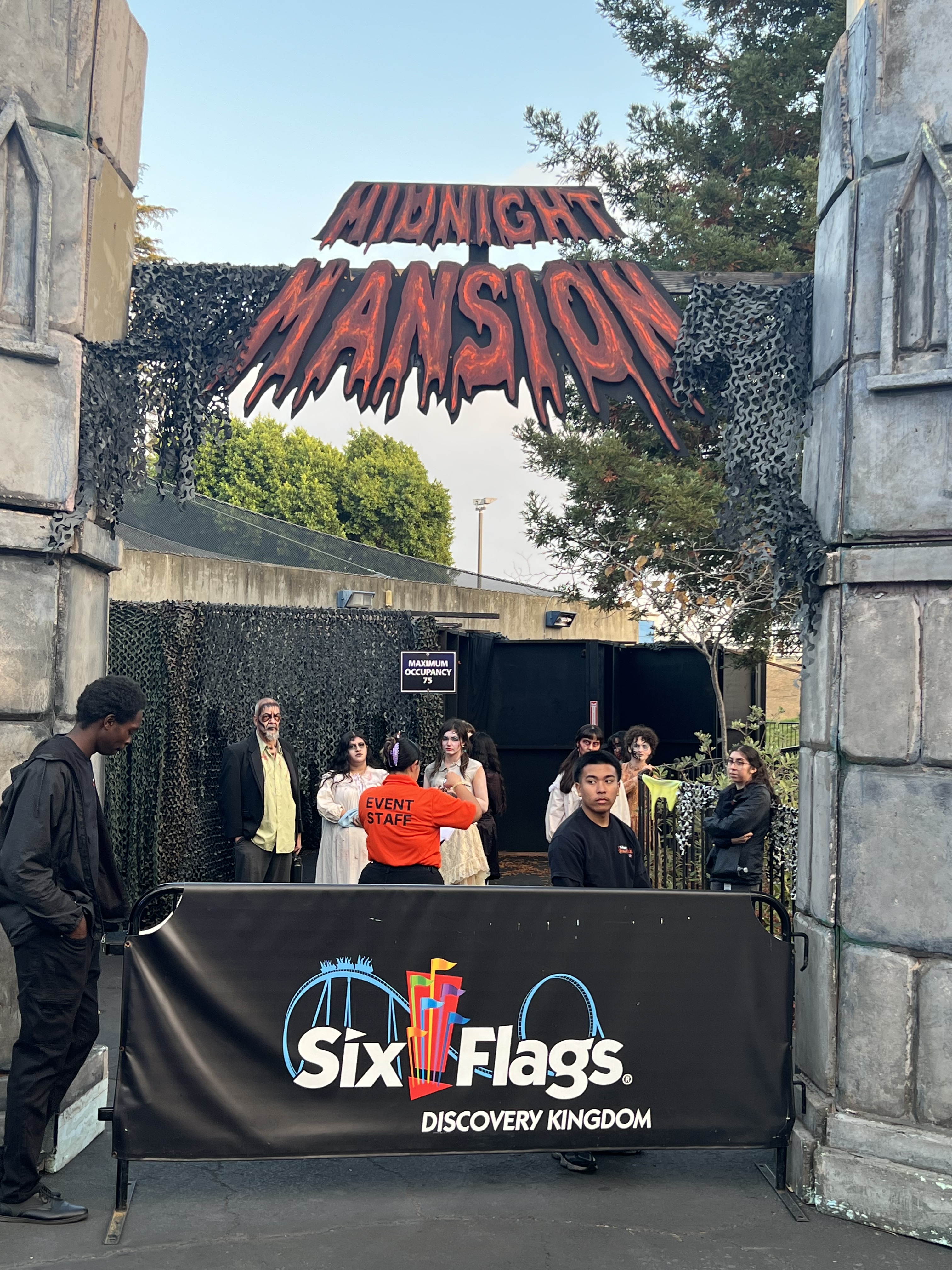
By the way, Six Flags Discovery Kingdom has a wonderful solution for what to do with a former walrus exhibit space that’s been closed for a number of years:
So it may seem as you’re reading Chapters 1 and 2 that I’m being harshly critical on activists in general and sanctuary developers and promoters in particular. I am. But I assure you that I will be just as harshly critical of the zoo and aquarium community in Chapters 3 and 4.
Finally, this series is comprised of five chapters. However, some of those chapters have gotten very long like a James Michener or Frank Herbert novel, so I’ve separated them into smaller sections to make them more time efficient. This post is the first section of Chapter 1.
SO….time for the checklist.
- Ask them to read the Introduction…..CHECK
- Rant about anti-cap complaints on my trip to Abu Dhabi….CHECK
- Mention equal harshness policy….CHECK
- Explain why chapters have been split….CHECK
Everything’s good to go. Keep your seatbelts fastened and your arms and legs and flippers inside at all times. It’s going to be a very bumpy ride. Prepare to be pissed or enlightened or both. That’s up to you.
Joe Kleiman
Why do animal welfare advocates fly drones over marine life parks?
It’s about telling a story. The drone itself isn’t the story, but it’s used as a storytelling tool.
Combined with on-the-ground visits (paid tickets), behind-the-scenes conversations with staff and visitors, and document acquisition, a complete story begins to unfold.
This was the case with Gulf World Marine Park in Panama City Beach, Florida. The footage taken of the park by the NGO TideBreakers went viral on the internet. Combined with acquired documents from government and other sources, it led to engrossing articles in the local, national, and international press. The documentation, video, and photos were also provided to state and national law enforcement agencies and politicians, resulting in the closure of the park and a state criminal investigation.
Now, I don’t agree with TideBreakers on a few things, and I’ll be addressing that later in this series. However, disagreeing is not the same thing as disrespecting. There are quite a few activists and quite a few members of the zoo and aquarium community with whom I have differing beliefs and, while we may not respect each others’ beliefs, we respect each others rights to have those differing beliefs.
That just may be the key to beginning a solution to the crisis we’re in.
There’s a well known activist who operates a rehabilitation hospital for cetaceans. When we speak, he, knowing that I cover the attractions industry professionally, often refers to the zoo and aquarium industry as “your industry,” somewhat jokingly. Likewise, when I speak to him about activism, sometimes I’ll throw “your industry” back at him. But beneath it all is this underlying respect. I have a lot of respect for him and his accomplishments and he, in return, has shown me nothing but respect. It is through that kind of respect that he, as an anti-captivity activist, was able to engage a leading AZA accreddited theme park veterinarian to perform a rare procedure on one of the cetaceans in his care.
I have a lot of admiration for the three women who comprise the core TideBreakers team. They have been establishing an international reach, monitoring and taking action on parks in North and South America, and throughout Europe. What I think I appreciate most is that they take what I perceive as a highly ethical approach to their activity. Others don’t, and I’ll be addressing that in a future post.
On the 12th of August, a team from TideBreakers was flying a drone near Marineland Antibes and came across an astonishing sight, and although the scene went viral on the net and in media, it encountered serious competition in both social and legacy media spaces from two contrived series of posts. One I’ll address here, the other in the next post.
Deep Fakes
About the same time TideBreakers released their astonishing footage, AI generated images began popping up on social media. These images were spread far and wide through algorithms to individuals who had expressed interests in whales and marine life parks. The posts purported to show an orca devouring a trainer during a live show. In some sets of images, the trainer was a man. In others, a woman. And the look of the individual differed from one set to another. Different names were given for the trainers, and different names were given for the park.
International media seemed to latch onto the most prevalent of the variations, that featuring the fictional trainer Jessica Radcliffe, partially because linking or presenting a story about viral posts tends to lead to higher hits for mainstream media stories, and partially because a good portion of the public had become susceptible to believing it was true. After all, even if a reader discerned the photos were fake, there was no reason to disbelieve the story.
While the Jessica Radcliffe story has expanded to the point of being mocked on the internet, with new posts showing her funeral, or her surviving and enjoying her new car, and even Jessica being attacked by a Megaladon at sea with her research team, one prominent nonprofit, Whale and Dolphin Conservation (WDC), easily determined why the AI was created to begin with.
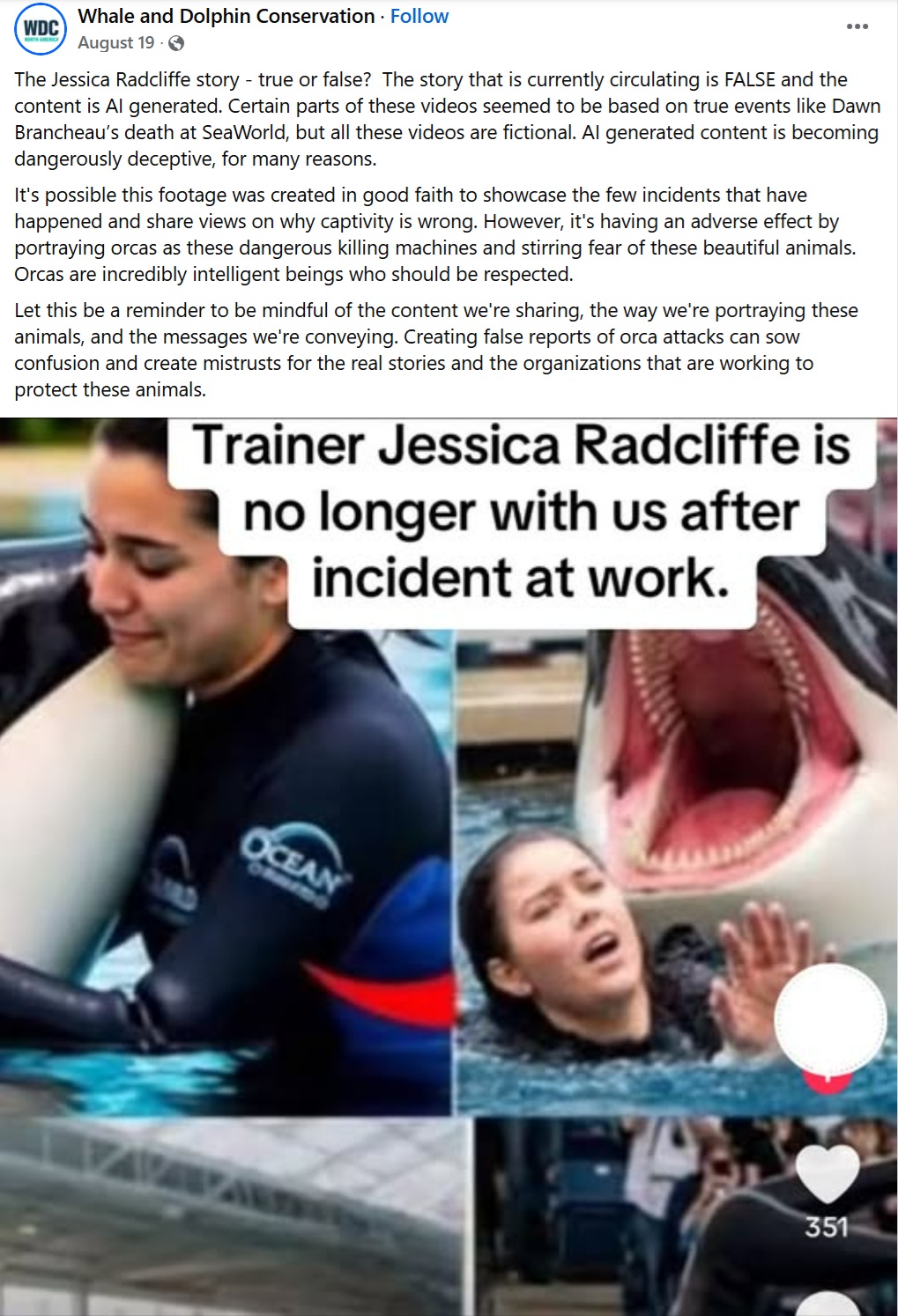
Of course, the organization is wrong. The actual reason is that AI image creation has advanced significantly over the past few years and, just like with any new-ish technology, disgusting people like to use it to create disgusting images. In this case, the algorithms favored it, people believed it might be true or just liked it, and it went viral.
These two lines in WDC’s Facebook post conflict with the daily operations of one of its projects: “It’s possible this footage was created in good faith to showcase the few incidents that have happened and share views on why captivity is wrong. However, it’s having an adverse effect by portraying orcas as these dangerous killing machines and stirring fear of these beautiful animals. Orcas are incredibly intelligent beings who should be respected.”
With these lines, WDC has trivialized and negated the role of the animal care staff – trainers, and veterinarians and others that are responsible for oversight of the animals’ wellbeing at any facility – and that would include the facility on which WDC is partnering with SEA LIFE Trust, the Icelandic Beluga Sanctuary. While there are no reported incidents of belugas killing humans, there have been documented incidents of aggression towards trainers and performers, especially in Chinese facilities.
In this video, shared online by China Cetacean Alliance, it can easily be construed that the belugas are wanting to play with the performer’s wig, which makes this incident eerily mirror the death of Dawn Brancheau at SeaWorld Orlando. While a number of activists claim the orca Tilikum’s attack on Brancheau was based on the frustration and anger caused by captivity, a number of experts have expressed the belief that it began with Tilikum wanting to play with his trainer’s ponytail, and the event curtailing to its catastrophic conclusion thereafter.
With its statement, WDC has failed to acknowledge the risks that its trainers undergo to care for the animals, something we previously witnessed with Whale Sanctuary Project (and before you argue, “But Joe, only orcas have killed people, not belugas,” I’ll point out that WDC has also publicly promoted Whale Sanctuary Project, which has been attempting to acquire orcas for almost a decade). It’s important to remember that no matter how cute and friendly they may seem, ALL cetaceans pose a risk to humans, regardless of whether they’re in the wild, in a sea pen, or in a concrete tank.
This sanctuary approach of decrying zoological facilities by saying “It’s bad with them, but it’s good with us” is partially based in a two-tiered marketing strategy – simplify the description of the sanctuary operation as much as possible for the general public in order to avoid unnecessary confusion AND create a nirvanic image of the sanctuary to appeal to the utopian desires of the general public and the frustrations of anti-captivity crusaders in particular. This strategy lambasts the animal exhibition industry, while, at the same time, it applauds sanctuaries as the perfect solution.
The key to this deceit is that, for the most part, the organizations fail to advise the public or minimize discussing with the public the extent to which sanctuary operations and design – feeding and veterinary procedures, enrichment (because bored whales will need artificial enrichment), the construction of medical pools, the division of a sea pen into smaller areas for separate genders or aggressive animals or different species or for quarantine, reducing the overall space available to a single animal – are all based in part on existing captivity protocols AND that park and aquarium and theme park trainers will likely be the ones hired to oversee the animals in these sanctuary facilities.
What I’m saying certainly does not apply to all sanctuaries, but it does apply to the three sanctuary developers who co-wrote the GFAS guidelines for cetacean sanctuaries, which I’ll cover in much more detail in Chapter 2.
Sea pens are not perfect and the fact that it’s a sanctuary doesn’t make the facility perfect. The Icelandic sanctuary is a perfect example of this, as its dive boat sank, leaking fuel into the sea pen. Fortunately, the two whales had already been relocated to an indoor pool after one experienced ulcers upon being reintroduced to a newly redesigned sea pen.
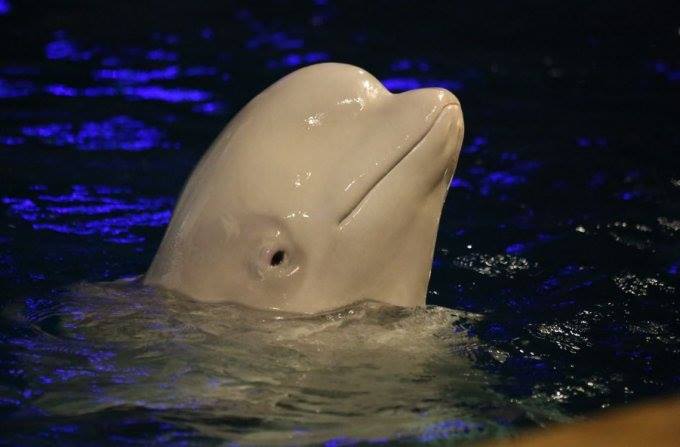
And let us not forget Jun Jun, the third beluga that was part of the SEA LIFE sanctuary project (photo at top of page. Image source: Whale and Dolphin Conservation), who died in her aquarium tank in Shanghai less than two years before her scheduled transfer to Iceland. James Burleigh, a Merlin Entertainments executive who, at the time, served as Chief Ambassador for SEA LIFE, stated: “It is with great sadness that I have to report the passing of Jun Jun our Beluga whale, she was 17 years. Jun Jun had a history of illness, particularly around her immune system. But at late she’d been getting fitter and fitter and enjoying her life, and unfortunately this happened very very quickly.” It would be nice if WDC paid more time posting tributes to Jun Jun and less time justifying sick death porn on the internet.
Not too surprisingly, Burleigh’s explanation is identical on its surface – history of illness, whale suddengly getting fitter and healthier, then suddenly getting sick and dying – that we heard from the Miami Seaquarium and Friends of Toki on an endangered killer whale.
And that’s part what I’ll explore in Chapter 1b, which will include:
- Lessons to be learned from Keiko and Tilikum
- Branding vs empathy
- Why TideBreakers’ footage changed the game

