
DISCLAIMER
The ownership and editorial staff of The Flip are not opposed to the retirement of cetaceans (whales and dolphins) and pinnipeds (seals, sea lions, and walruses) in human care to seaside facilities, be they refuges, sanctuaries, or retirement facilities of another name. We are not opposed to the right of the Whale Sanctuary Project (WSP) to exist, nor to its right to its mission. Our expressed concerns with and criticism of WSP lie solely with the decisions, indecisions, ineptness, marketing strategy, and lack of transparency conducted by its senior management.
Portions of this blog post originally appeared on our former website, TheFlipOnline.
QUOTE FROM A SMART PERSON
“Intelligence can be considered as being able to tick boxes, while wisdom is concerned with knowing of which boxes are worth ticking.”
– Richard Armitage, “The intelligence–wisdom gap and the urgent need to close it”, British Journal of General Practice, 30 December 2022
LORI MARINO: FACTUAL EXPERT
There are five key ways that a sanctuary can acquire a cetacean from an exhibition or research facility:
- Court order: This has proven difficult as requests for courts to place the cetaceans in sanctuaries has to date been near impossible due to the scarcity of operational sanctuaries.
- Government seizure: As has been seen with the recent closures of Marineland parks in Canada and France, the governments have been hesitant to seize the park’s animals, with provincial and federal agencies in Canada pointing the finger at each other as to which party is responsible.
- Purchase or donation from the facility owner or acquisition and donation by a third party: As we’re about to show, this has become nearly impossible due to a flawed strategy instituted by Whale Sanctuary Project a decade ago.
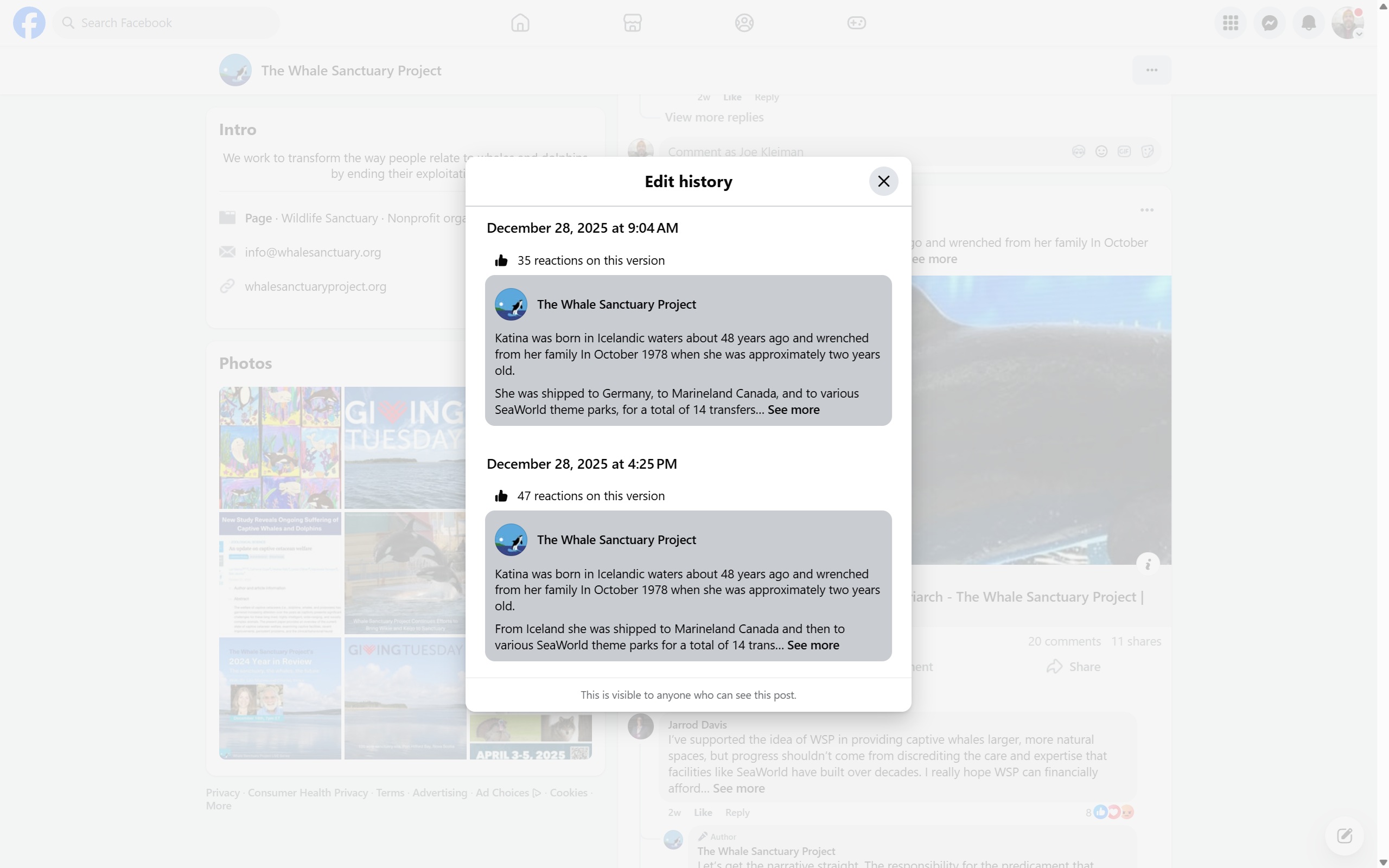
To understand, we’ll look at a blog post on the Whale Sanctuary Project website written by its founder and President, Dr. Lori Marino. We have screenshot the article in case it’s altered again.
The first thing noticed in this post about the death of SeaWorld’s orca Katina is that it does not celebrate the orca at all. Rather, it is a hit piece on SeaWorld. The article does not mention that Katina was the most prolific breeding whale in the history of orca exhibition, with a total of seven surviving calves. Instead, it focuses on such interesting facts about her motherhood as:
In 1993, Katina gave birth to a son, Taku, whose father was Tilikum. Thirteen years later, when he reached sexual maturity, Taku impregnated his mother, resulting in an inbred calf, Nalani. In the wild, incest among orcas is unheard of. It is as aberrant as it is among us humans, and a behavior that is emblematic of the highly artificial and abnormal conditions imposed on captive orcas.
Nine days later, Marino wrote a blog post about the mother and son pair of Wikie and Keijo at Marineland Antibes, where she does state that Valentin “was Wikie’s half-brother and is generally assumed to have been the father of Wikie’s second son, Keijo, who was born in 2013.” Truth be told, it’s more than an assumption.
So why the huge emphasis on the negativity of inbreeding with regards to Katina, but a passing line in the piece on the French orcas? WSP is attempting to acquire the French orcas, while it realizes there is no chance for it to acquire orcas from SeaWorld.
It took a week after SeaWorld announced Katina’s death for Whale Sanctuary Project to make a statement. It took a day for them to make a statement on the death of Kshamenk, the lone orca at Argentina’s Mundo Marino park. Again, why? Because, as Marino stated in an October 2023 presentation, “I’m not sure if he’s healthy enough, or even if he’s a viable candidate, but we like to keep him in there, because we’re thinking about him. If there’s any path forward, we’d like to have him.” For those of you not in the know, the Argentine government ruled it illegal to export Kshamenk from the country.
THE SEAWORLD DILEMA
Compromise is a real thing. Compromise exists. Marino could have approached SeaWorld with the concept of “Our goal is to end cetacean captivity. We would like to work with you on retiring your whales to natural habitats.” Instead, playing off the vitriol developed by the film Blackfish, WSP began running pieces on candidate whales accusing their owners of neglect and abuse. While this may have proven effective with activists and the film’s fans in garnering financial support, it backfired with the parks. For example, WSP ran a piece on the last captive orca in Canada, Kiska, with the headline “Crisis at Marineland” only weeks before requesting the park donate the whale for their sanctuary. The park not only declined, but also published an extensive report showing faults with the sanctuary site and the WSP organization itself.
Why have hope for Kshamenk when Katina at one point was a much more viable option. In 2017, under former CEO Joel Manby, SeaWorld, with the backing of the Humane Society of the United States, implemented an orca breeding ban at all its parks. It also established a rule that any new parks, included licensed ones, would not house whales. To date, the breeding ban has been honored, even though it is only required by law in California AND when a licensed SeaWorld park opened in Abu Dhabi, it opened without orcas or belugas.
But instead of compromise, Marino decided to villainize SeaWorld. And then in 2018, she sued the National Oceanic and Atmospheric Administration (NOAA) in an effort to reverse policy on how necropsy reports were handled. The goal, as shown in the court filing, was to make recent necropsy reports available on SeaWorld orcas to non-company affiliated scientists.
With such an aggressive policy, it’s no wonder that parks refuse to donate or sell whales to WSP. Only one has cooperated – The Dolphin Company – and the CEO of the company found himself with a condemned orca stadium housing a condemned tank, leading to an unprecedented decision by a federal agency that the whale and dolphin in the condemned tank could be kept there as long as they were not on public exhibition. The caveat – both would lose federal protections under the Animal Welfare Act. The CEO now had a whale with expensive upkeep that he couldn’t make money off of and he partnered with WSP and its associate nonprofits once they offered to foot the bill. Marino often argues that WSP had a minimal role in this project, yet there is substantial evidence to state otherwise. By the way, this CEO was very adverse to spending money, so much so that he took out hundreds of millions of dollars in loans that his company failed to pay, resulting in bankruptcy filings in multiple countries.
Recently, Marino has been playing the victim card, accusing the owners on both social media and her website of being the sole source of the problem. But who wants to hand over their assets to a bully that keeps villainizing them? Marino reminds us of the kid demanding lunch money who then seeks pity for her rumbly tummy, blaming the kids who wouldn’t pay her, when she gets ignored.
Even WSP’s CEO, Charles Vinick, knows this is a huge problem. On an October 2020 episode of the Gabby Reece show, he stated: “People would assume that a Whale Sanctuary Project is an advocacy group against marine parks. Not the case. We have to be partnered with the marine parks.”
THE FACTS ARE WRONG
One of Marino’s strongest traits is that she continuously gets important facts wrong, and that’s problematic for the head of a nonprofit building a $30 million+ project (up to $20 million for construction and $2 million per year for first five years of operation).
For the first day the Katina post was online, both it and its accompanying social media posts inaccurately stated that she had been housed in Germany.
That’s not as bad as the statement she made during numerous presentations, where she failed to mention Katina and another SeaWorld orca, Ulises as caught in the wild. We captured one such statement live:
During the same presentation, she gave erroneous information as to the SEA LIFE Trust’s beluga sanctuary in Iceland:
Just this past week, Marino stated that the orcas at Marineland Antibes in France are living in chilled water, even though the chillers have been inoperable for the past decade, a fact well known within the industry. In the following thread, you’ll see Flip editorial contributor Valerie Greene, a retired SeaWorld trainer with over a decade experience, including with orcas Tilikum and Katina, point this out. If you look for this online, you’ll see that the context of the thread has changed, as WSP blocked Greene, therefore automatically removing any of her comments.
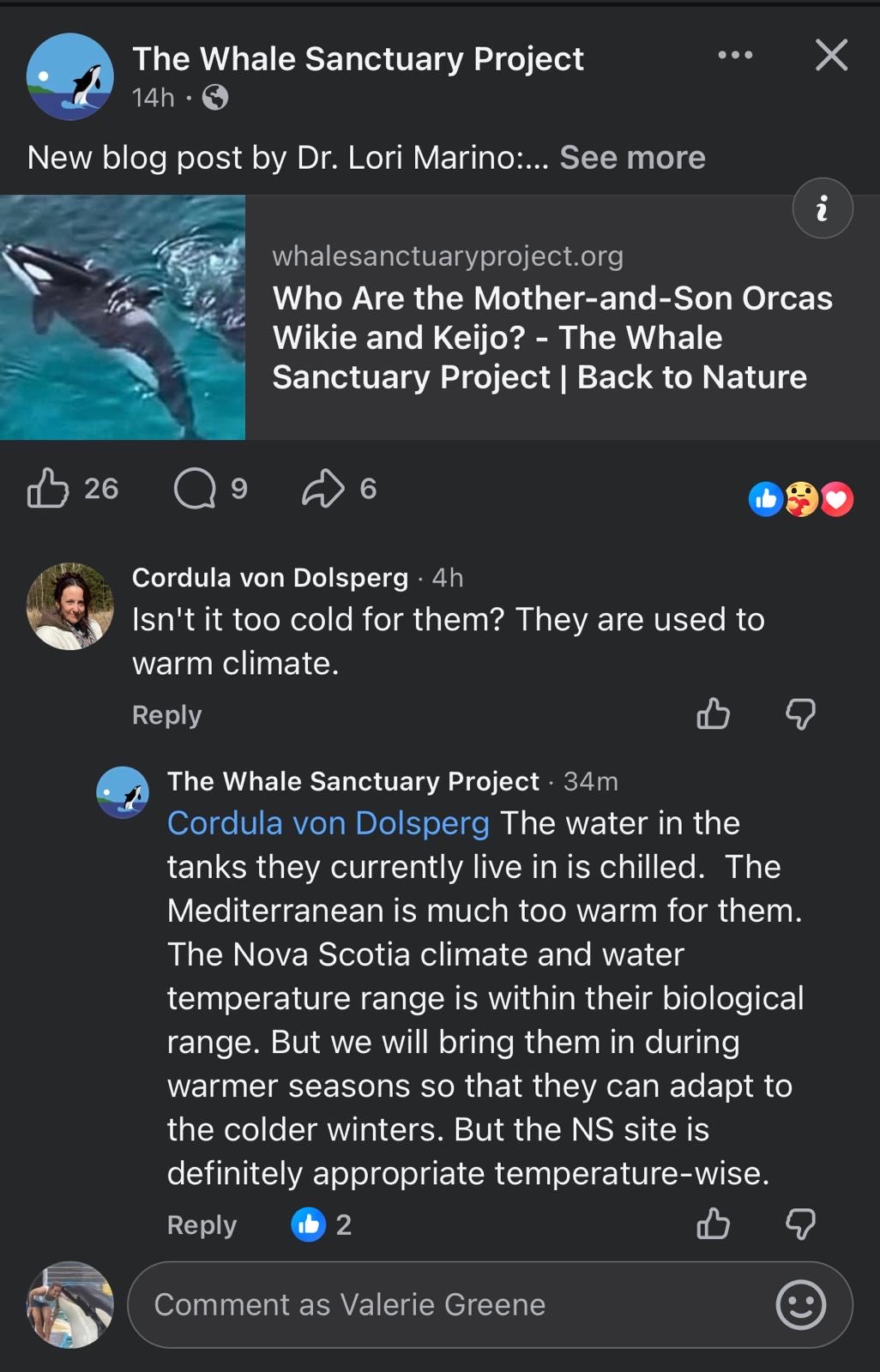
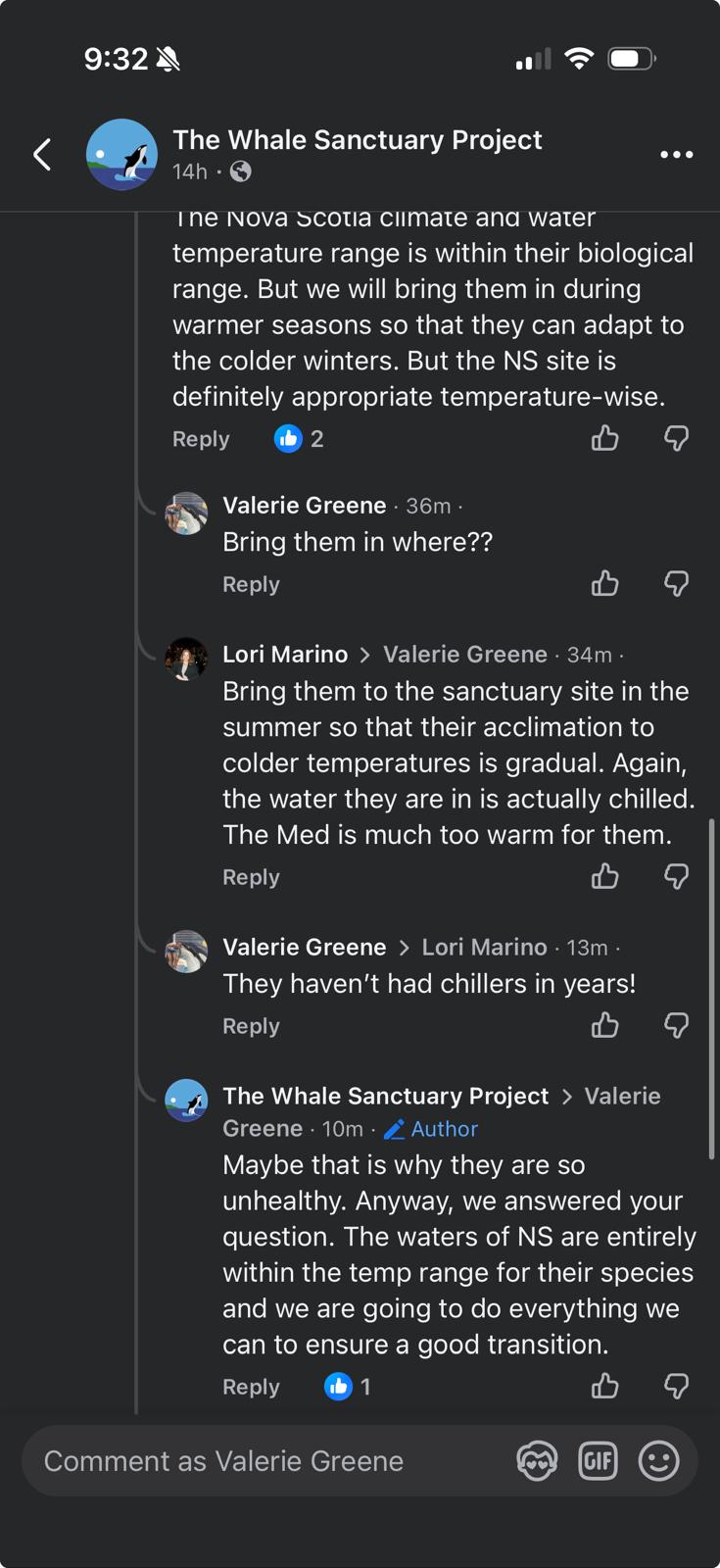
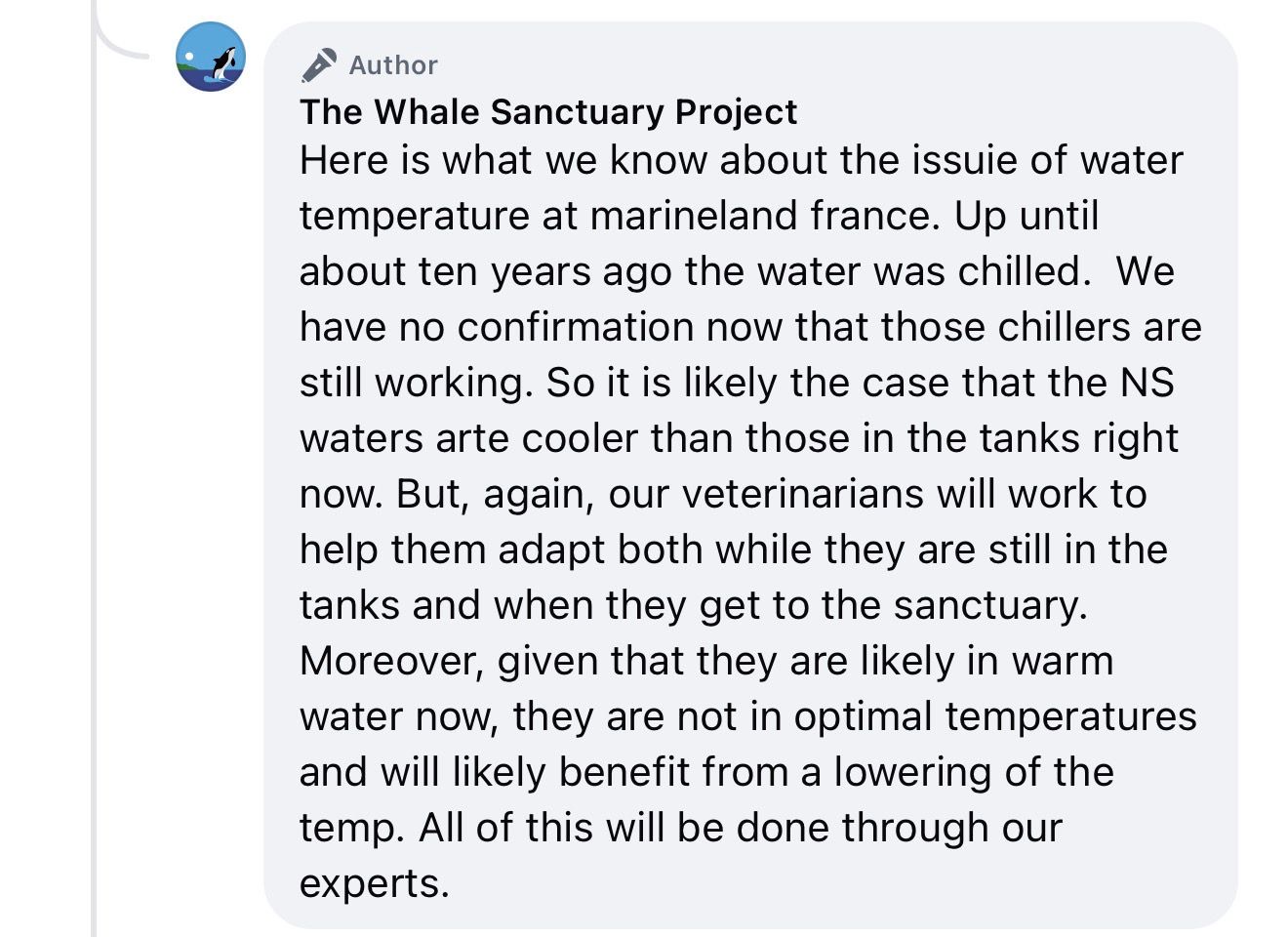
Our concern on this is not just that WSP had no idea of the current situation nor that it stretches back to the flash flood of 2015 that inundated the park, orca facility, and life support systems, but that temperature acclimation is an important part of the strategy in moving the orcas to WSP’s proposed sanctuary in Nova Scotia. If they were under the assumption that the tanks were chilled, that result in a shock to the orcas due to a drastic temperature change. Don’t forget – Keiko, the Free Willy whale, spent a number of years in a transitional tank in Oregon between his time in the warm waters of Mexico and the chilly waters of Iceland. We have not seen anything of this caliber offered to the French orcas.
Honestly, we can’t tell if Marino just simply is really bad at memorizing things or if she just doesn’t care anymore.
CHARLES VINICK: FINANCIAL GENIUS
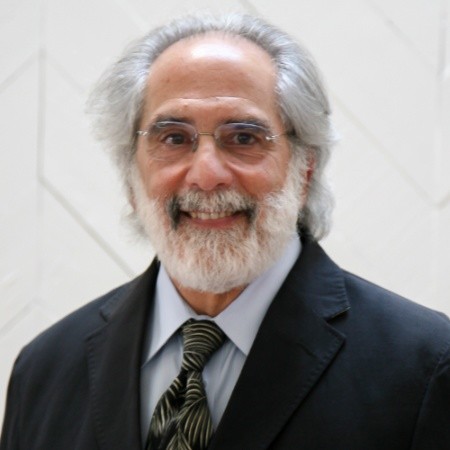
On 11 July 1989, a new indoor theme park was inaugurated in the Forum des Halles in Paris. The 120 million franc park was themed to the oceans and the work of Jacques Cousteau. The park proved far from being a financial success. For 1990, its first full year of operation, Parc océanique Cousteau had projected revenues of 44 million francs, but by the end of the year, only 25 million had been earned. Park attendance only reached one-half to one-third annual projections and in 1992, it filed for bankruptcy after only three years of operation.
Parc océanique Cousteau was the brainchild of Jean-Michel Cousteau and his close confidant Charles Vinick, who at the time served as Vice President of the Cousteau Society in charge of business development. According to his official bio on the Whale Sanctuary Project (“WSP”) website, where he currently serves as Executive Director, Vinick also served as General Manager of the park, where he failed to meet attendance and financial expectations.
The Parisian park was not the first failed attempt for a Cousteau attraction under Vinick’s leadership. Prior to Paris, Vinick had been working with the leaders of the city of Norfolk and the state of Virginia on developing a US headquarters for the Cousteau Society that would also feature a Cousteau-themed visitors center. To design attractions for the center, Vinick contracted Rolly Crump, a former Disney Imagineer best known for his work on Disneyland’s Haunted Mansion.
A State of Virginia audit in 1986 showed that $1.2 million in public funds had been spent between 1980 and 1986 towards the design, construction, and administration of the center, which had a projected cost of $20.5 million. During this time period, Vinick made numerous statements about engaging in talks with cities around the world (we have counted a total of eight) interested in building Cousteau centers. Only the Parisian park came to fruition.
By April 1985, the Cousteau offices and an education facility had been eliminated from the project to cut costs. The following year, the Cousteau Center was cancelled altogether by city officials. In the months leading up to the cancellation, Vinick pleaded in the press that the cancellation was premature and that he was close to achieving a fundraising goal of $5 million.
Vinick wrote in a letter included in the state audit: “. . . the whole development process has been prolonged more by the inexperience of all parties creating this kind of a facility and in developing the appropriate legal structures for it, rather than only by the inexperience of the Cousteau Society.”
Variations on this type of statement have remained prevalent throughout Vinick’s career, most recently on the development of a cetacean sanctuary in Nova Scotia and the relocation of Tokitae, the endangered (and now, under Vinick’s care, deceased) orca that was housed at the Miami Seaquarium.
Vinick has shown, time and time again, a lack of acumen when it comes to fundraising and nonprofit management.
FREE WILLY AND THE SUSTAINABLE BUSINESS PLAN
He is perhaps best known as a key architect of the Free Willy Foundation’s efforts to relocate and release Keiko, the movie star whale, from a Mexican theme park to Icelandic waters. As shown in his work with Keiko and subsequent efforts, Vinick concentrates on one or two high-value donors for each project, but fails to have sustainability models in place to ensure financial self-sufficiency should donations dry up.
In the case of Keiko, this happened when billionaire Craig McCaw, began reducing annual donations to the cause. According to McCaw’s associate Bob Ratliffe in a 2002 Guardian article, “. . . he cares deeply about Keiko, but he just read in the newspaper that he was dying, so he sent somebody to help out. After two years of solid attempt, if it hasn’t happened yet, it’s going to become a long-term project that should be funded by an animal care organization . . .”
This happened in 2001, when, due to funding cuts from McCaw, Ocean Futures, the organization Vinick ran with Jean-Michel Cousteau, left the experimental project, begun in 1995, handing over operations to the Humane Society of the United States, under the supervision of Dr. Naomi Rose.
US tax filings show the origins of the Free Willy Foundation: Cousteau’s Ocean Futures nonprofit was assimilated into Earth Island Institute and renamed Free Willy Foundation, while a second Ocean Futures was founded at the same time and then contracted by Earth Island Institute. Such creative business organization continues to this day, as illustrated by the Whale Sanctuary Project’s 2022 tax filings, which will be addressed in a moment.
David Phillips of Earth Island Institute, which managed the Free Willy Project in conjunction with Cousteau and Vinick, and Rose would both, along with Dr. Lori Marino, become founders and board members of Whale Sanctuary Project in 2016, bringing Jean-Michel Cousteau on as advisor. Shortly thereafter, Vinick joined Whale Sanctuary Project as a board member and led an “extensive” search for an experienced Executive Director to replace Marino in the role. Ultimately, he selected himself.
MERGING THE FUNDS
On 23 March 2022, Vinick co-founded Friends of Lolita, later renamed Friends of Toki. The original claimed role for the organization was to work with the new owner of the Miami Seaquarium, a Mexican dolphinarium chain called The Dolphin Company, along with Miami-Dade County officials, in evaluating and rehabilitating Tokitae. Upon the pledge of additional financing by billionaire Jim Irsay, the purview changed to relocation of the whale to the waters she was captured from.
Vinick’s co-founder on Friends of Lolita was Pritam Singh, a Florida resort and housing developer. Singh had recently, as Chairman of Sea Shepherd Conservation Society (“SSCS”), orchestrated a coup ousting the organization’s founder, Paul Watson. While this was in the works, Singh, in 2018, began dissolving SSCS’s Operation 404, a program dedicated to eradicating the use of cetaceans in theme parks and swim programs. By 2019, the only remnants of Operation 404 were social media posts about actions taken by other NGOs or governments. The program’s social media channels were dismantled soon after. In 2020, the Sea Shepherd Store posted on Instagram that the Operation 404 program was no longer public, but was still “operating in the background,” though no further explanation was given. As Singh was dissolving Operation 404, he was developing a premium resort in Marathon, Florida, the Isla Bella Resort, which partners with Dolphin Research Center, a nearby dolphin swim facility.
On 24 February 2022, the day after the incorporation of Friends of Lolita, and the anniversary of the death of trainer Dawn Brancheau by the whale Tilikum at SeaWorld Orlando, a press release was issued with a headline stating that Singh would donate $1 million towards the care of Tokitae. The press release did not indicate if the funds were Singh’s own or if they came from another source. Further, the text of the release did not mention the funding at all, but did include a rather prominent quote from Jean-Michel Cousteau.
What is the lifetime of a nonprofit? In the case of Friends of Lolita/Friends of Tokitae, it is gauged from the time indigenous elders are allowed into a whale stadium in Miami for filming a documentary to the time the time the film’s premier is announced. According to 2022 tax filings from Sacred Lands Conservancy (“SLC,” the Lummi organization operating as Sacred Sea), Friends of Toki was the result of an introduction between SLC board members and Pritam Singh by James Costa, the executive producer of SLC’s documentary, “Resident Orca.” Costa is Vice President of the Sea Shepherd Conservation Society board of directors.
Friends of Toki was dissolved by a board vote in January 2024. However, the documentation for the dissolution was not filed with the state until 6 March, one day after the release of the “Resident Orca” trailer and premier date..
Though incorporated in 2022, Friends of Lolita did not receive federal tax exempt status until 22 February 2023. Therefore, its 2022 expenses were funneled through Whale Sanctuary Project. According to US tax law, a nonprofit is required to indicate separate unique program expenses on its filings. However, instead of separating the expenses for the Nova Scotia sanctuary from the expenses for Tokitae’s care, the two were combined. Though the entry states that funding for the Tokitae project was completely covered by donations to Whale Sanctuary Project by Pritam Singh, it does not state his exact monetary contribution, making it impossible to discern if Singh donated the full $1 million he had pledged, or a lesser amount. As Whale Sanctuary Project does not provide any financial documentation to the public other than tax returns, it is impossible to delineate what portion of the $1.4 million assigned to both projects was attributable to Tokitae and what was utilized for Nova Scotia.
We have no issues with Whale Sanctuary Project as a concept and are not opposed at all to sanctuaries. The problem here lies with those who manage WSP’s finances, operations, and communications. Had WSP been a publicly traded commercial company, the shareholders would have voted out the board and replaced them and brought in new management by now. Instead, the board remains without checks and balances, and the organization continues to be administered by one of the few people in the world who managed a theme park into bankruptcy – something, not surprisingly, missing from his resume and official bio.
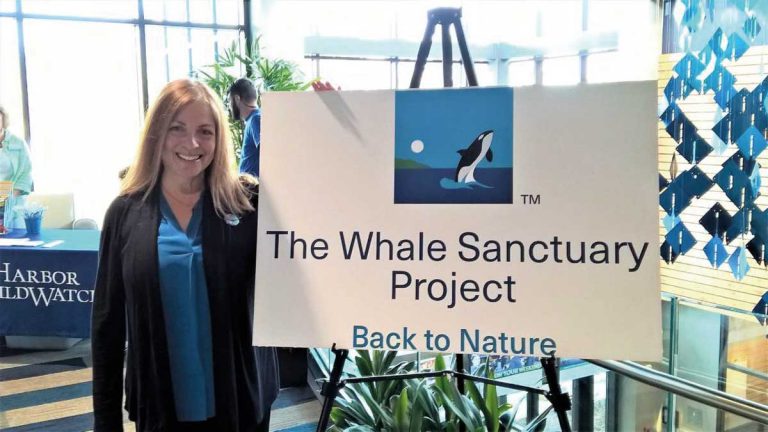
TOP PHOTO: Lori Marino. Credit: Whale Sanctuary Project

