
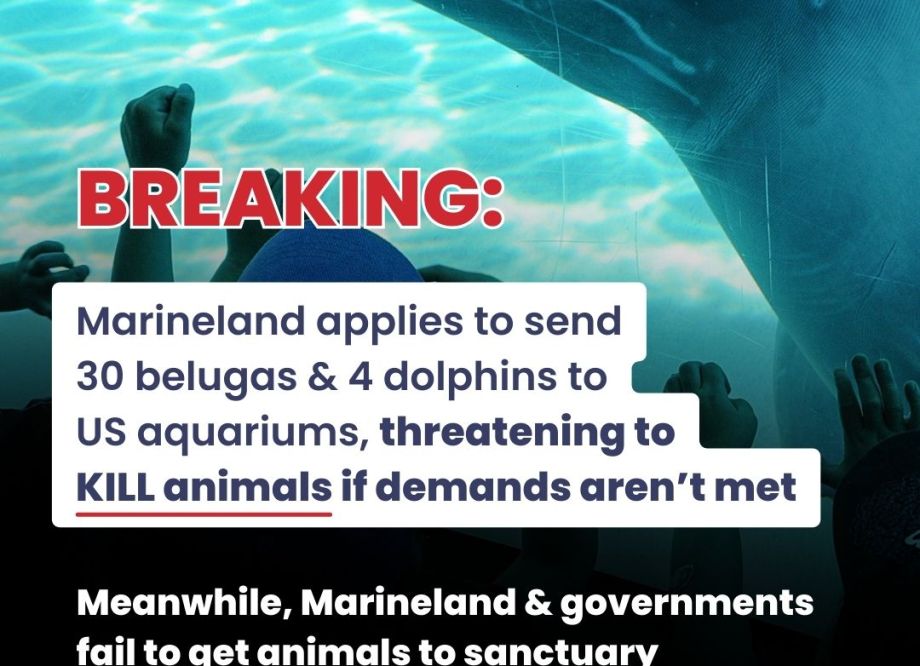
On January 23, 2025, the Canadian NGO Animal Justice published the above graphic. In it, they blamed MarineLand Canada and the Canadian and Ontario governments for failing to get the animals “to sanctuary.”
What they’re not telling you is that Animal Justice’s partner, Whale Sanctuary Project (WSP), which is developing a proposed sanctuary for belugas and orcas in Nova Scotia, is just as much to blame, if not more.
Here’s why:
WSP has a very impractical business plan, which is based upon first gaining control of whales from parks or aquariums, and then using those whales to raise funds to build the sanctuary for them.
We’re not making this up.
Whale Sanctuary Project’s CEO Charles Vinick was asked by the French publication Nice-Matin in an interview published on January 23 about raising the remaining $15 million needed for the sanctuary site. His response: “The confirmation of the decision to transfer Wikie and Keijo to the Nova Scotia sanctuary by the owners of Marineland and by the French government will surely mobilize people from all over the world to support this transfer.”
There’s a huge issue with this strategy: historically, and with what we’re seeing today, park and aquarium operators, courts, and governments have shown a lack of interest in handing over whales to a sanctuary if the sanctuary has not been constructed or lacks the funding to be constructed. And that would be WSP.
Government Partnerships and Whale Ownership
Of the two cetacean sanctuaries that are fully operational, one is a rescue, rehabilitation, and release facility for dolphins operated by NGOs in cooperation with the Indonesian and Bali governments, while the other houses two belugas, fully owned by the facility’s operator, which were acquired when its parent company purchased an aquarium in China.
WSP neither owns any whales nor has it asked for any government funding, priding itself on being a completely philanthropical endeavor. Philanthropy, however, depends on philanthropists and the general public giving more than $2.25 million in a year for a $30 million project (construction and first five years of operation).
In brief, WSP is dependent on being given whales in order to raise funds for its sanctuary, but without a sanctuary, nobody will give it whales. This is known as a Catch-22, or in the words of Bart Simpson, demonstrating an oxymoron: “You’re damned if you do, you’re damned it you don’t.”
Millionaires and Billionaires
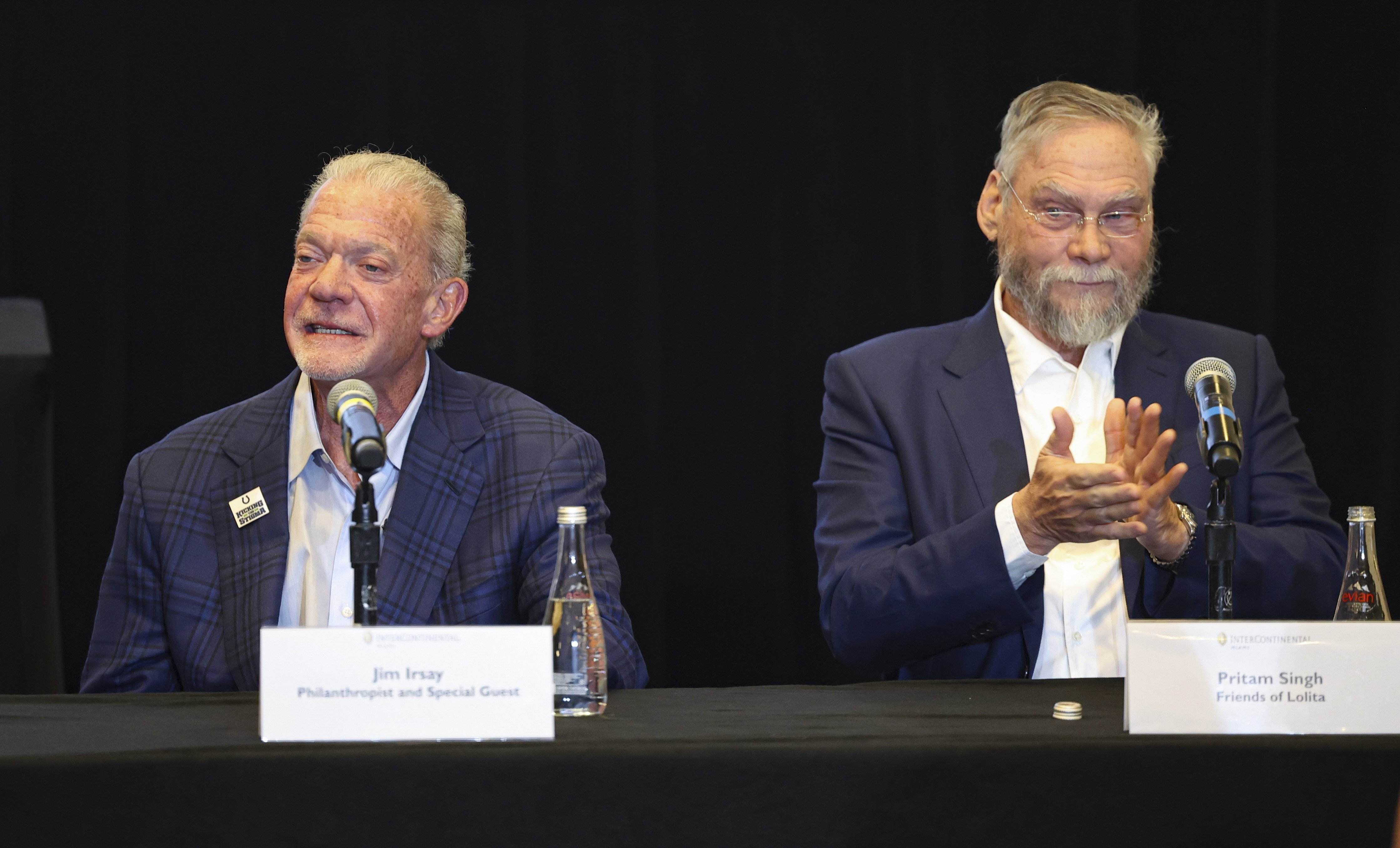
One of the greatest mysteries we’ve encountered has been why Jim Irsay or Pritam Singh didn’t just pivot off of the Friends of Toki project they were financing and pay for the Nova Scotia sanctuary in full.
The answer is simple.
Irsay was only interested in Tokitae and was devastated when she died.
As for Singh, There’s a scene in the documentary “Resident Orca” where he complains about spending $120,000 a month of his own money for the care of Tokitae. If a multi-millionaire (some say billionaire) like Singh, the head of Sea Shepherd Conservation Society, has issues paying $120,000 a month for a whale in his care, why would he want to spend $15-30 million to build a sanctuary that has no agreement whatsoever to obtain any whales?
One Voice, One False Killer Whale Statement
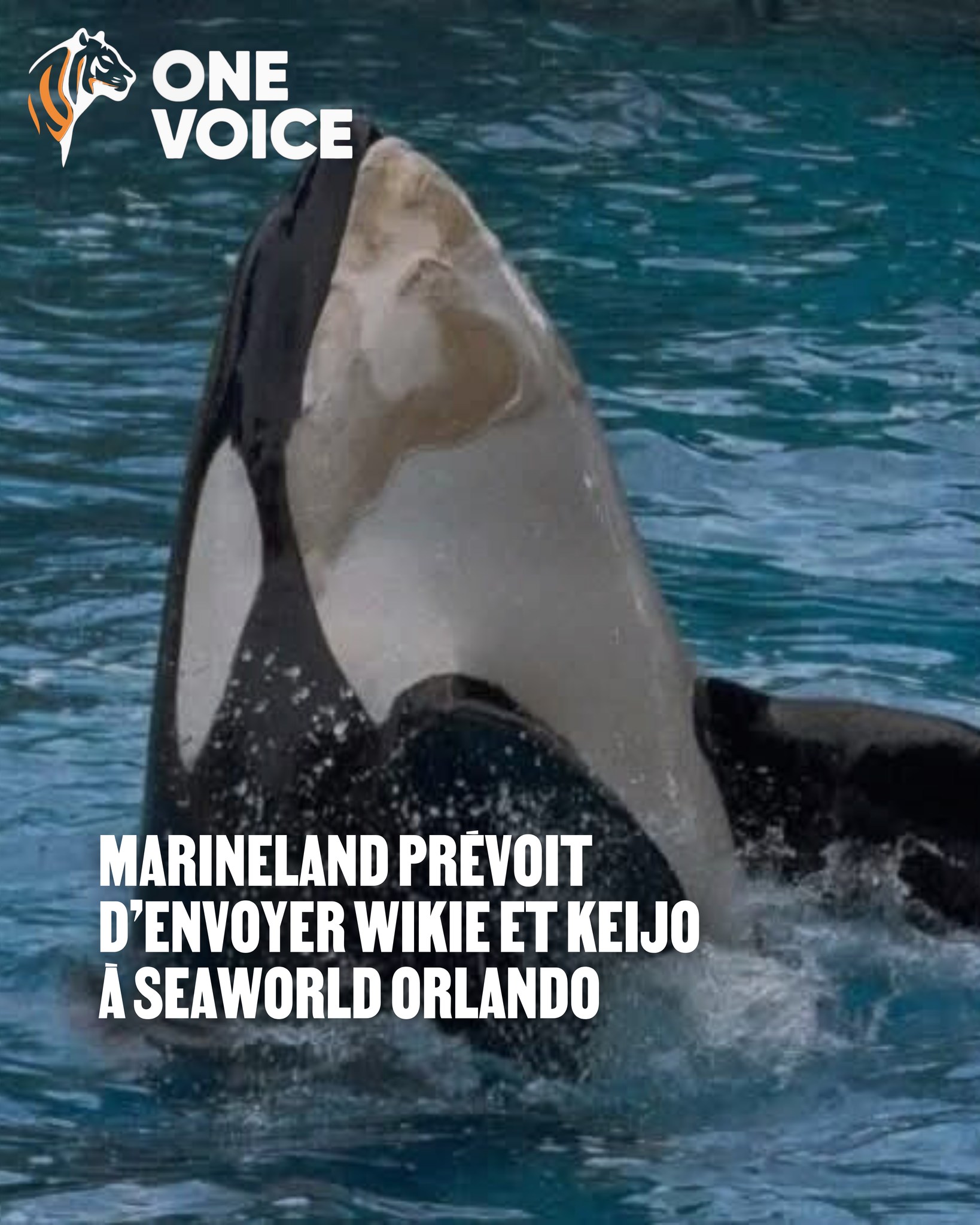
Another WSP partner, the French NGO One Voice, announced on January 20 that Marineland Antibes plans to send Wikie and Keijo to SeaWorld Orlando. The news spread like fire over social media, but, in all instances, the rumor was traceable to a single source – One Voice. Joe Kleiman, The Flip’s Managing Editor, contacted sources at both United Parks (parent company of SeaWorld) and Parques Reunidos (owner of Marineland Antibes) and confirmed that the two companies had been in discussion about transfers for a number of years, but that no discussion had taken place since last year.
So what happened? Did One Voice hear about the earlier discussions and think it was currently happening? Did they get advanced notice on the proposed beluga move from MarineLand Canada to SeaWorld and confuse Canada for France and belugas for orcas? Or did they use SeaWorld to pull off a SeaWorld-style deflection, like when the theme park chain distracts from bad news by announcing a roller coaster’s opening date or a new mariachi festival with unlimited margaritas?
If so, why would they lie intentionally about SeaWorld? Could it be to deflect from the recent news that Lotte Group has opted not to send its lone beluga to Nova Scotia, that MarineLand Canada has filed for permits to send its 30 belugas to US facilities, that the French government is reevaluating WSP’s proposal since the sanctuary developer admitted to being unaware that the chillers in Antibes have been inoperable for a decade? Or could it simply be a ruse to anger activists and raise money for a group that needs whales but can’t get them?

